

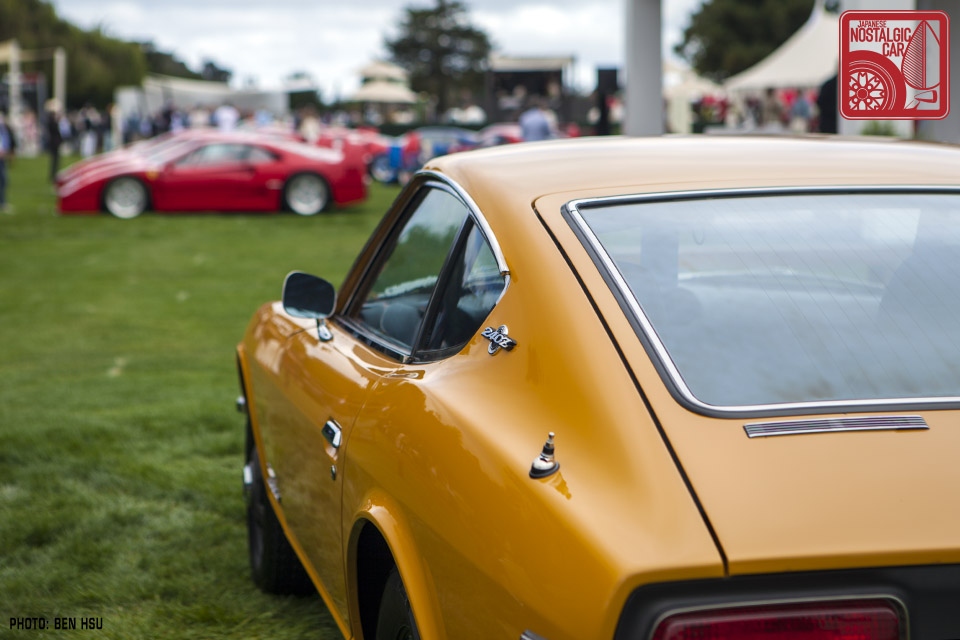
For most of its history, The Quail, A Motorsports Gathering has prized European and American classics. Cars selected to participate in the judged portion of the car show must meet strict standards. While some Japanese cars have made it through the committee in past years, they were usually singular examples in a broader class of, say, Post-War Sports Cars. For the first time, this year there was an entire dedicated class titled “Legacy of Japanese GTs”.
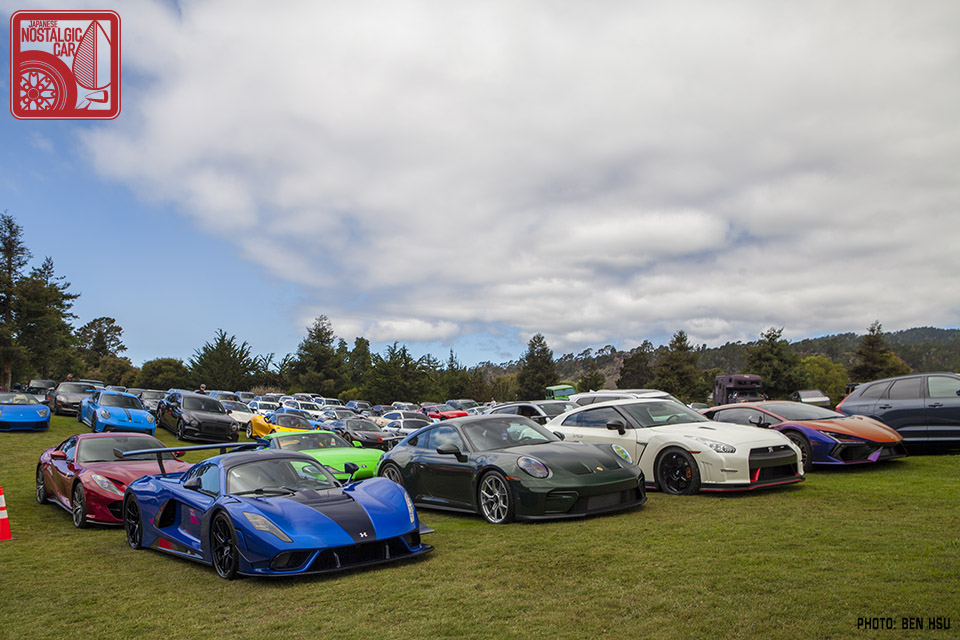
Founded in 2003 as an alternative to the white-glove rigor of the Pebble Beach Concours D’Elegance, The Quail’s Motorsports Gathering has quickly become one of the hottest tickets for Monterey Car Week. But don’t mistake the event for a casual car meet. Tickets still cost $1300 at a minimum and are distributed by a lottery system. There are endless rows of six-figure supercars, and that’s just the parking lot.
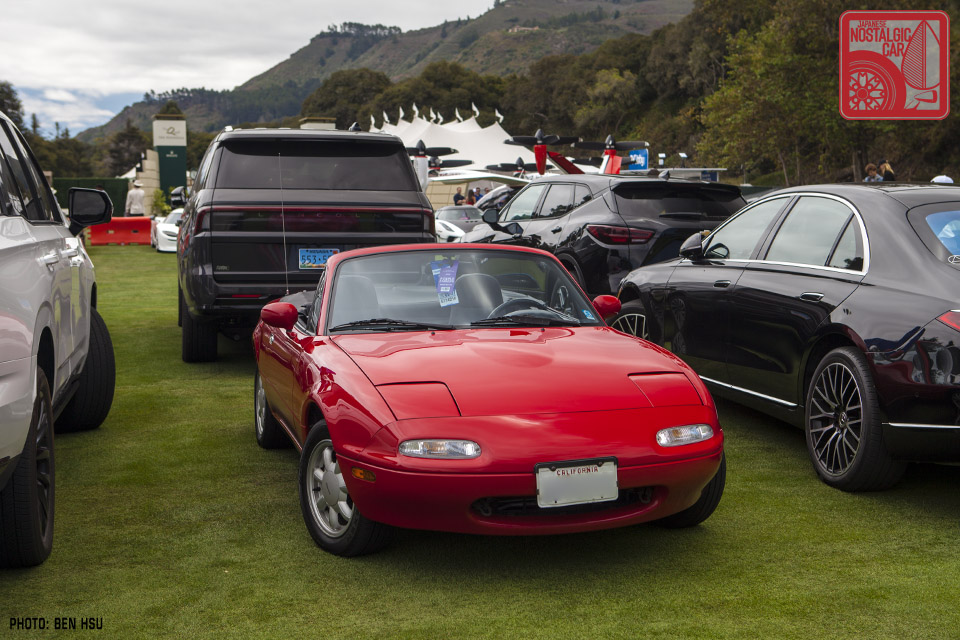
However, in a sea of pricey sheetmetal, we did spot a lone Mazda Miata happily waiting for its owner to return. And in case you were wondering, those white cars in the back row are a Koenigsegg Agera (starting at $1.5 million) and Koenigsegg Regera ($2 million plus $285,000 for the Ghost Package option). Neither were part of the official show.


To get to the Japanese GTs, one had to walk through the Land Rover-sponsored promenade to the gate, past a herd of Nissan-headlamped Lamborghini Diablos and seven Gordon Murray T50s at the GMA booth (The Quail’s prominence has grown significantly over the years and now serves as a venue for high-end manufacturers to reveal their latest wares).
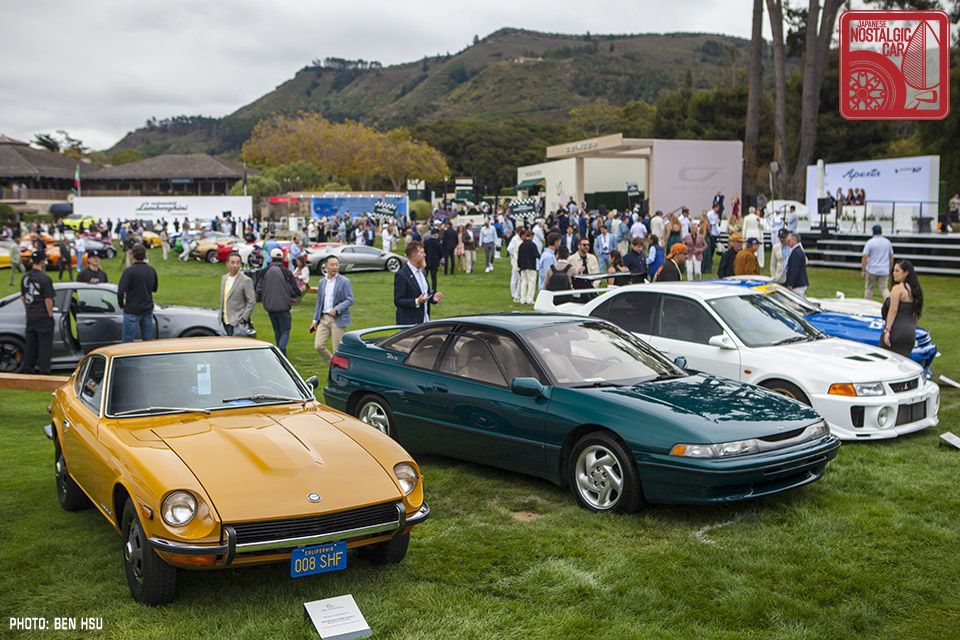
At last, we were greeted with a row of well presented machines from Japan. Brad Du Coing’s 1970 Datsun 240Z, finished in Safari Gold, served as a superb restored example of the seminal sports car that brought about a sea change in perceptions about Japanese cars.
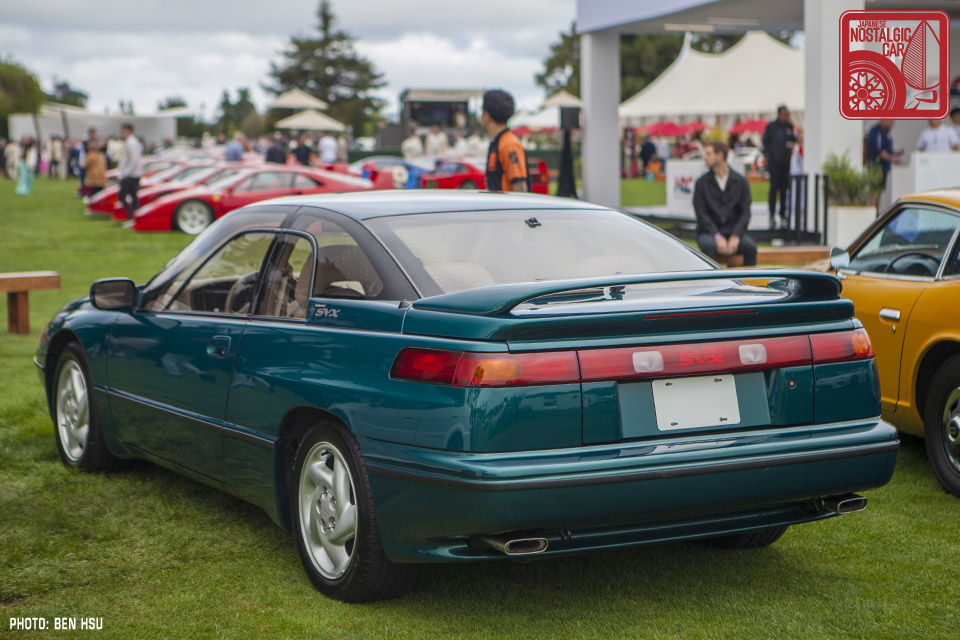
Beside it was a 1996 Subaru SVX in Polo Green owned by Richard Chen, an exemplary embodiment of the breed with only two owners from new. It was also the only true GT in the group. All were in good company, sharing the lawn with over a dozen Ferrari F40s, which were part of a special celebration within the Ferrari class.
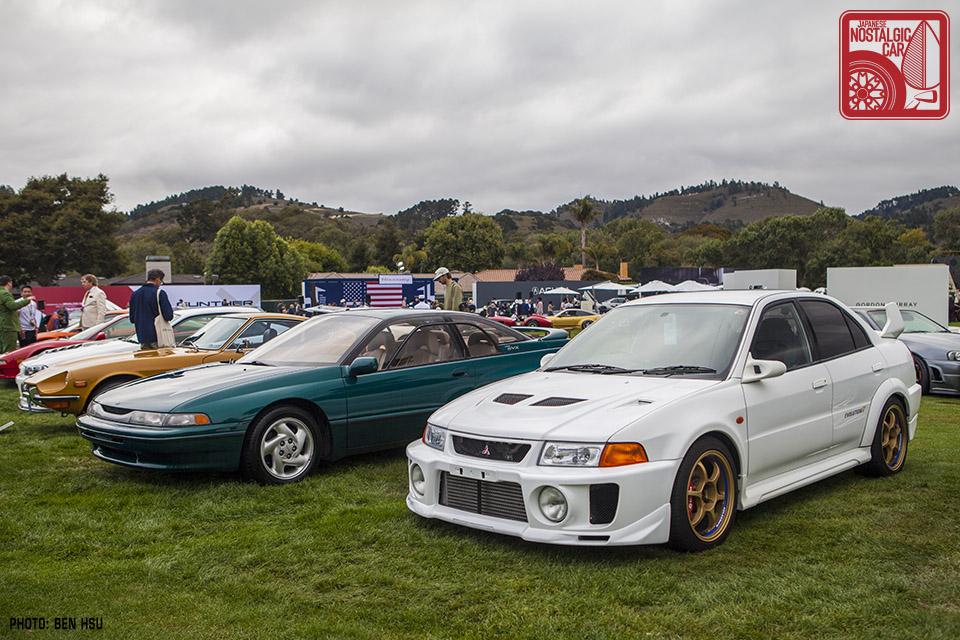
Derek Sugiono’s 1998 Mitsubishi Lancer Evolution V in Scotia White was a stellar representation of Japan’s history with World Rally Championship homologation specials.


Two Acura NSXes were prominently displayed in front of the Honda Racing booth, a perfect pairing of elite examples from both generations of the Japanese supercar. In New Formula Red was a 1999 Zanardi Edition, owned by Jason Wang, number 47 of 51 built. In Thermal Orange Pearl was a NC1 NSX Type S, just one of 350 built and one of 300 allocated for the US market, owned by Alan and Tammy Granberg.
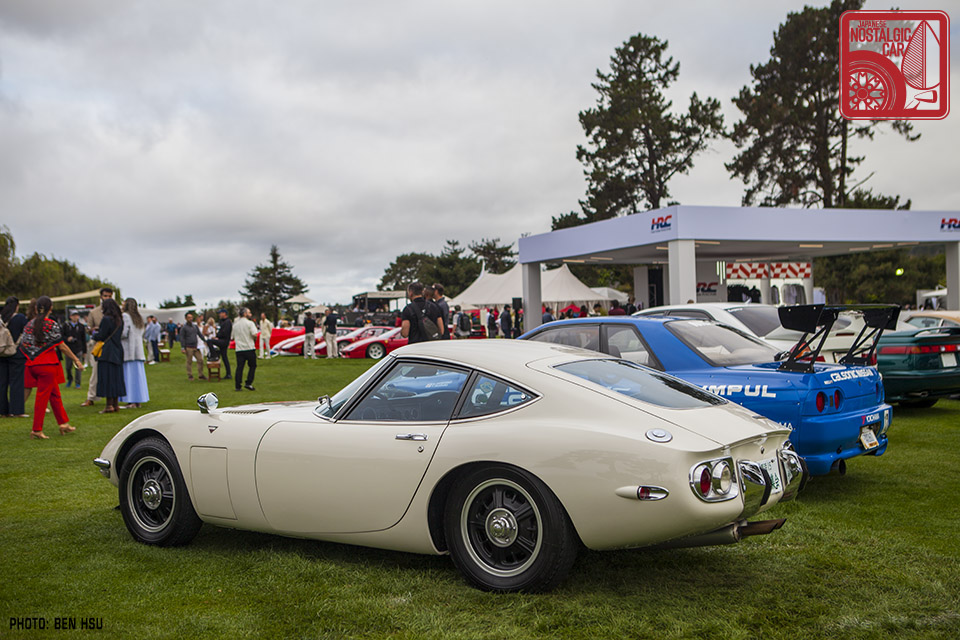
You can’t have a Japanese GT class without the OG, a Toyota 2000GT. Finished in Pegasus White and owned by Mike Malamut, this was one of three left-hand-drive examples originally imported to the Philippines. It resides in California today.
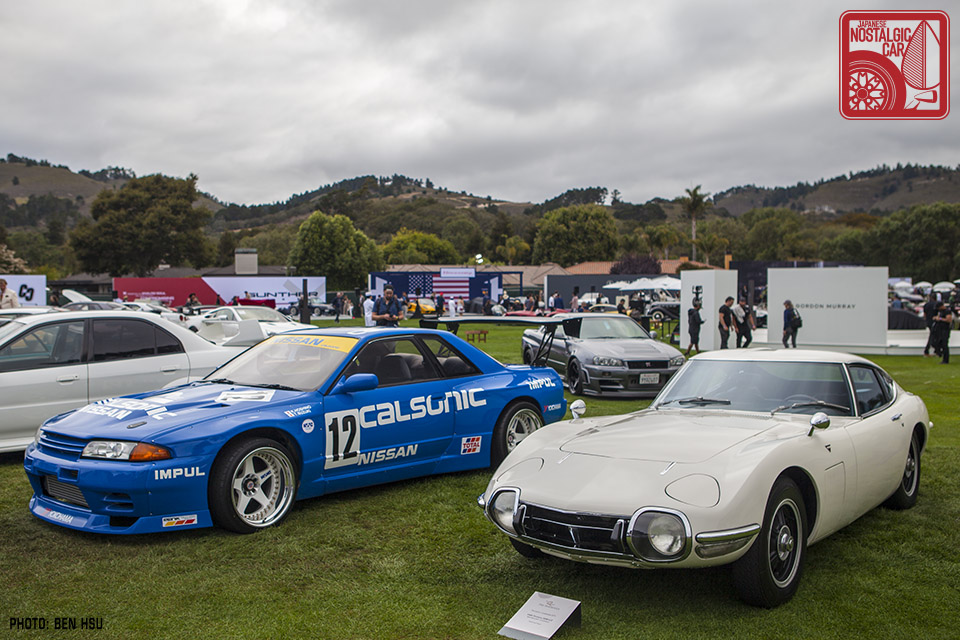
In theory, all entrants should have been vetted before the show, but this was the first year for the Quail’s Japanese GT class and unfortunately not all the cars met the show’s self-imposed criteria. It is unfortunate to have to call a particular car out, but the blue R32 Skyline GT-R has neither originality nor racing pedigree.
On the surface it looks like a tribute to the Calsonic Group A race car, but in reality it’s a custom job with many incorrect parts, such as a Seibon hood, enormous GT wing and, perhaps the biggest faux pas, Alibaba-sourced replicas of NISMO LMGT wheels that actually read “NISNO” on the spokes.


Skylines (or Skyline-based cars) that definitely met the rarity criteria included an HKS Zero-R, built by the famed tuning house to be a turnkey supercar. With no Nissan badging, it was considered a standalone make and model (similar to how Ruf cars are distinct from Porsches). In addition to a host of powertrain and suspension upgrades, the rear seats have been removed in order to accommodate a fuel cell for precise 50/50 weight distribution. Only 10 were built, including prototypes. Owned by Gianluca Cimini, it is the only known example in the US.
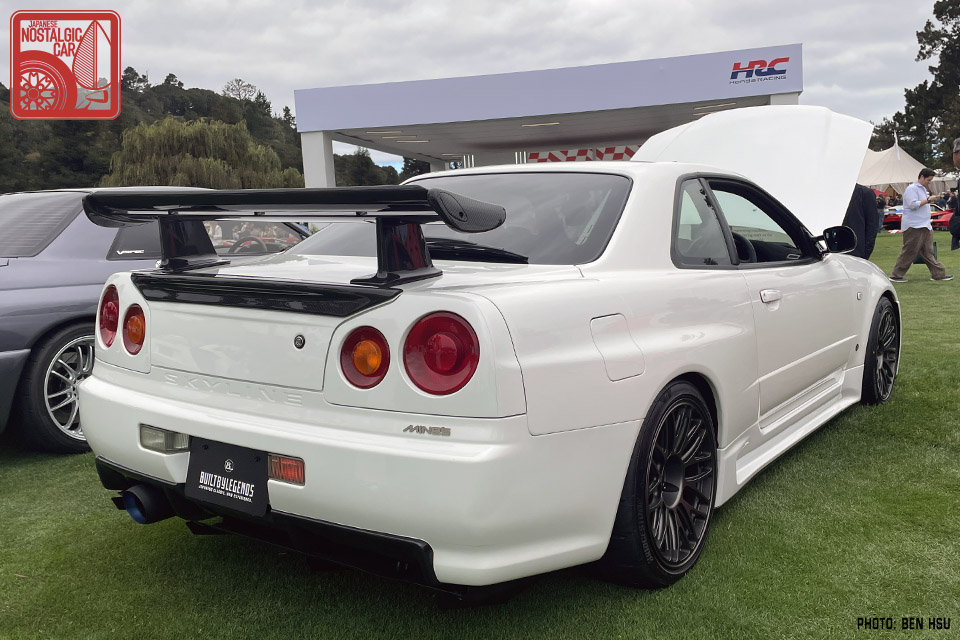
The Mine’s R34 GT-R is centerpiece of the Built by Legends portfolio. The restomod firm recreated the iconic Mine’s BNR34 N1, but with modern upgrades, like R35 fuel injectors, dry carbon aero parts, Ultrasuede fabric on the interior, and improved sound insulation. Its MB7 engine was built by Toshikazu Nakayama at Mine’s, with the chassis receiving a nut-and-bolt restoration on a 3D laser alignment jig at Garage Yoshida.


A NISMO 400R owned by Matthew Katz represented the apex of the R33 generation. A complete car built by Nissan Motorsports with know-how derived from N1 and endurance racing, the moniker reflected the 400ps generated by its RBX-GT2 engine at a time when manufacturers like Nissan and Toyota were still living under the self-imposed 280ps of the Gentlemen’s Agreement. The base RB26DETT was bored and stroked to 2.8 liters and the body fitted with flared fenders to accommodate wider wheels. Only 44 examples were built.
Behind it, Jay Belkamp’s modified 1994 Mitsubishi 3000GT VR-4 hailed all the way from Virginia. It’s not every day you find a souped up Mitsubishi displayed within spitting distance of a 1926 Bugatti 37A, 1935 Lagonda Rapier Sports Special, and 1938 Aston Martin 15/98 Drop Head Coupe.


Parked apart from the cars above were two pinnacles of modern Japanese engineering. The Lexus LFA Nürburgring Edition boasts a slight bump in horsepower (to 562) over the standard model and limited production of 64 examples. Toshihiro Iwasaki’s R34 Nissan Skyline GT-R CRS is the first to be registered in the US. The Clubman Race Spec is essentially a modern ground-up NISMO Omori Factory build like the Z-Tunes of old, with over 800 components replaced with Nissan Motorsports equivalents. Fewer than 20 are known to have been finished since the program started.
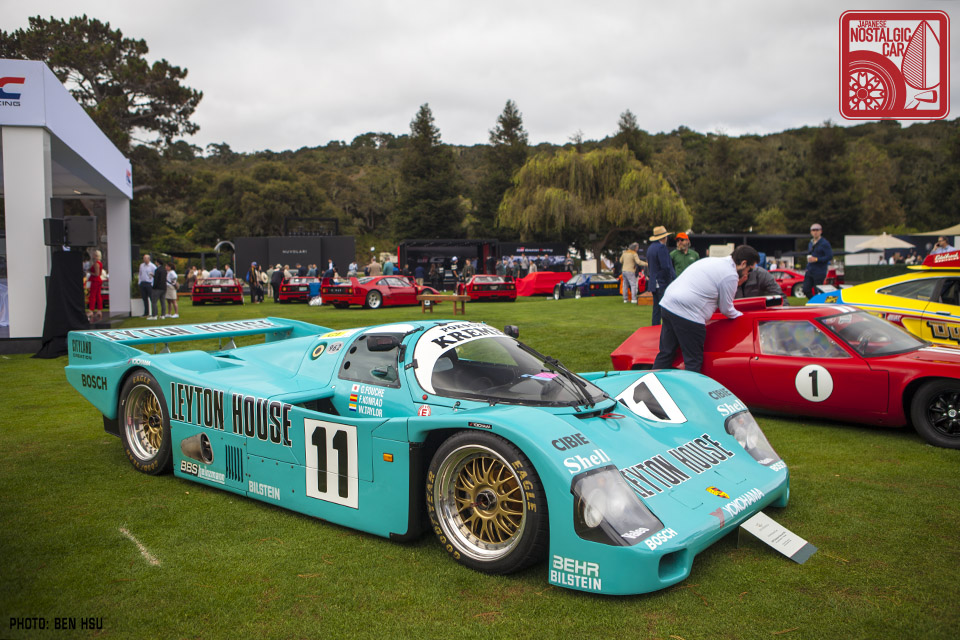
Beyond the Legacy of Japanese GTs class, some other notable cars, both Japanese and tangentially related to Japan, populated the lawn. Among them, Jasbir Dhillon’s 1987 Porsche 962 in the livery of Japanese real estate conglomerate Leyton House. This chassis, CK6-87, finished fourth overall at the 1987 24 Hours of Le Mans and eighth overall at the 1988 running. It is the only known street-legal 962 in the US.


Both the Porsche and a JGTC Toyota Supra in TOM’s Castrol livery owned by Colton Amster were part of the Post-War Racing Cars class. The Supra is reportedly a retired GT500 race car built by TOM’s and restored in the US with TOM’s assistance. It is one of several GT500 Supras finished in Castrol livery, though not the 1997 JGTC-winning No.36 which remains preserved in Japan.


The Honda Racing booth had many goods for sale, including an entire Acura ARX-01a LMP race car that is the first car to be offered as part of Honda’s Heritage Racing Program. Also available were engine parts from a McLaren-Honda MP4/5, including a piston ($2200), head gasket ($3800), and camshaft ($3800).


We also got our first in-person peek at the Amalgam 1965 Honda RA272. The larger, 1/8-scale model is comprised of over 1600 individual pieces and costs approximately $29,000. A certificate of authenticity is also included denoting the serial number of the model. Only 30 will be produced. If it’s too pricey, Amalgam also offers a smaller 1/18-scale model that retails for $1735.


Every exotic manufacturer from Aston Martin to Spyker unveiled their latest products at The Quail, and Acura used the occasion to show the Nexera Vision to the public for the first time. The concept showcases the future direction of Acura design while celebrating the marque’s 40th anniversary. Sharing the stage were a first-generation Legend and Integra to mark the occasion.


The Nexera Vision is finished in a color called Matte Titanium with a splash of hot pink in the cabin. The design team each all dressed in color-coordinated outfits with hot pink accessories to match. The design lead, Yasutake Tsuchida, spoke of light dancing on the car’s surface and emotion in design. It makes sense, as he is an ex-Mazda designer that worked on the current Mazda 3 and CX-90.


Elsewhere at the show, Honda positioned additional cars from its collection, including a cherry 1991 Acura NSX and a 1961 Chevy Apache pickup that was restored in 2019 to commemorate their 60th anniversary of US sales. When Honda first set up shop in the US in 1959, long before the Ridgeline, Chevy pickups like it were used to haul motorcycles around.
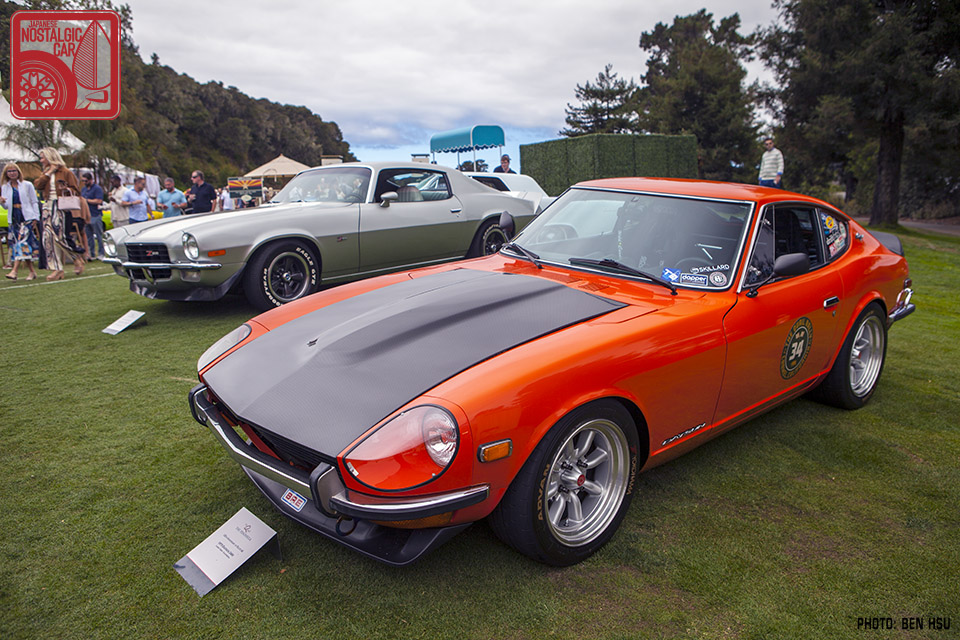
A large display of American automobiles honoring the 100th Anniversary of Route 66 had a lone Japanese entrant. Many may recognize the Datsun 240Z as belonging to photographer Larry Chen.


At the Gazoo Racing stand, a GR GT in silver caught a lot of attention. The car, reportedly designed with aerodynamic function prioritized above form, exudes an immense presence in person. It was unlike any other supercar on the lawn, almost frightening in its brutish and purposeful shape.


The Ferrari class was filled with historic cars, including a Ken Okuyama-penned Enzo, one of six that came from the factory in Grigio Titanio. Even more surprising was a 2016 Ferrari J50, a Japan-market exclusive designed to celebrate 50 years of the brand’s presence in that country. Based on the 488 Spider, it features bespoke styling and a 20 horsepower bump from its 3.9-liter V8 (to 681). Only 10 were built.
It was a momentous occasion to have Japanese cars recognized with their own class, but as will be revealed in subsequent Car Week installments, this was only the beginning. To be continued…


Very happy to see this. But we all know the “awesomeness” of Japanese cars.
How disappointing that now that Japanese cars are getting their due, that R32 is there among world class examples of Japan’s finest.
I’m sure some people will point to it as why Japan wasn’t previously represented.
I very much look forward to the future where Acura is producing 2-door sports cars with flip up doors. It’ll be interesting to see how that design language will translate to compact crossovers, crossovers, and sub-compact crossovers. Or are you saying the Nexera concept is the design language of the color of the paint? If so, then gray-ish silver should work out fine along with the other grays, silvers, blacks, and whites on offer.
Good gracious, I don’t know why I’m so bitter.
According to Tsuchida-san, the lead designer, the Nexera’s design language — the A-shaped lighting, surfacing, etc. — will appear on future Acuras.
I don’t blame the owner of that R32 for bringing their car to The Quail- I’d be happy to show my Crown there whether it belonged or not (it doesn’t). And they’re probably very proud of their car, even though poorly modified Skylines seem to be a dime a dozen these days
I do blame the event organizers, for having just enough knowledge to understand that Japanese classic cars DO belong at exclusive concours, but not enough to realize this is not that car.
What a great Friday post. I know a Ferrari F40 or Czinger 21C would wow me pretty hard, but are we “weird” to find more fulfillment in seeing JNCs rather than multi-million dollar hyper cars?
Thanks for sharing! It has been a while since I was there when the first Japanese car a Toyota 2000 GT of Tom Knudson’s was invited. Great to see some well deserved respect for the Japanese finally.
I wanted to clarify that our critique of the R32 is with regards to the show’s selection committee. If I were the owner and my car was accepted I’d do the same thing and show my car there. I left his name out of the article as to not single him out. We definitely feel that the selection committee should have adhere to their own criteria more closely.
I understood what was written exactly as you are clarifying as it is the committees job to say accepted or denied.
Thanks, Jim. I remember meeting you at the Quail many years ago. If you were there this year, I’m sorry I missed you.
Thank you for the great coverage and kind words. It was an honor to show and the trip of a lifetime.