Among the big draws to Monterey Car Week are the various car auctions that spring up across the peninsula. They represent some of the most prestigious and highest-grossing public automotive sales on the planet, bringing collectors, speculators, and museums from within the US and abroad. Here’s a run-down of the notable Japanese car auctions that took place this year.
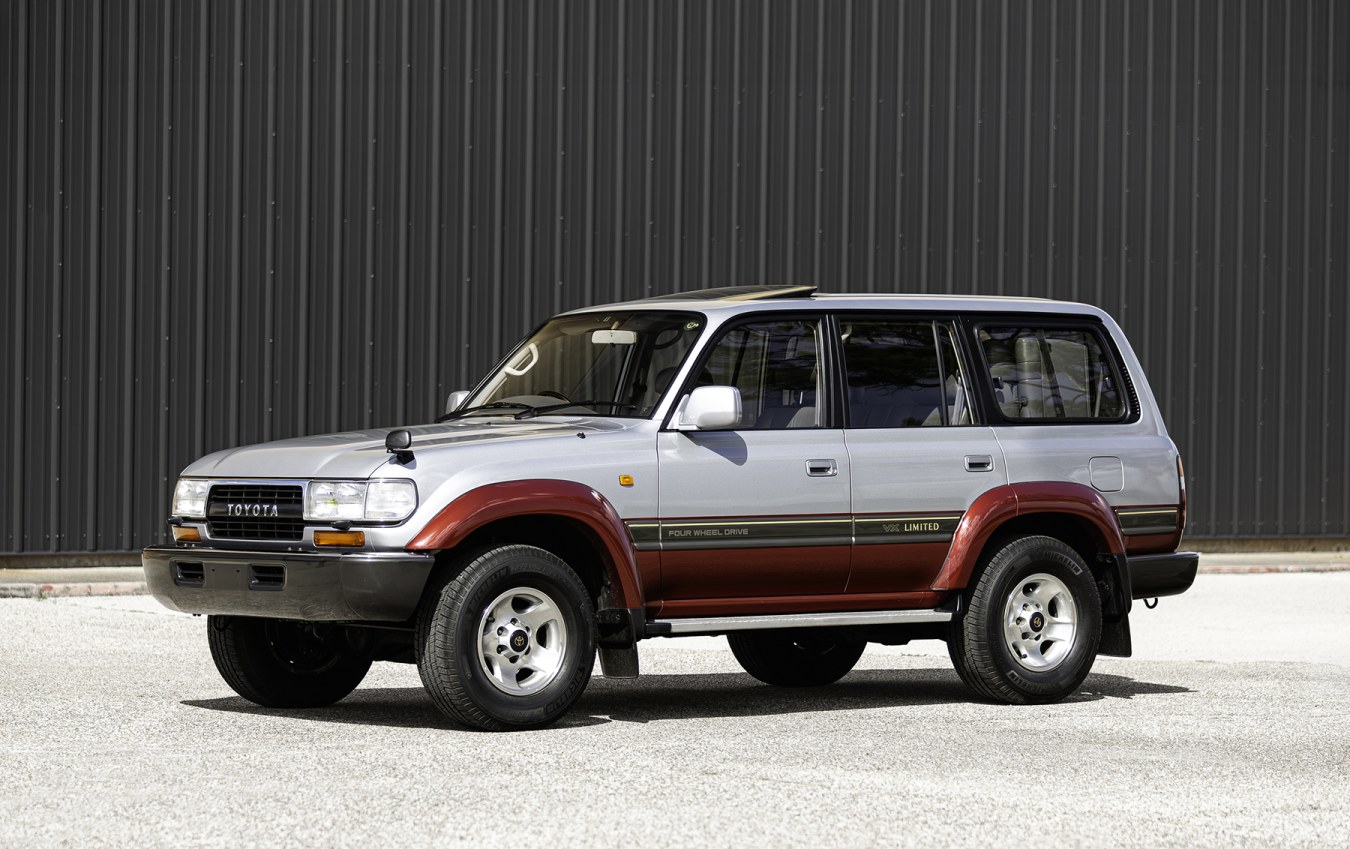
Gooding Christie’s sold a nice-looking 1993 Land Cruiser VX Limited for $44,800. The rig was described as a “virtually impeccable” JDM specimen with only 37,000 km (23,000 miles) on the odometer. It was finished in the two-tone Adventure Road Toning colorway that was an exclusive option for top-end VX Limited models.
Because it is a JDM model with a build date that still requires California Air Resources Board emissions certification to be legally registered in the Golden State, the auction explicitly stated it would not be sold to a California resident. This same truck passed me Monday afternoon heading home on Highway 46 at 80-plus mph wearing Montana dealer plates.


Over at Broad Arrow one of the headliner JDM cars was a 1996 NISMO 400R finished in KR4 Sonic Silver and listed as number 20 of 44 examples built. It features a bored and stroked 2.8-liter straight-six and N1 metal turbo, which together generate its namesake 400 ps. This particular car was said to have had three decades of ownership in Japan and was recently imported to the US. It gaveled for $857,000.


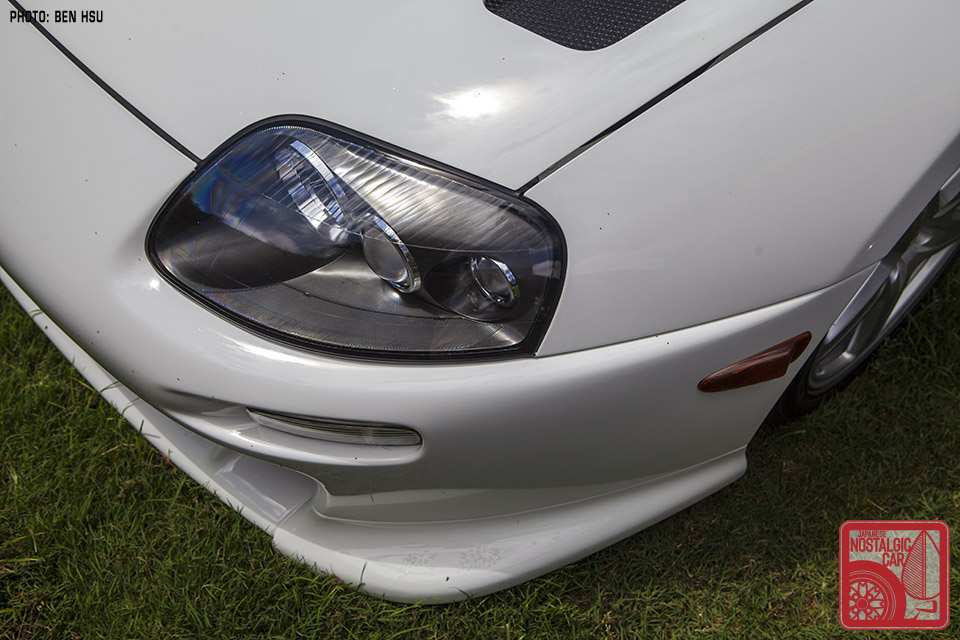
At the same auction was a TRD 3000GT. Based on the A80 Supra, it featured a widebody kit and aggressive cooling vents derived from the GT500-class race car that Toyota campaigned in the All Japan Grand Touring Championships. While the parts were available individually from the TRD catalogue, 35 examples were assembled in-house at Toyota Racing Development. This is one of them. Similar to the NISMO 400R, it was reclassified with “TRD” as its official make rather than “Toyota” and received its own Japanese government-certified VIN plate reflecting the change.
The hype may be around the Skyline GT-R and its variants, but the TRD 3000GT was Toyota’s own motorsports-inspired complete car built upon its 90s flagship. It sold for $582,000.
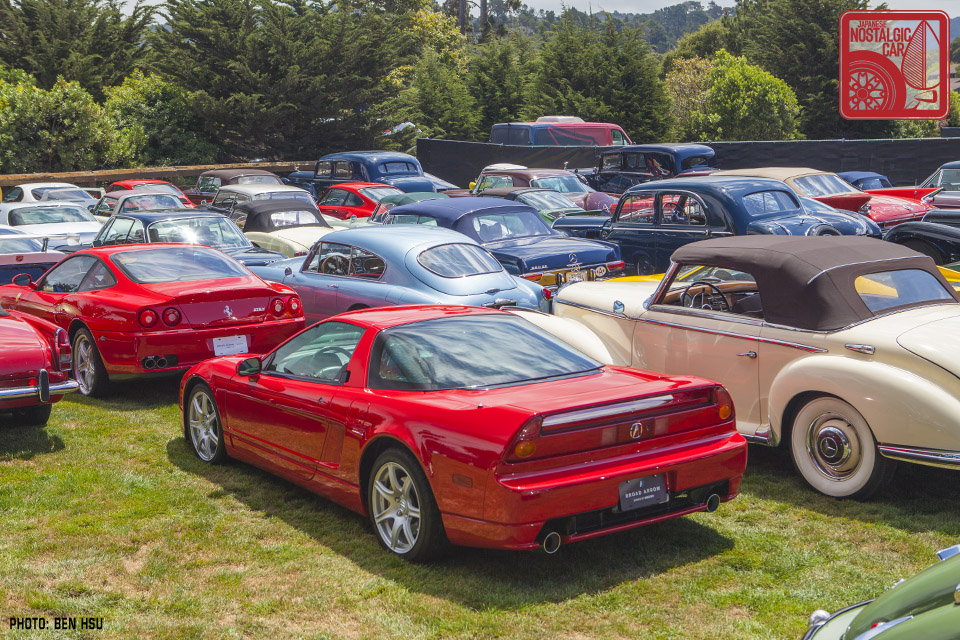
Broad Arrow also offered a Acura NSX, said to be one of 20 sold in New Formula Red over a black interior in 2005, the final year of first-generation sales in the US. This fastidiously kept East Coast six-speed has clocked just 27,000 miles and comes with a well-documented archive of service invoices, as well as its original window sticker.
The winning bidder took it home for $207,200, a tad higher than the going rate for NSXes of similar vintage and mileage but an expected margin after the Car Week premium. While exposed-headlight NA2s continue to sell for over six-digits, the NA1s are less expensive and (we think) purer to boot.


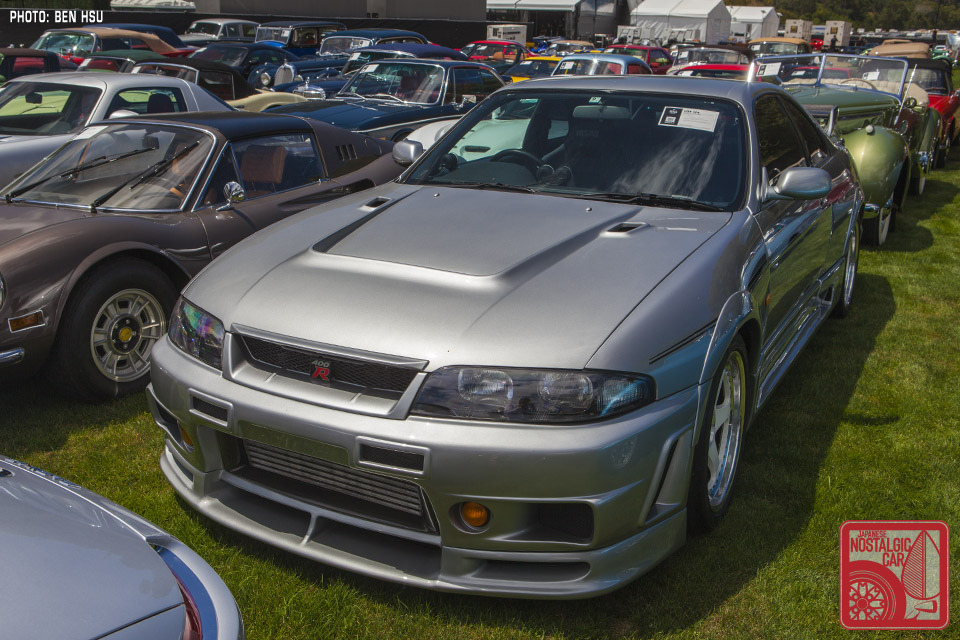
Broad Arrow had a Whitest White Lexus LFA Nürburgring Edition available for private sale, just one of 64 built and one of 25 allocated for the US market (it was displayed nearby at The Quail). But as we left the auction we saw another LFA Nürburgring Edition in the parking area, finished in 9K5 Orange. We were forced to catch a shuttle to the satellite lot for the plebes and on the way came across a row of nicely tuned Skyline GT-Rs.


Turns out we were all sleeping on the Mecum auction. It’s typically considered a middle-tier auction that contrasts Car Week’s classic European focus with lots of American iron, modern-day supercars, and attainable daily drivers. This year Mecum had its usual selection of “entry-level” collector cars, including a small handful of JNCs.
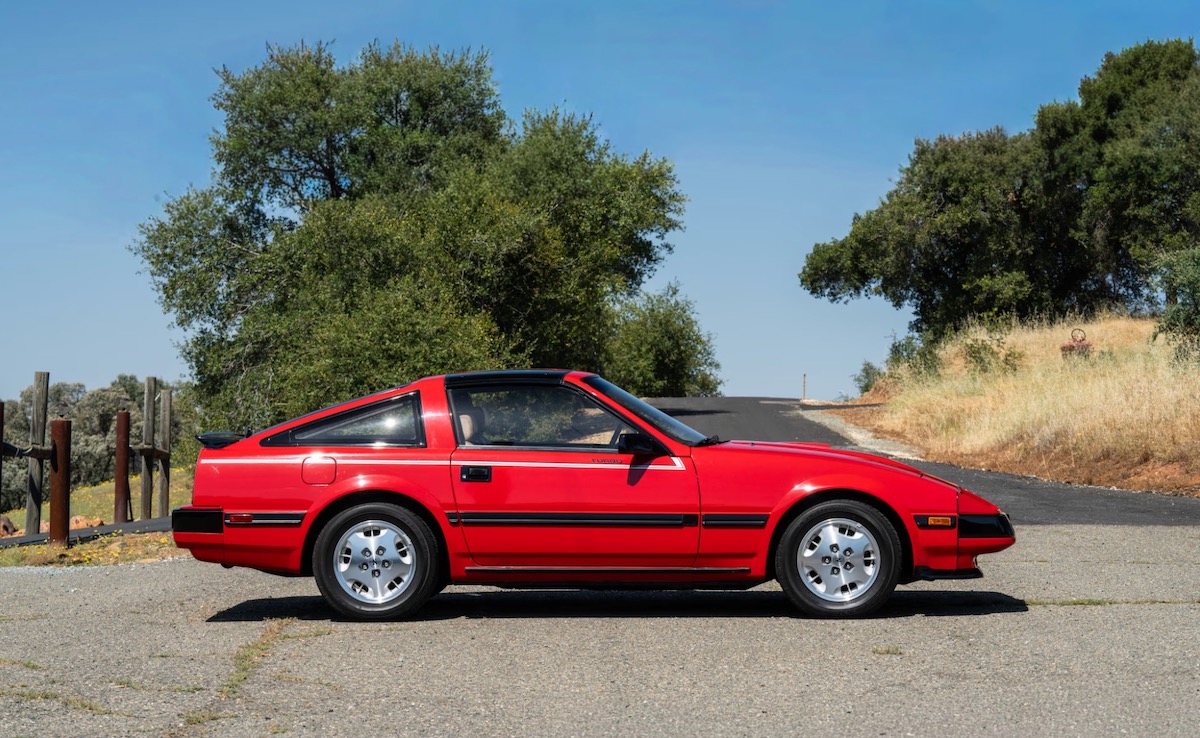
There was a modded 1974 Datsun 260Z that sold for $20,900, a lightly restomodded Datsun Sports 2000 roadster that sold for $39,600, and a 9607-mile 1972 Datsun 240Z that sold for $93,500. A Z31 in Resell Red with 17,000 miles brought an impressive $29,700, especially considering it was a non-turbo automatic.


The big JNCs at Mecum were not one, but two 1984 Lola T616 Mazda Group C2 race cars, in the famous BF Goodrich livery. Chassis HU-2 was the 1984 Le Mans C2 class winner, driven by Yoshimi Katayama, John O’Steen, and John Morton, which sold for $236,500, a very reasonable price considering its pedigree.
These cars were built on an aluminum honeycomb monocoque chassis and powered by a 13B rotary making 300 horsepower. Top speed was a reported 200 mph. The No.68 car received a restoration of its major components in 2016 and Canepa Motorsports.


Its sister car, chassis HU-3, took third in class that year at Le Mans, and won its class at the Monza 1000 Km. This one had a frame-off restoration completed in 2003. Both cars raced at Le Mans, Monza, Nürburgring, Fuji, Datyona, Sebring, Miami, and more. The No.67 car sold for $132,000. So, for less than half a million bucks, you could have purchased an entire JNC vintage race team of major historical significance and eligible for historic races that require past racing provenance.
Right now there’s a lot of heat concentrated in the recent supercar market. The younger cohort of collectors is favoring cars like Rufs, pre-merger AMGs, manual Lambos, and the Big Five Ferrari supercars (288 GTO, F40, F50, Enzo, La Ferrari). The heavy hitters of the Gran Turismo generation, cars like the NISMO 400R and TRD 3000GT, fit in comfortably here. While there still seems to be an absence of Japanese classics such as Honda S800s and hand-built Isuzu 117s, it seems that Tuner Era JNCs are finally getting their due.