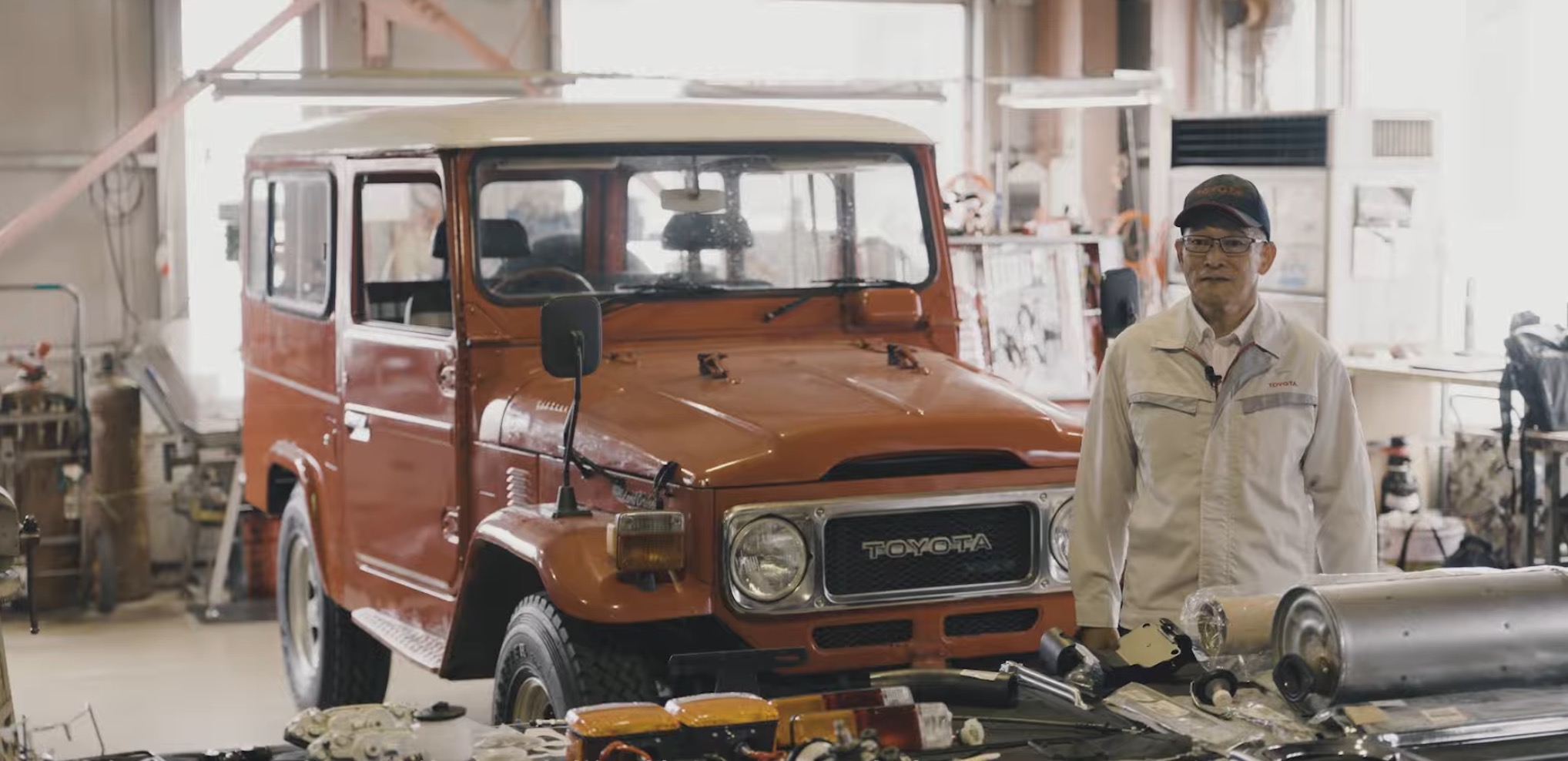
Toyota is releasing a series of videos documenting the restoration of an FJ40 Land Cruiser. The stated purpose of the project is to demonstrate the use of reproduction parts from the Gazoo Racing Heritage Parts Program, and we’ve seen Toyota work on projects like this before, with an AE86 and A70 Supra. However these restoration videos go into much greater depth, giving viewers a look at how masters entrusted with restoring a vehicle to the quality standards of Toyota Motor Corp handle the craft.
The subject of the restoration is an FJ40 that had been languishing somewhere in a Toyota building for years. It’s a 1982 model, 43 years old at the time the restoration began, a higher trim level equipped with rare options. The team overseeing the project consists of members normally responsible development of the long-running J70 but also tasked with handling the Land Cruiser reproduction parts.
The restoration is an opportunity to check the fitment and function of the reproduction parts. For example, as one technician describes, the reproduction master cylinder comes with only a rubber cap for the reservoir. In theory, an OEM cap equipped with a brake fluid level sensor should work with the reproduction reservoir, and this will be an opportunity to test that theory.
At the time of filming Toyota has only made about 40 reproduction parts for the FJ40. However, another 200 or so parts are still in production, and will be used on the restoration. Still, the team will have to reuse or fabricate a lot of parts, as they are stripping the Land Cruiser down to its bones.
In the second installment, the team completely disassembles the FJ40, and we do mean completely. The body is lifted off the frame and body panels are chiseled apart at the seams. The team discovers a lot more rust than they were expecting, and must fabricate new sheetmetal to weld in. Whether you care about FJ40s or not, it’s a chance to watch how a world-class restoration shop handles such situations.
It seems like a lot of work just to demonstrate the use of 40 or so parts. However, the team says that they’ll use insights gleaned from this project to decide what other reproduction parts they should make next. There have been two installments published, with an estimated six total. They’ve been riveting so far, and we look forward to the coming updates.