

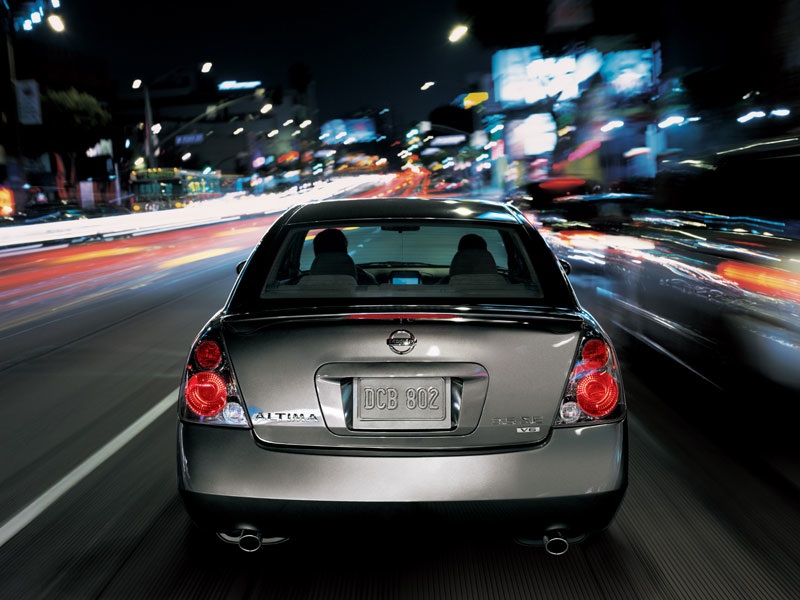
The Nissan Altima is dead, confirmed by a top Nissan exec last week. In Part 01 of our Altima retrospective, we followed its rise, from compact Stanza spinoff to, by generation three, a true enthusiast’s contender against midsizers like the Honda Accord. Unfortunately, Nissan was unable to keep that momentum going, and the Altima’s downfall was a microcosm of the larger problems at Nissan (Hint: It was Ghosn).
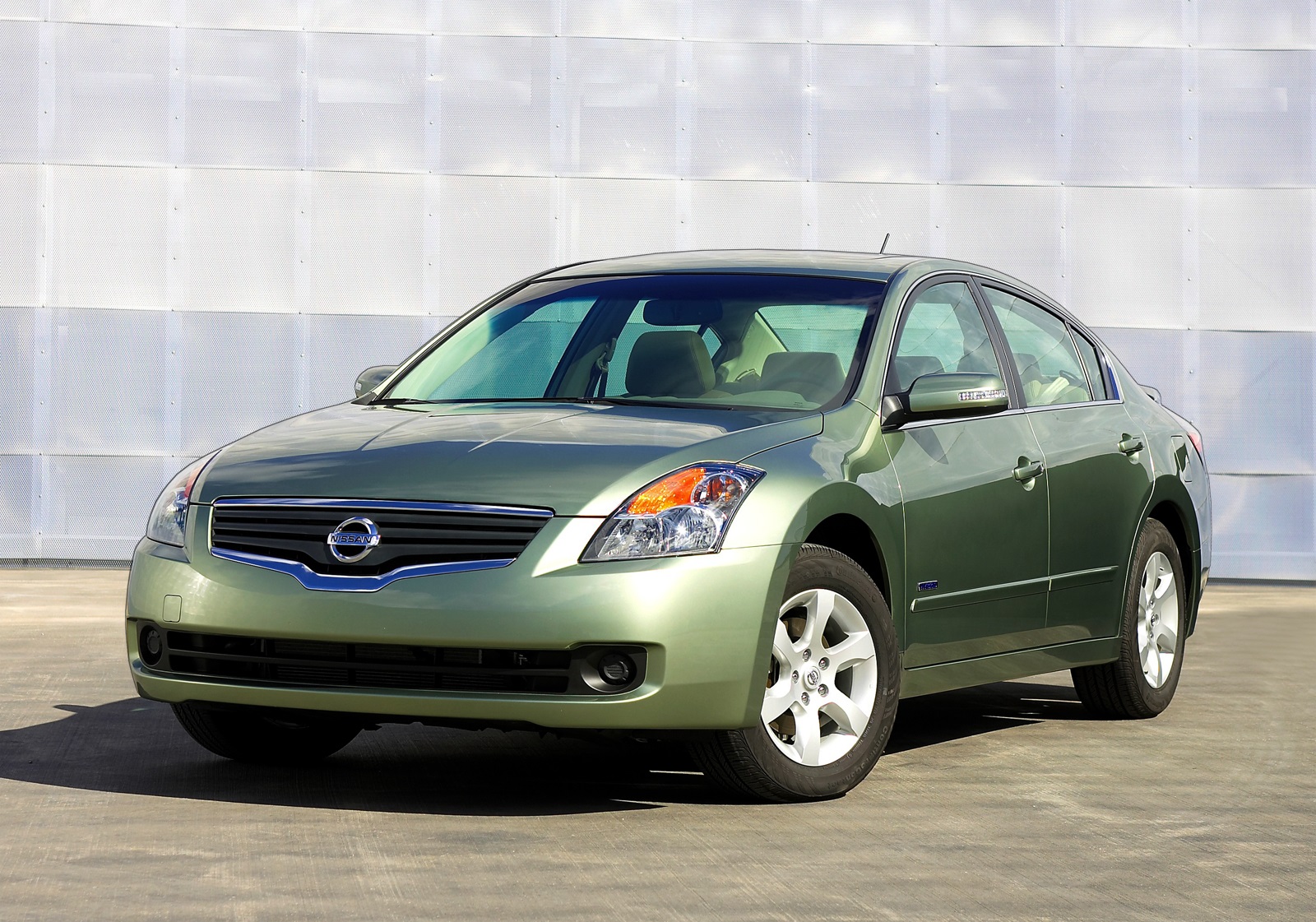
Despite the peak that the L31 represented the press still dinged it with a few complaints,,so for 2007 the fourth generation attempted to address them. By redesigning the L32’s suspension, lowering the engine position, and equalizing the drive-axle angles, Nissan was able to engineer out the L31’s wrist-snapping torque steer, even as the VQ climbed to 270 horsepower.
Cabin cheapness was a frequent point of contention, so Nissan added higher quality soft-touch materials, more sound insulation, and technologies like a push-button starter, which was uncommon on mainstream sedans of the era. Sales soared to unprecedented levels — 270,000 to 280,000 per year.
The changes may have made the Altima a better car on paper, but the unhinged rawness of the L31 was gone. So was the SE-R trim, but a vaguely Infiniti G-styled Altima Coupe appeared in 2008 to take on the two-door Accord. Most viewed the coupe, chassis code U32, as a failed attempt to recapture some of the Altima’s lost sportiness. No matter how many doors, the fourth-gen felt softer and more neutered than the hot rod L31.
However, what really began the Altima’s downfall was the adoption of the continuously variable transmission. Not just buzzy and awkward feeling, the cost-saving CVT was also prone to catastrophic self-destruction before 80,000 miles. Nissan had always been a tick behind Toyota and Honda in terms of reliability, but the CVT truly decimated whatever hard-earned goodwill Nissan possessed.
As CVTs began failing, L32 resell values went into freefall. That made selling a new Altima a challenging proposition as well, and Nissan’s financing offers to low-credit buyers got more aggressive still, ushering in the era of Big Altima Energy. The pandemic-era meme went viral, transcending to non-automotive realms as it spot-on characterized Altima drivers as reckless and hostile, even as they showed complete disregard for the condition of their cars or traffic laws.
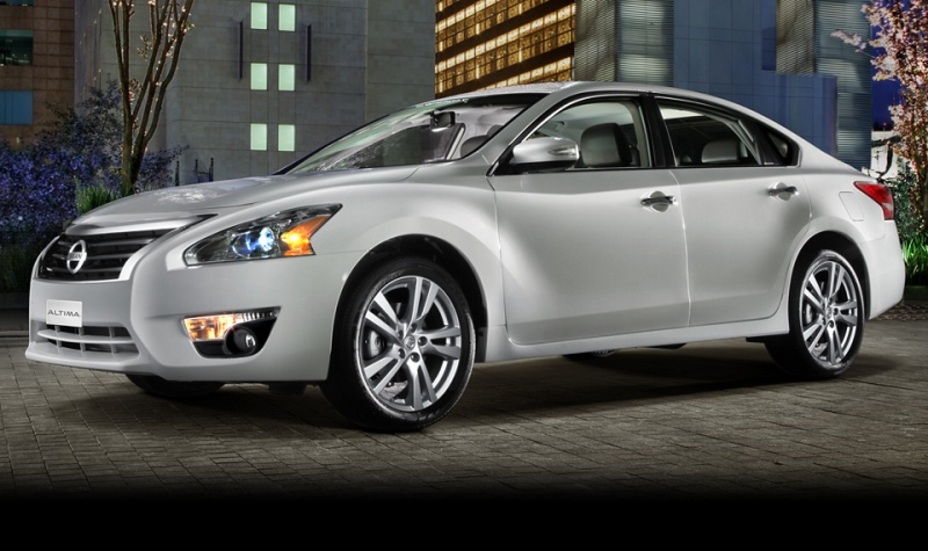
The design brief for the L33 was the most stylish, fuel-efficient, high-performance, and advanced mid-size sedan in the US. Styling-wise, the 2013 Altima added boomerang head and taillight cues of the 370Z and Maxima. Mechanically, it was largely a carry-over from the L32, minus the hybrid, coupe, and manual. It was CVTs all the way down.
To fully understand the Altima’s decline requires study of what else was happening at Nissan at the time. For much of the 90s, Nissan was bleeding cash after the bursting of the bubble economy. At the same time, the auto industry was in a period of massive consolidation (DaimlerChrysler, Ford’s Jaguar-Land Rover acquisition, etc). In 1999, Renault took a controlling stake in Nissan and Carlos Ghosn took the reins in 2000.
Ghosn, a notorious cost cutter, pulled Nissan out of the red in just one year by ruthlessly shutting down factories, slashing 21,000 jobs, and dismantling Nissan’s supplier network. Ghosn returned the company to profitability a full year ahead of schedule, but he didn’t stop there.
Prior to the L33’s debut at the 2012 New York Auto Show, Ghosn came up with an internal plan called Power 88, which set a goal of 8 percent operating profit margin and 8 percent market share in six years — growth was unheard of in the auto industry. The plan demanded that Nissan, which at the time held just 5.8 percent, catapult past Ford’s 6.9 percent, and close in on the heels of Hyundai/Kia, the world’s fourth largest automaker at 8.6 percent. To meet those numbers, Ghosn practically gave away Altimas at fire sale prices to fleet buyers. Thus began the close association that the Nissan has as the default brand for rental agencies.
At the same time, Ghosn waged a global campaign of relentless expansion, with quixotic ventures like the revived Datsun brand, the NV commercial vehicles, the purchase of AutoVAZ and Mitsubishi, and more. Secretly, Ghosn harbored ambitions to make Renault-Nissan the world’s biggest automaker, though when asked about it publicly he would downplay the sales numbers as a side effect of his business acumen. Don’t forget, Ghosn approached GM, Ford, Daimler, and Fiat (twice) for mergers as well.
The L33 became the first Altima to be sold back to Japan. It was renamed the Teana and played a key role in Power 88’s vigorous push. Built in six countries and sold in North and South America, most of Asia including the booming Chinese market, Australia and New Zealand, Russia, and the Middle East, the L33 was the first truly global Altima.
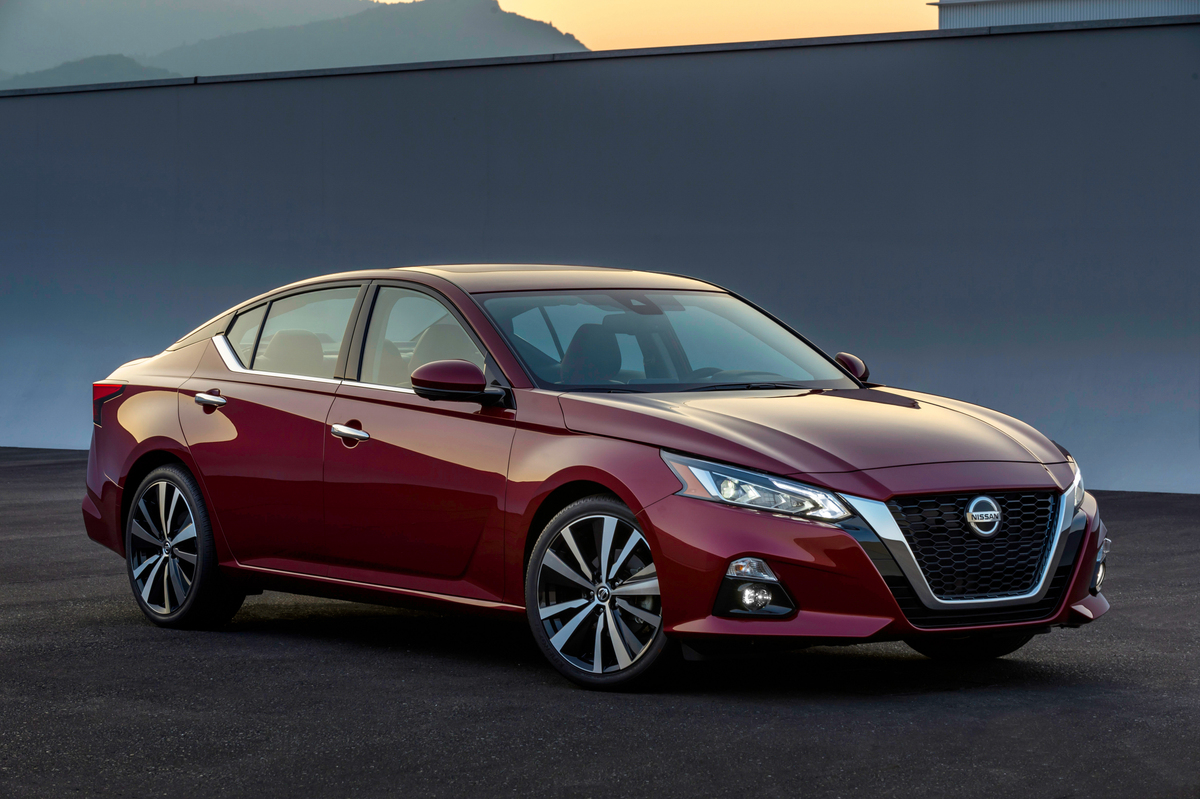
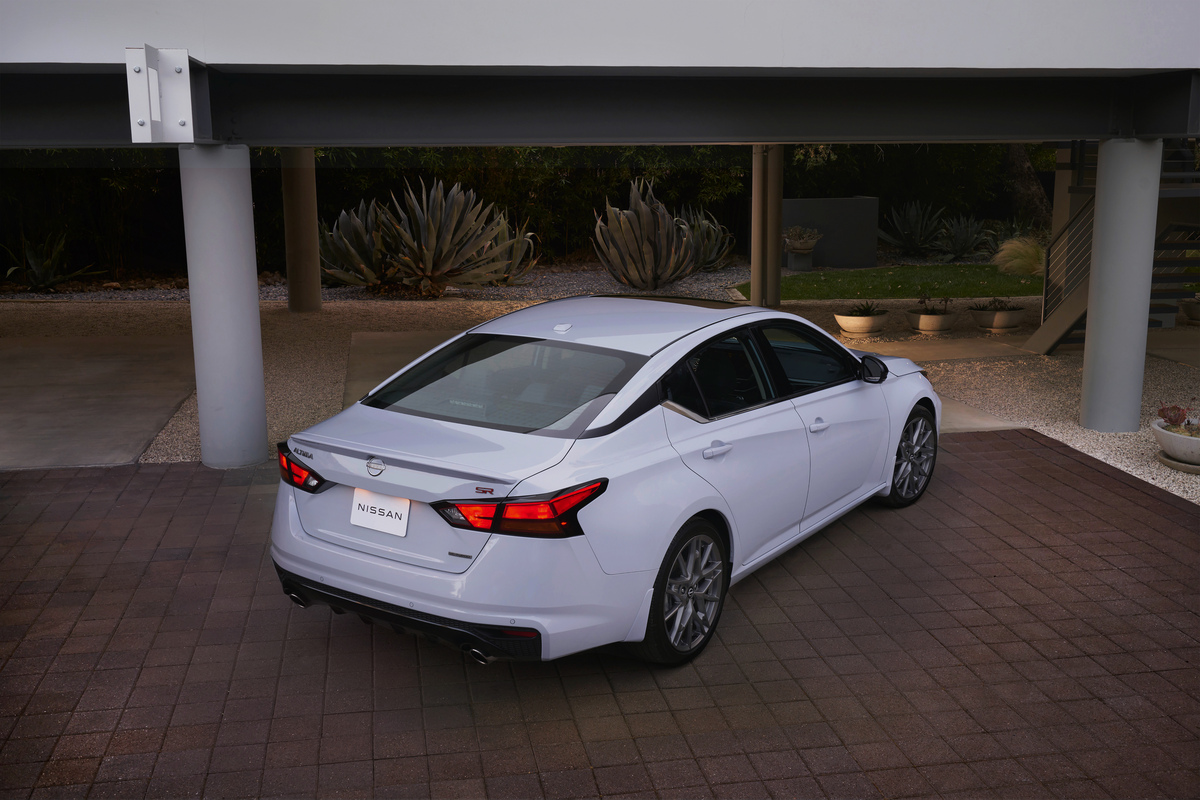
The sixth and final generation of the Altima was introduced in 2019, and for a moment it seemed like the Altima could see a resurgence. With a chiseled new skin the L34 stood out from the L33’s shapeless blob. Available engines included a standard 2.5-liter inline-four and a revolutionary new engine that replaced the V6 called the VC-Turbo.
Twenty years in the making, the VC stood for variable compression, an engine that could change compression ratios on the fly. Essentially, it could deliver more torque than the outgoing V6 and in a broader curve, all while sipping 35 percent less fuel. It was an engineering breakthrough but by the time it arrived just as the entire industry was switching away from pure internal combustion.
Too little, too late. By then, the damage from Ghosn’s quest for market share had done irreparable damage to the brand. The issue with Power 88 was that its two goals — increased market share and increased profits — are inherently contradictory. To steal sales from from established rivals requires deep price cuts, cash-back incentives, and cheap financing to lure buyers. But that’s directly at odds with the profit part of the equation.
Not to mention, it became increasingly hard to justify a new Altima when used car lots were absolutely flooded with ex-fleet vehicles, examples repossessed from subprime loans, and hoopties with dying CVTs. It was a textbook example of how chasing short-term growth destroyed a brand’s future.
Months after the L34’s debut, Ghosn was arrested in Tokyo on charges of financial misconduct. Prosecutors alleged that he underreported his salary by tens of millions and diverted million in company funds for personal use. While awaiting trial, he fled Japan in a musical instrument case and never returned.
The highest market share Nissan ever achieved under Power 88 was 6.4 percent. It was a bump from the 5.8 percent at the plan’s start, but a far cry from the proposed 8.0. Even worse, that increase came at great cost. Ghosn’s ambitions had siphoned resources that should have gone into developing new products, a big reason why models like the 370Z and Frontier stagnated for so long.
In the end, Power 88 stuck Nissan with an aging lineup, dead-end product lines, and bloated factory capacity, as well as a generation of buyers who felt burned by the brand. Nissan has spent the decade since trying to recover.
The Altima’s demise marks the end of an era, serving as a tragic symbol of Nissan’s turbulent recent history. What began as a promising, enthusiast-friendly underdog devolved into a literal joke. If nothing else, the Altima serves as a cautionary tale of how cost-cutting, the blind pursuit of market share, and one man’s thirst for legacy can shatter a brand.
Images courtesy of Nissan.



Well then, i will start getting Maxima’s unless if you make the Nissan Sentras identical to the Altimas.
Ah the Nissan Altima, the hood chariot, RIP
It’s too bad as the current Altima is a genuinely good car (when viewed in the proper context of what it is/was supposed to do, i.e. transport people efficiently, quietly, and competently) and people are looking for affordable cars…but the game has moved on I suppose, it’s hard to compete with the new all-hybrid Camry and to a lesser extent, the Accord, and/or spend the money required to significantly update the current car. I was reviewing cars back when this generation was released in 2020 and really couldn’t find much fault with it. Certainly nothing anywhere remotely near as bad as what random internetters would have one believe at the time…Exciting? No. But that wasn’t its goal at all, not everything is built to take on the ‘Ring. Or the Touge…. Quiet, comfortable, user-friendly, economical, affordable? Absolutely!
My fondest memory of it was at a multi-manufacturer press event later that year that had the same Altima I had reviewed earlier as one of Nissan’s contingent, the event was set up in a large closed-off snow-covered parking lot at a ski resort with no tarmac showing anywhere, solid snow/ice – We were doing head to head dragraces with the cars up a run that ended in a long sweeper and then returned via a slalom course – towards the end of the day someone brought their personal (much older) VW R32 AWD out and I went head to head with it in the Altima – Both cars were traction limited off the line and pretty much neck and neck up the run but the Altima was able to just drift around the back curve beautifully, tail out, and then was kicking back and forth wonderfully controllable in the slalom return – I didn’t quite beat the R32 to the line but it ended up FAR closer than I think anyone expected, within a car-length ot so. In the dry it wouldn’t have been a contest of course but in those wintry conditions….Not bad at all for a $32k sticker family car with a four-cylinder and part time AWD up in the Rockies. I for sure found the Altima to be a nicer place to be in than the Camry and Accord of that year.