

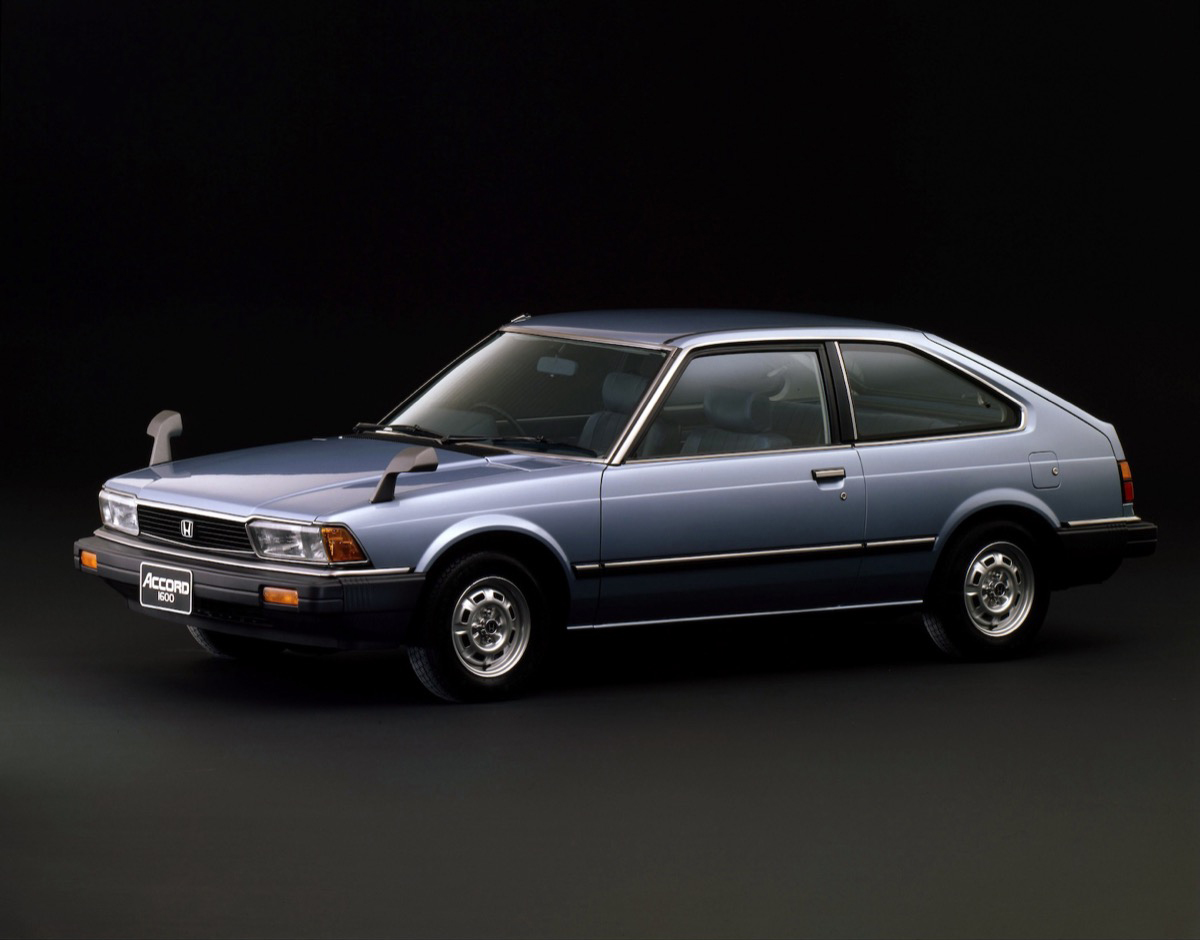
This year marks the 50th anniversary of the Honda Accord, launched in May 1976. Pioneering ideas like front-wheel-drive and taking on environmental concerns with the CVCC engine, it sold 1.5 million examples in 90 countries. Expectations for were high when it came time to succeed it. In typical Honda fashion, it offered comforts and technologies typically reserved for models far pricier segments — or in the case of world’s first in-car navigation system — not available at all.


Like its predecessor, the second-generation Accord came in both three-door hatchback and four-door sedan body styles. Design-wise, it took the basic form of the first generation and smoothed out the curves, radii and chrome giving way to angles and urethane. Semi-concealed wipers lent the car an upscale feel. The nose even featured quad rectangular headlights (or single-piece composite wraparound lenses in Japan), at the time considered the domain of luxury cars.


Alternative designs recently shared by Honda reveal a sporty fastback coupe with wraparound rear glass and sedans that would have pushed the premium aesthetic even further. One illustration (bottom right) looks more like a preview of the third-generation Accord, showing just how far ahead designers were already thinking.
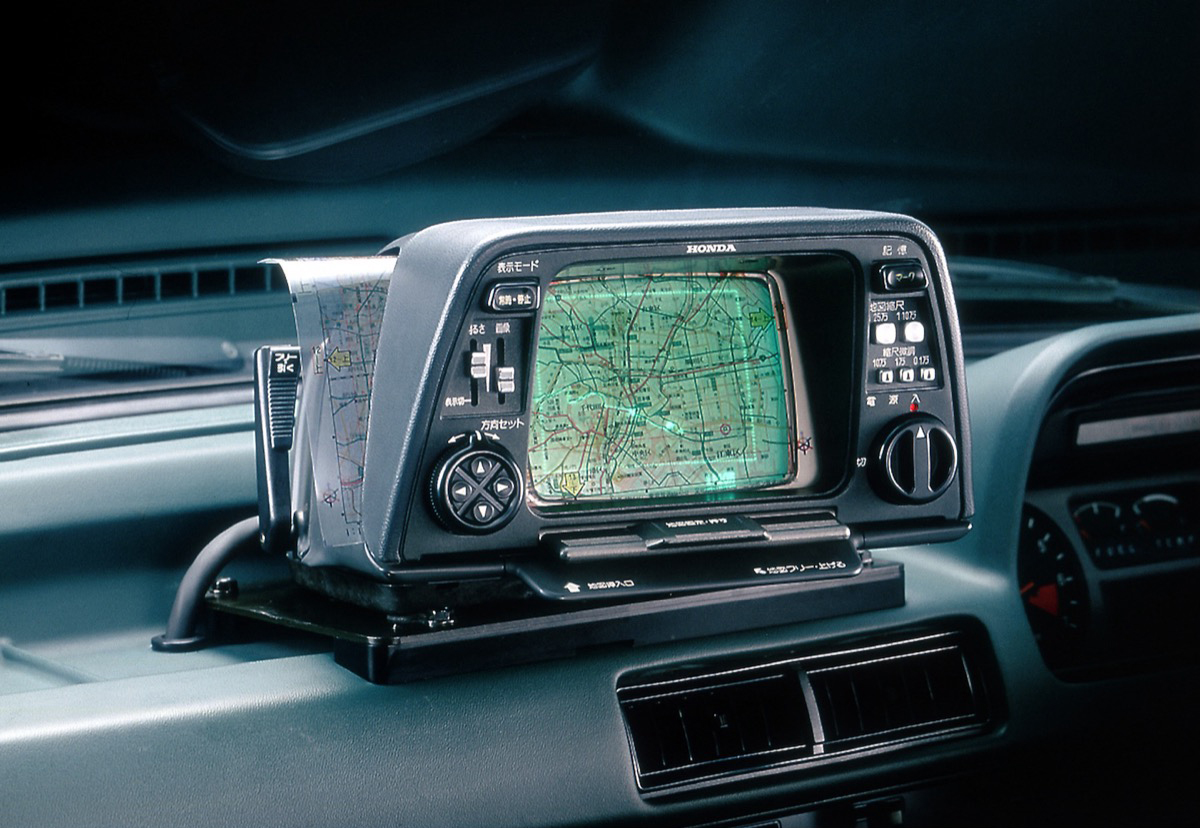
Speaking of thinking ahead, the second-gen Accord’s flagship technology was the Honda Electro Gyrocator, a first-of-its-kind real-time positioning map available as an option in Japan. We covered its operation way back in 2007, but in short it used a helium gas gyroscope to detect changes in direction. The driver overlaid a transparent map of the city — the car came with a book full of them — on a CRT to follow along. If they reached the end of the map, they’d have to physically swap in the next page.
Unfortunately, the option cost as much as one-quarter of the car’s list price. In 2017, the Honda Electro Gyrocator was recognized by the Institute of Electrical and Electronics Engineers as an IEEE Milestone for its contribution toward navigation systems.
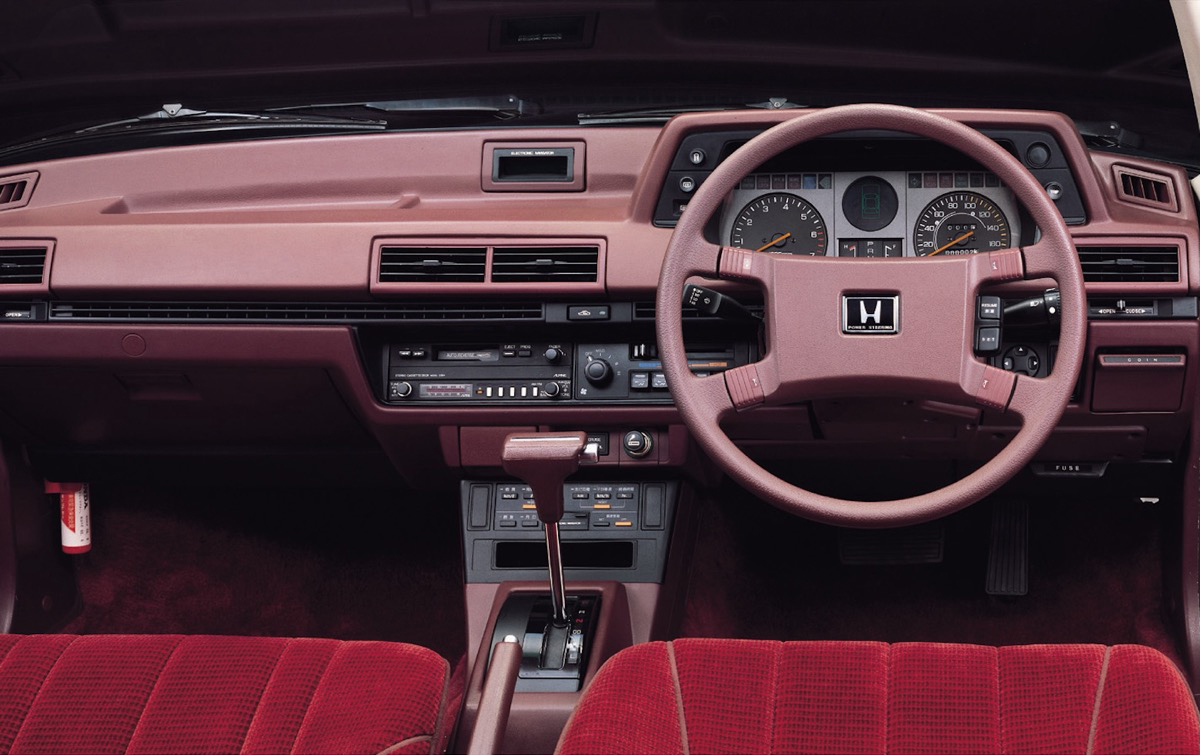
The Electro Gyrocator may have been the most showstopping technology, but it was far from the Accord’s only innovation. One of the car’s engineering philosophies was that simply replacing mechanical functions with electronic ones wasn’t enough. Honda wanted specifically to include technologies not found in other cars.
As such, the Accord also featured Japan’s first four-wheel auto-leveling suspension with two ride heights. The electronically controlled system used sensors to detect changes in load and used air springs to automatically level out any discrepancies. The driver could also manually raise the ride height by 30mm (1.2 inches) for off-road or snowy conditions.


The Accord was also the first car in Japan to have cruise control standard across all trim levels (In the US, it was only on top LX trims). Steering wheel-mounted buttons made its use as simple as ever. And while on the subject of steering, the Accord also featured speed-sensitive variable power steering using a torsion bar within the steering shaft. It made the steering light and quick at low speeds, and more responsive and smoother at high speeds. Starting in 1983, Honda even offered ABS on some Accord trim levels in Japan using the much more sensible acronym ALB (anti-lock brakes).


Last but not least, there was one more pioneering innovation that the second-gen Accord could lay claim to: it was the first Japanese car to be built in the United States. Other Japanese automakers had been skeptical of building cars in the States, citing concerns with labor quality, union relations, and supply chain reliability.
Striking out alone, Honda brought Japanese manufacturing practices like just-in-time inventory and rolling model changes to the US. They did away with the adversarial relationship between management and line workers, dressing everyone in the same white uniforms and allowing anyone on the floor to stop the line and suggest improvements. In the process, they upgraded US supply chains and taught lean production to local parts makers, transforming the US auto industry and prompting Nissan, Toyota, and Subaru to follow.
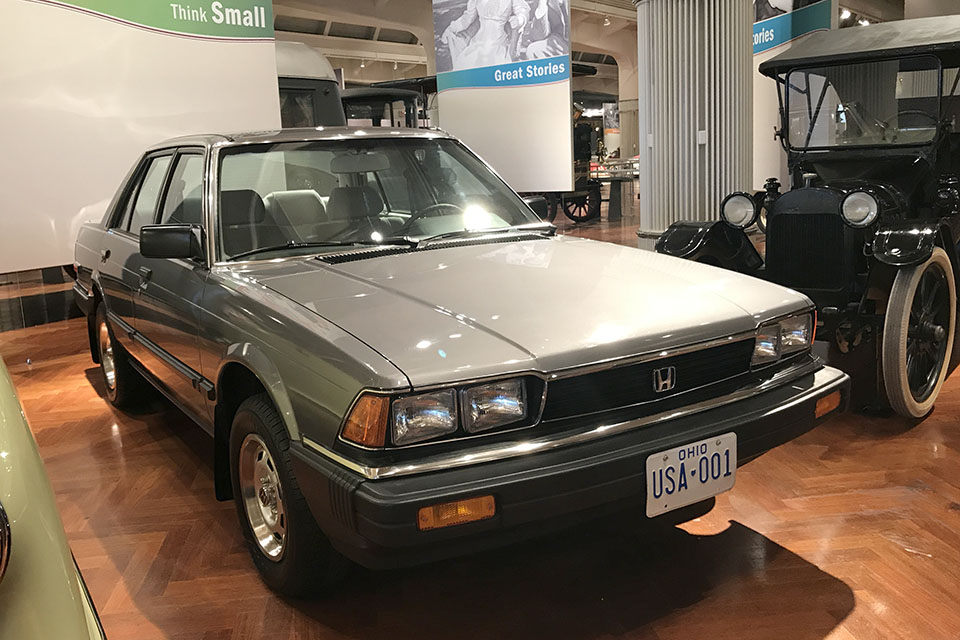
Production began at Honda’s $250 million plant in Marysville, Ohio on November 1, 1982. Honda’s establishment of a US manufacturing hub cemented its reputation in North America and endeared the Accord to millions. The first US-made Accord is still displayed at the Henry Ford museum in Dearborn, Michigan.
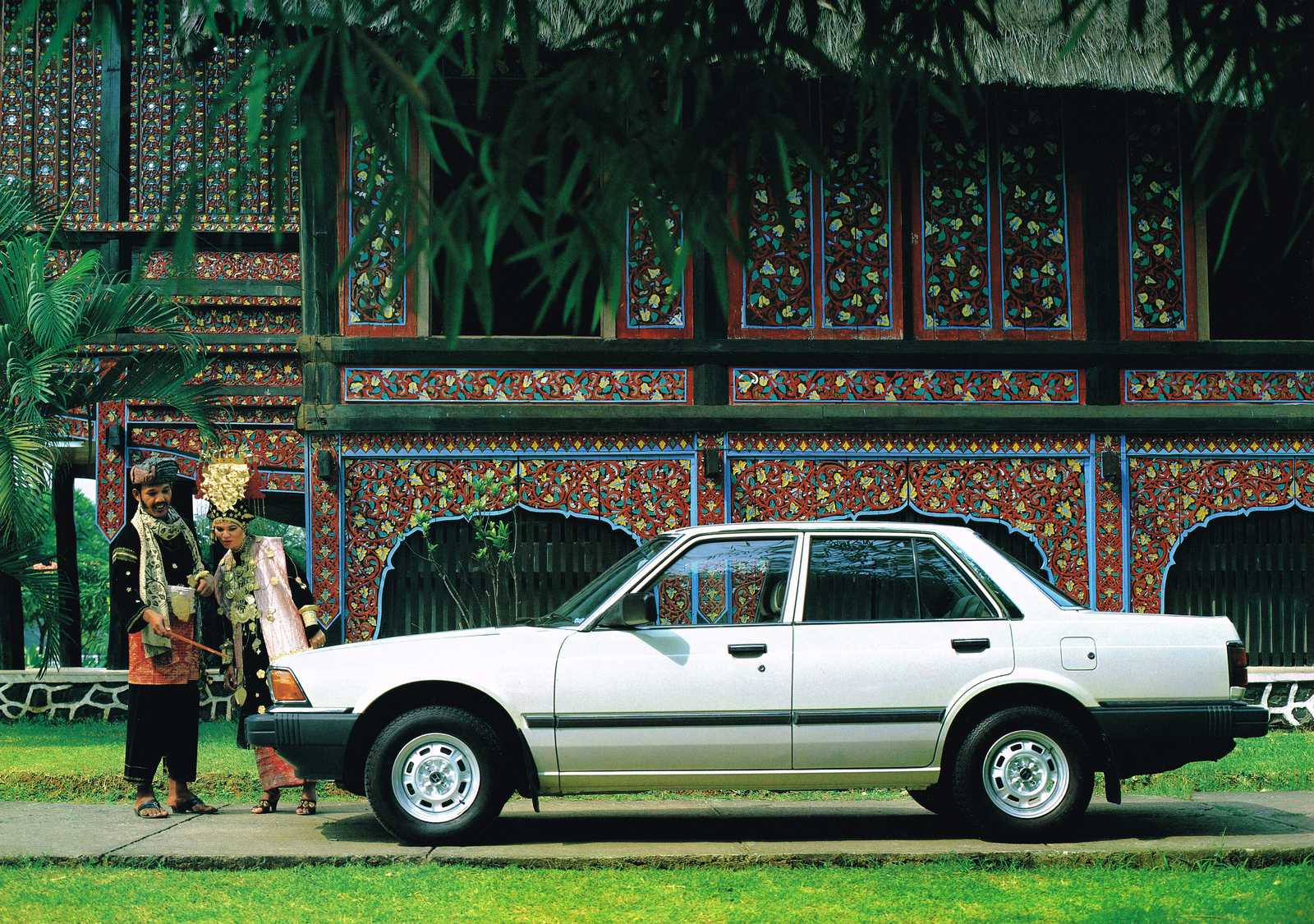
The second-generation Accord is often overlooked in discussions of classic Hondas, but it was an indispensable step in the brand’s growth. Far from being a conservative iteration on a winning formula, it pushed the boundaries of automotive technology and permanently altered the landscape of modern global manufacturing. Half a century after the Accord name was born, it serves as a reminder of how a mainstream family car can quietly alter the course of automotive history.
Images courtesy of Honda.

What a great-looking car. Three-box design always looks handsome, even if at the expense of some aerodynamics. I refined my stick shift skills on my friend’s 1985 Accord during college. His had a cracked cylinder head that ran on 3.5 cylinders, but he kept driving it and it took a long while before the care ultimately went down. Regular trips from Oakland to UC Davis, impromptu trips to SF and Stanford and UCSC, the car was fun to just cruise around in with windows down and big greenhouse.