

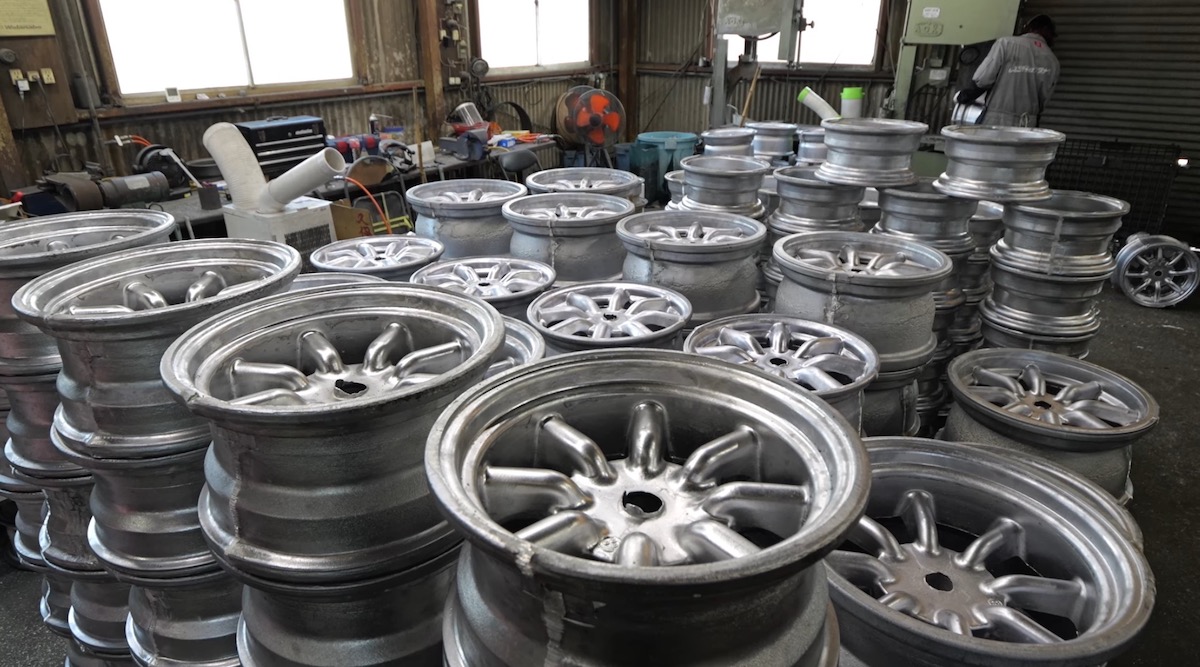
Despite being one of the most recognizable wheels on the planet, the RS-Watanabe 8-spoke is born into the world in a surprisingly low-volume, old school process. They’re made in the traditional way, mostly manually with barely any electronics and not a single assembly line in sight. Watching the Racing Service Watanabe craftsmen conjure wheels from nothing but raw aluminum is akin to watching a master sculptor create a work of art.
A nearly hour-long video by Japanese Industry Process shows in detail how RS Watanabe wheels are produced. Raw aluminum ingots are heated in a furnace, workers use long ladles to scoop up the molten metal and hand-pour it by hand into a mold.
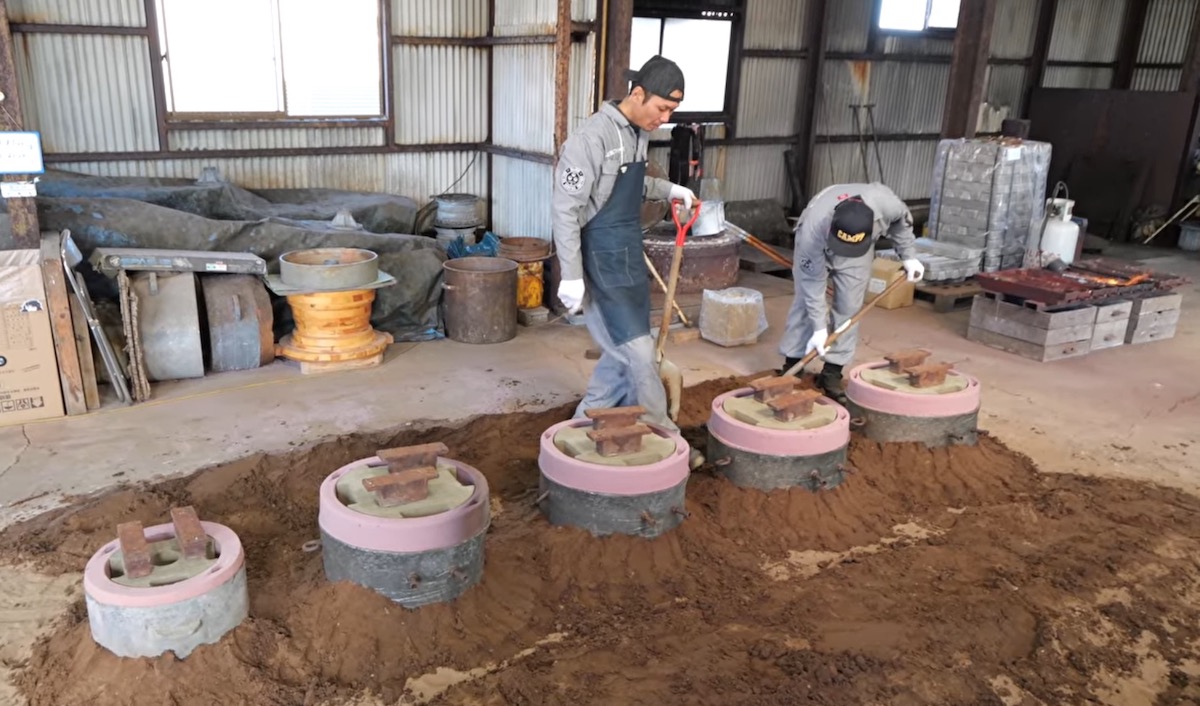
More common sizes are squeeze cast, while lower-volume or custom offsets use an even more labor-intensive sand casting process. Each sand mold can only be used once and then must be destroyed to get the wheel out. To maintain proper temperature and to prevent liquid magnesium from leaking out, the molds are buried in sand on the workshop floor resembling a line of sake barrels.
The wheels that emerge emerge from either casting process are still far from finished. The flashings must be hammered and sawed off. Rough edges and small imperfections are sanded, TIG welded, or Dremeled. If the imperfections are too big, the entire wheel is tossed back into the furnace, melted down, and the process starts again.
If the wheels are magnesium, there’s yet more work involved, as raw magnesium reacts violently if it comes into contact with steam. Workers must ensure there’s no moisture at all, taking extra care to dry the molds and coat their ladles so that even airborne water does not affect the material.
After casting, wheels must then go through a hardening process where they are baked at high temps and rapidly cooled with water. The wheels are then cured before another hardening step takes place the next day.
It is only then that the first computer is seen, used to machine the wheels if such a surface is required. Boring the center is still done with an uncomputerized hand-crank lathe with 10-micron precision. The worker who drills the lug holes has been working there for 30 years with the same equipment, and does the final deburring by sitting on a piece of cardboard on the floor. Finally, wheels are cleaned, powdercoated, and baked in a kiln to get that iconic gunmetal (or gold, or silver) finish.
A single wheel can take several days to complete and the shop processes 20 to 30 wheels a day. It’s no wonder the waiting list can extend up to two years. The amount of labor put into each one is absolutely jaw-dropping, a fascinating mix manual and mechanical. Some wheel companies pride themselves on the latest and greatest technology, necessary in certain applications. With RS-Watanabe, there’s a charm about the decidedly old-fashioned methods it employs and the soul they imbue into each wheel.




I’m glad I gave this a watch. I ignored the video the first few times it popped up in my feed because I’ve seen a few RS-Watanabe factory videos already. This shows the sand and metal casting process in great detail, however. Really wish they would bring back their old Mag colour, though. I’ve spent nearly a decade trying to track down 2 more aluminum 8-Spoke R-Type R15-85 -6 114.3/4 wheels in the old Mag colour!
i have to admit i watched this one more than once…