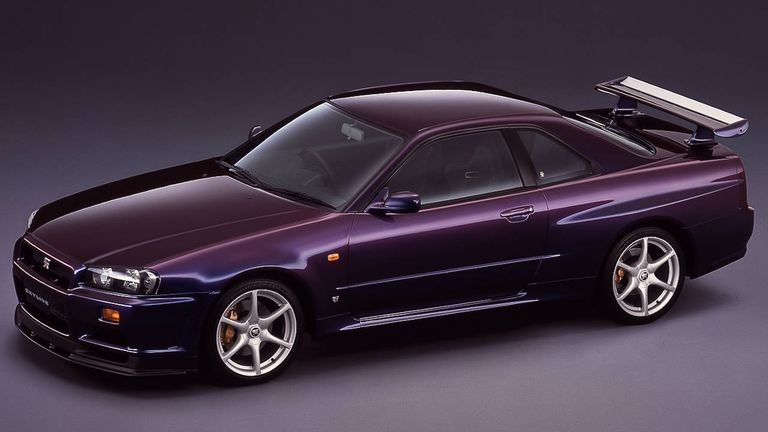
Today, November 16, is Good Color Day in Japan. As with many of these occasions, the date is a pun because the date can be read in Japanese as “ii” (11) and “iro” (16), which means “good color”. There have been countless eye-catching colors on Japanese cars that it’s impossible to pick a favorite. There’s timeless Nissan Safari Gold, iconic Honda Championship White, stunning Toyota Royal Sapphire Pearl, elegant Mazda Soul Red Crystal, and so many more. If I could, I’d paint my house in the Skyline GT-R’s Midnight Purple III. No, wait, Honda Rio Yellow. Or perhaps Lexus Platinum Metallic. It’s just too hard to choose.
What is the best Japanese car color of all time?
The most entertaining comment by next week will receive a prize. Scroll down to see the winner of last week’s QotW, “What misused automotive term drives you crazy?“.

This question received a lot of passionate responses, showing just how many automotive misnomers are floating around out there.
For starters, Aaron Cake takes issue with “crank” when people actually mean “start”. There’s also Kyuusha Corner‘s pick of “dampeners” which makes sense because the purpose of your suspension is not to make the car moist. Taylor C. pointed out that marketing tires as “all-season” is just plain dangerous. Jonathan P. dislikes the ubiquitous use of “crossover” and GS disputes the use of “longroof” to mean wagon.
Are we running out of words? Because the modern age has co-opted words and applied entirely different meanings. Negishi no Keibajo calls out Tesla’s Autopilot, while Ian G. takes exception to Porsche’s use of “Turbo” on electric cars. steve has misgivings about the word “technology” altogether, and Ben E points out that “standard” transmissions are no longer the standard.
From the world of slang Joe Musashi has a bone to pick with the phrase “clapped out” to mean a hooptie, Land Ark has a bone to pick with the word “whip” to describe a car, and Rotor Nutcase calls out “rims” as a term that refuses to die. Alan objects to British-isms like “piece of kit” and the two-syllable pronunciation of coupe.
It should come as no surprise that quite a few fury-inducing terms apply to Japanese cars specifically. Jeff Koch takes the “Mark IV” Supra descriptor even further, calling out those who read out the letters as “em kay four”. streetspirit‘s takes issue, and rightfully so, with applying “JDM” to VWs and other non-Japanese cars that are modified a particular way. TheJWT laments everything said in the west about kaido racers and the fact that any small Japanese car is automatically a “kei” car. Finally, Michael Moore balks at the offside/nearside descriptors, admittedly something that we’ve never heard of as it seems to be an Australian thing.
Speaking of which, the winner this week is Styles, who has a bone to pick with the “DM” suffix:
The use of “#DM” e.g. USDM, when describing a car’s original market specification.
A Toyota or Honda that’s Japanese-market spec, JDM – absolutely. An Australian specification S15? No, it’s not “AuDM”. It’s just Australian or Export Market.
The key is in the D – Domestic. Japanese brand, Japanese spec, JDM.
You could argue perhaps that a Chevrolet Camaro is USDM, likewise a Ford Falcon in Australia could be an AuDM. But let’s not talk about these things here.
Omedetou, your comment has earned you a set of decals from the JNC Shop!