

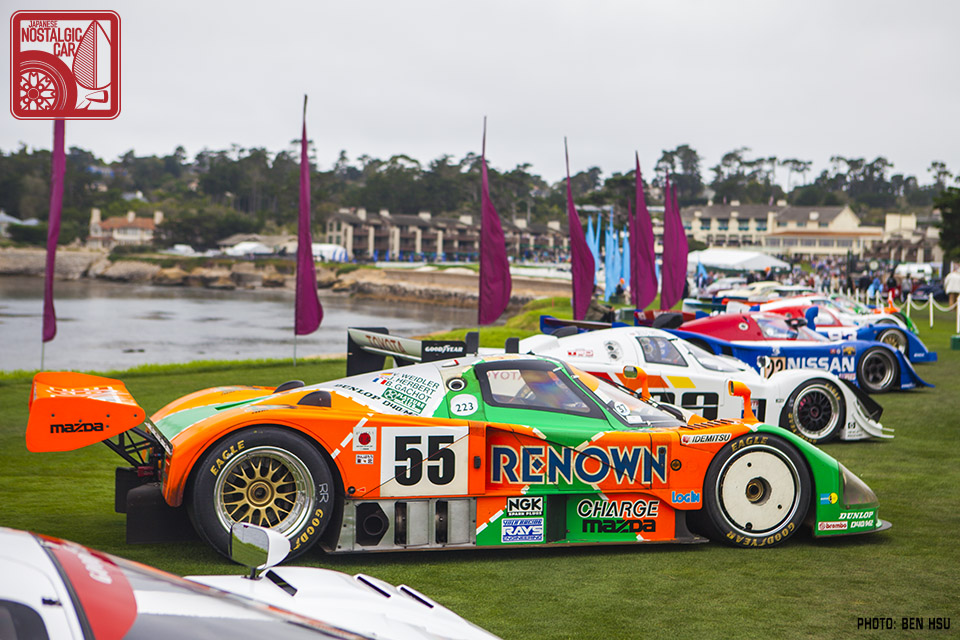
The Pebble Beach Concours d’Elegance that marks the grand finale of Monterey Car Week has long held the title of most prestigious car show in the world. Winning Best of Show is the highest and most coveted honor a car can receive, proof that it has passed the rigorous judging of its historical accuracy, technical merit, and quality of restoration. A win fundamentally reshapes the global valuation of a vehicle. Since its founding in 1950, it has never had a class for Japanese cars, until now.
Along with its prestige the show has gotten a bit of a reputation for catering to the crustiest of the upper crust, a carefully curated social scene for ultra-high-net-worth individuals. The top prize typically goes to multi-million-dollar Hispano-Suizas, Voisins, Duesenbergs, Delages and maybe even a few marques average people can actually pronounce.
In 2014 a controversy erupted when Microsoft executive Jon Shirley’s Best in Show Ferrari 375 MM Scaglietti Coupé took Best in Show. Despite the Prancing Horse’s popularity and illustrious racing history, a Ferrari had never won the top accolade in the event’s then-65-year history (nor has another since). The scandalous offense, naysayers claimed, was due to the fact that Shirley’s impeccable 1954 Ferrari was built in — gasp — the post-war era.
Prior to this year, the only Japanese passenger car to be shown on the Pebble Beach lawn had been the Toyota 2000GT, and that was back when they were still relatively new. When the Honda HP-X was selected to be part of a Wedge-Shaped Concept Cars and Prototypes class in 2024, it was the first Japanese car to be invited in over 50 years.
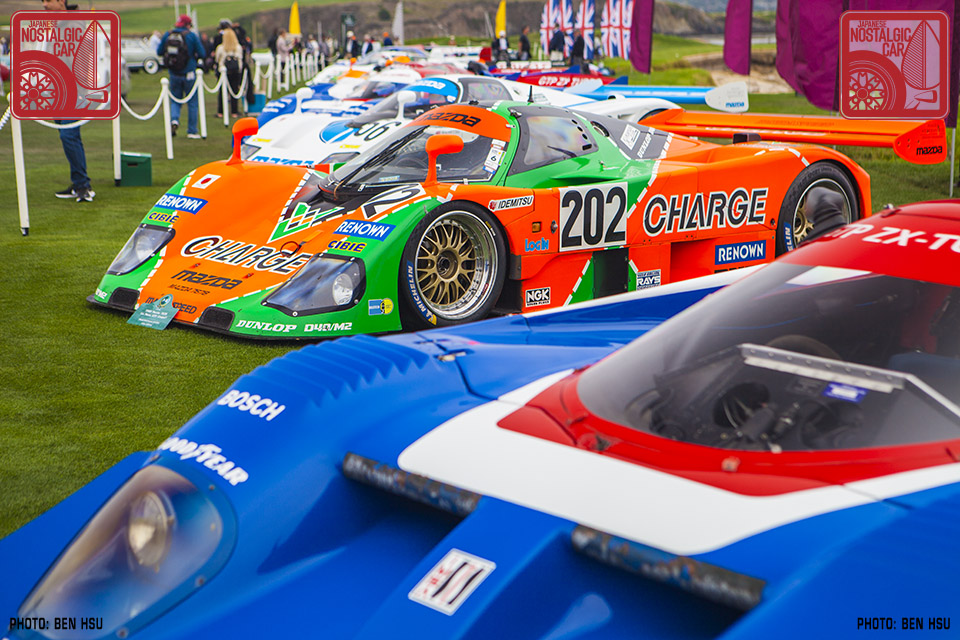
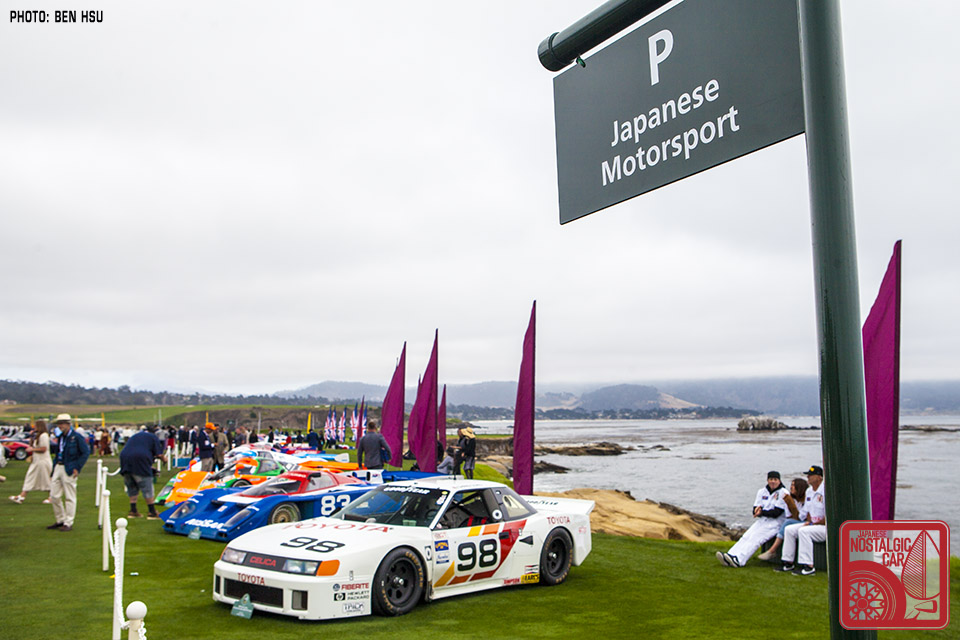
Therefore, to now have an entire class devoted to Japanese racing cars represents a monumental shift in the culture. Witnessing such wondrous machines on the shores of Pebble Beach, some of which traveled from the other side of the globe, felt transcendent. Here are the cars that had the honor of being part of the first class of Japanese cars at the Pebble Beach Concours d’Elegance.
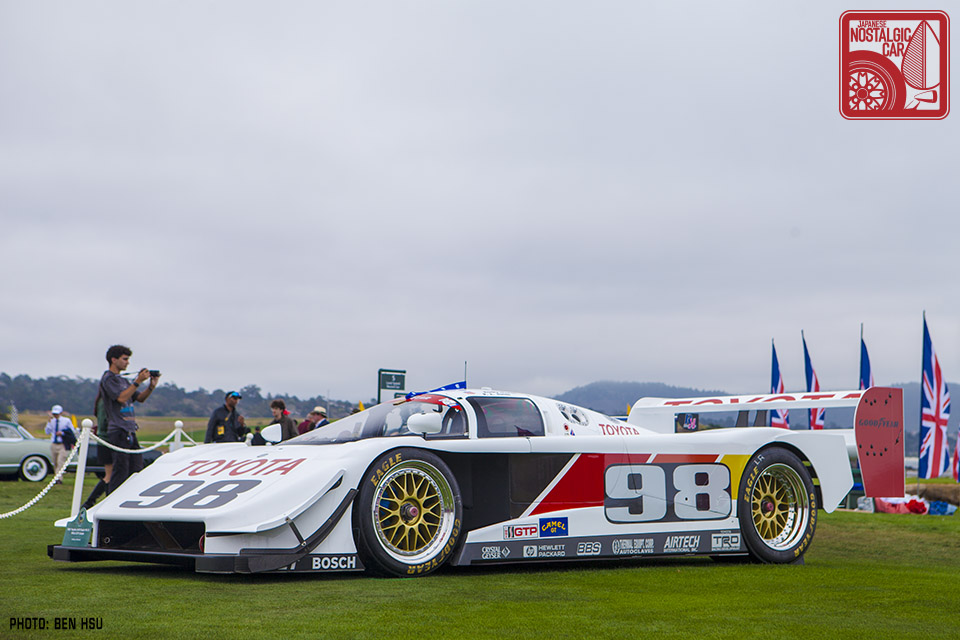
The Toyota AAR Eagle MkIII dominated the IMSA GTP division so completely from 1991-93 that it essentially ended the class. It won 21 of the 27 races it competed in over that three-year span, including a commanding streak of 14 consecutive victories. Along the way, it took first in both the 12 Hours of Sebring and the 24 Hours of Daytona.
Developed by Dan Gurney’s All-American Racers, its carbon fiber monocoque construction by engineer John Ward tipped the scales at just over 1800 pounds but was strong enough to withstand a crushing 7220 pounds downforce. Aerodynamicist Hiro Fujimori shaped a dual-element rear wing and integrated front diffuser that gave the MkIII the ability to hug the tarmac at four times its own weight at 200 mph — though driver Juan Manuel Fangio II claimed that it felt more like 10,000 pounds.
By 1993 major rivals like Nissan and Jaguar pulled out of GTP due to the Eagle MkIII’s supremacy on the track. Andy McIntosh’s 1991 Eagle MkIII chassis No.002, while was not as decorated as its sister cars, remains part of its legacy.

If the Eagle MkIII was the culmination of Toyota’s North American racing efforts, the Celica IMSA GTO coupe represents its foundation. In 1986 Toyota and AAR sent the Celica into battle against V8 machines from Ford and GM. Like most GTO machines, the Celica only vaguely resembled its street-legal counterpart. The skin was built on a tube-frame chassis and powered by Toyota’s 2.1-liter turbocharged 4T-GTE, which made 450 to 600 horsepower.
Nick Price’s chassis 86T-003 is one of three built and was once owned by Chris Cord, the driver that clinched the 1987 season for AAR and Toyota. Winning four races including a season closer determined by half a car-length, the Celica narrowly beat out the Chevrolet Corvette in points and secured the manufacturer’s title for Toyota and the drivers’ title for Cord. Having proven the turbo four against the V8 competition, AAR moved on to the top GTP class that ultimately led to the Eagle MkIII.
As a side note, Cord was the grandson of E.L. Cord, founder of the Cord automobile company, whose pre-war machines are no strangers to Pebble Beach.

In 1984, to promote the Nissan brand’s transition away from Datsun, the company entered the top tier of IMSA racing with its GTP program. At the time the Porsche 962 was unbeatable, but despite being underfunded John Knepp and Don Devendorf’s Electramotive Racing, which had seen success in the GTU and GTO classes with its Z-cars, chipped away at Porsche’s position with incremental improvements.
In 1988 Nissan turned the tide with an all-new GTP ZX-Turbo designed by ex-Boeing missile engineer Trevor Harris and aerodynamicist Yoshi Suzuka. It utilized a carbon-fiber monocoque chassis powered by twin-turbo VG30 V6 engine derived from the Z31 300ZX road car pumping out 850 to 1000 horsepower.


Though named the GTP ZX-Turbo to advertise the Z31, the team nicknamed this car, chassis 88-01, “Elvis” because it was “the king” of the 1988 season. It put an end to the era of Porsche dominance, with drivers Geoff Brabham and John Morton winning nine races including a record-breaking streak of eight consecutive victories. Brabham won the Drivers’ Championship, but Nissan missed the Manufacturers’ crown by a single point because it chose to skip the early endurance rounds at Daytona and Sebring.
The following year Elvis repeated its domination, securing 10 wins and both the driver and constructor championships. Along the way, it became the first Japanese car to win the 12 Hours of Sebring. It occupies a prominent place in Nissan’s collection, and was recently restored at Z-Car Garage of San Jose, California.
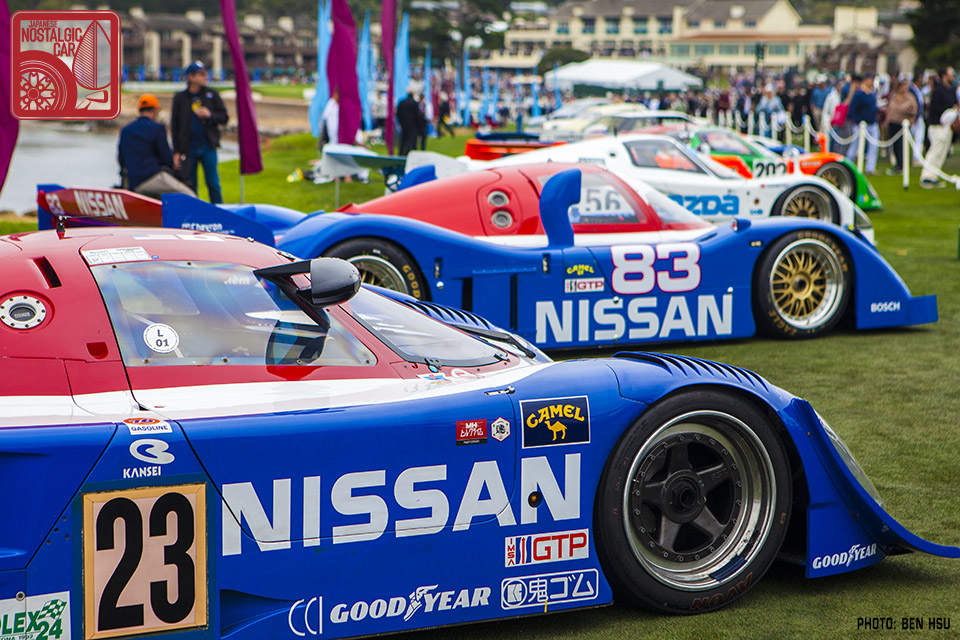
Despite its success, by the late 80s Electramotive found itself in dire financial straits. In 1989 Nissan finally decided to invest in an official works program with a massive $40 million investment into American motorsports, Nissan Performance Technology International.
The 1990 Nissan NPT-90 IMSA GTP coupe was born from the NPTI facility in Vista, California, a sprawling site with wind tunnel, composite studio, and fabrication shop. In its debut year Geoff Brabham drove the NPT-90 to claim the both the drivers’ and manufacturers’ championships. Brabham repeated the performance in 1991, including an outright victory at the 1991 Sebring 12 Hours, and for two years the Nissan dominated GTP.
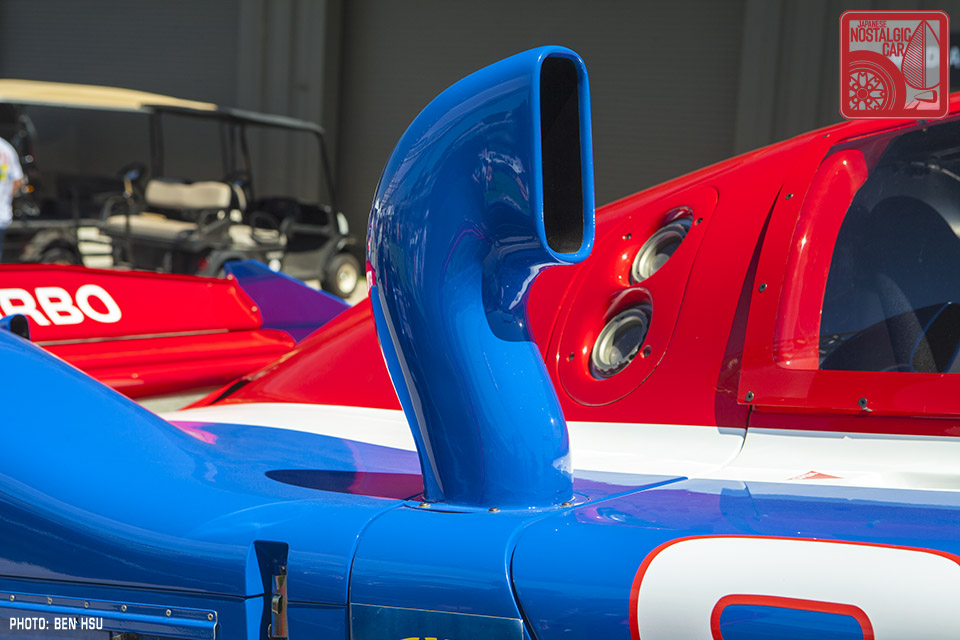
By the end of the 1991 season the aforementioned Toyota AAR Eagle MkIII had entered the fray, and would soon steal the spotlight from Nissan. The NPT-90 was slated for retirement, but its successors suffered terrible crashes in the 1992 season, so the car shown here, chassis No.90-01, was summoned for duty again. The older 90-01 fought valiantly and racked up five podium finishes that year, but the advanced Eagle MkIII ultimately dominated the field.
Only six NPT-90s were built, but Bruce Canepa’s chassis No.90-01 remains the most intact, having never suffered a crash. It claimed five 3rd-place finishes, seven 2nd-place finishes, and three 1st-place finishes, at Sears Point, Mid-Ohio, and Road America.

Meanwhile, on the other side of the globe, Nissan Motorsports in Japan was building its own prototype race cars to take on the World Sportscar Championship and the All-Japan Sports Prototype Championship. The Group C racers that emerged were developed separately from the US racing program but were just as formidable. Powered by a twin-turbo 3.5-liter V8 generating 800-horsepower, the carbon-fiber bodied R91CP made history in 1992 as the first Japanese car to win the 24 Hours of Daytona.
Driven by Kazuyoshi Hoshino, Toshio Suzuki, and Masahiro Hasemi, the car set a staggering record of 762 laps, or 2,712.72 miles, (the official Pebble Beach Concours d’Elegance guide mistakenly lists the distance as 738 laps, which was set the previous year by the Nissan R90CK). The R91CP finished nine laps ahead of the second-place Jaguar and bested Jaguar’s previous race distance record by a full lap. The Nissan was so utterly dominant that the record stood for 26 years, until 2018 when the track was altered to accommodate faster modern-day machines.


The Daytona-winning chassis No.R91CP/2 resides in Nissan’s collection in Japan. The car shown at Pebble Beach is a sister car, chassis No.R91CP/1, the first example built. Hoshino and Suzuki drove to five victories in seven races of the 1991 JSPC season, claiming both the drivers’ and constructors’ championships. Owned by Katsu Kubota, a private collector from Japan, its engine, turbos, brakes, and safety systems have been meticulously restored, but Kubota intentionally kept the body’s beautiful original patina with faded decals and battle scars.


The Mazda 767B was a crucial stepping stone in Japan’s motorsports history, laying the groundwork for Mazda’s eventual triumph at Le Mans. It was among the first of Mazda’s race cars to wear the famous orange and green Renown livery and was the first Mazda designed specifically around the 650-horsepower 13J quad-rotor engine. Only three were ever built.
At the 1989 running of the 24 Hours of Le Mans, Mazda unleashed a trio of 767Bs, numbered 201, 202, and 203. They swept the GTP class while finishing 7th, 9th, and 12th overall, respectively, ahead of many Group C cars. They also took first in the GTP class in several JSPC races that year, and the crucible of real-world testing paved the way for the historic win that would arrive two years later.
Today, the No.201 car is owned by a private collector in Japan. No.202 is owned by Mazda and underwent a restoration in 2016. Sadly, No.203 caught fire days earlier.


After the 767B came the 787, a quantum leap in technology. With a monocoque chassis with carbon composites, an all-new four-rotor engine in the R26B, and improved aerodynamics and cooling, it was Mazda’s first real assault at taking Le Mans overall. Hopes were high at the 1990 enduro, and though the 787 proved faster than the 767B, electrical failures ended its run early. That year, Mazda’s only finisher was the No.203 767B from the year prior.
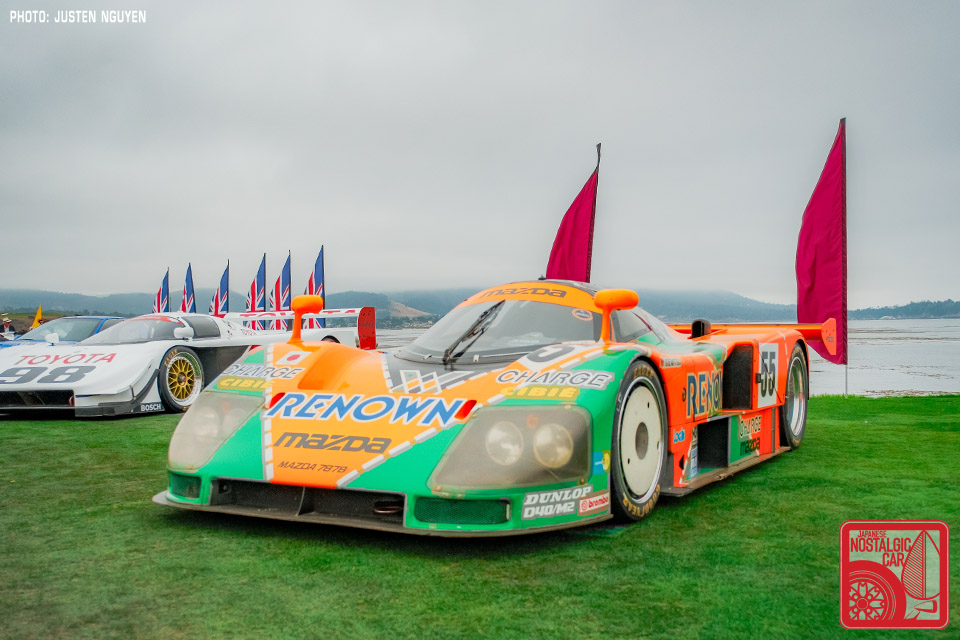
However, the lessons learned from the 787 resulted in the 787B, which claimed the ultimate win in 1991, thus becoming the first Japanese car to win the 24 Hours of Le Mans. That same year the 787, which ran alongside the winning 787B, started in 30th position on the grid but finished 8th overall and put all three Mazda entrants in the top ten.
The 787B represents more that just a single win. It was the culmination of a decades-long effort from a small car building firm in Hiroshima to challenge the world’s most grueling race.


Mazda was the only company to successfully commercialize the rotary engine despite attempts from GM, Mercedes-Benz, Citroen and others. It had been a goal of Mazda’s to prove the rotary on the world stage since entering the Marathon de la Route in 1968.
Not only did the Mazda 787B prove the engine’s prowess, but it did so in the last year it would have ever been possible. New rules would have made the rotary engine ineligible the following year. Had Mazda not won in 1991, the world may have never known the groundbreaking engine’s true might.

We do have a major nit to pick with the official Pebble Beach Concours d’Elegance guide, however. Under the 787B it reads, “The Mazda 787B secured its place in motorsport history with victory at the 1991 24 Hours of Le Mans, becoming the first — and still only — Japanese manufacturer to win the race outright.”
We think the Toyota TS050, parked just a few cars down from the victorious Mazda, might have a bone to pick with that statement. In 2018 it won the 24 Hours of Le Mans, a race that had eluded the marque for two heartbreaking decades. In doing so this car, chassis No.18-09, became the second Japanese car to place first overall at Circuit de la Sarthe.


Drivers Sébastien Buemi, Kazuki Nakajima, and Fernando Alonso crossed the finish just 16.9 seconds ahead of their sister car, chassis 17-06. Still wearing 3,285 miles’ worth of dirt and flecks of melted rubber, the TS050 looks absolutely exquisite in all its battle-worn glory. Toyota has won Le Mans five more times since.


Resplendent in its Raybrig livery, the Team Kunimitsu 1996 Honda NSX GT2 was among the first chassis to wear the iconic purplish-blue and red warpaint. Having won the GT2 class in 1995, grandfather of drifting Takahashi Kunimitsu returned to Le Mans with co-drivers Akira Iida and Kunimitsu’s even more famous protégé Keiichi “Drift King” Tsuchiya.
Though they didn’t repeat the previous year’s success, this 1996 car heroically clawed their way from the final row of the starting grid to a respectable 3rd place class finish and 16th overall. Notably, Kunimitsu went on to campaign the NSX in the All-Japan Grand Touring Car Championship, in which the Raybrig livery became a fixture. It was retired in 2020, but went out in one of the most glorious fairy endings possible.
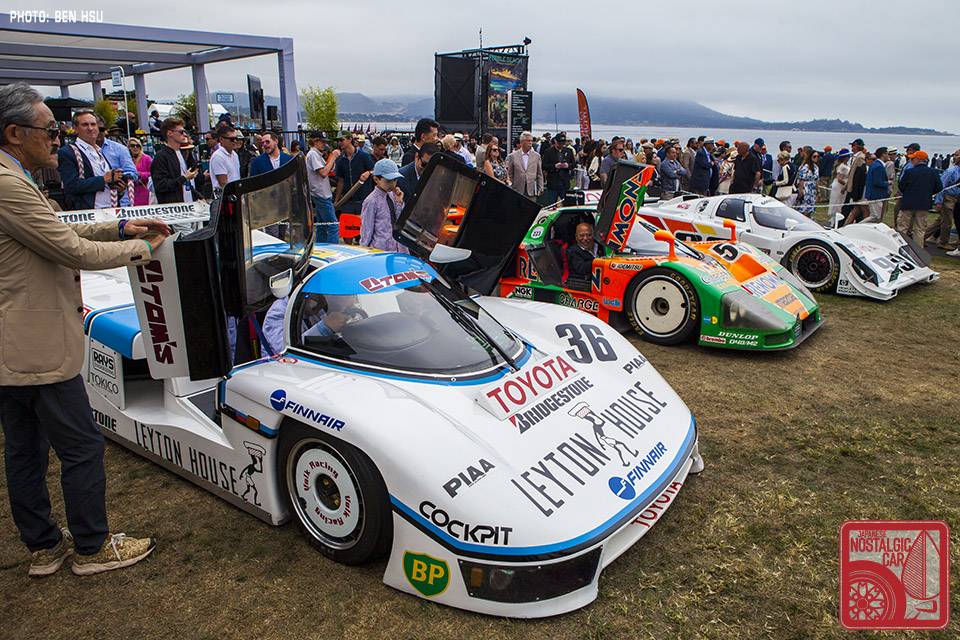
At last came time to award the first-ever Japanese class at Pebble Beach. Waiting in the queue before the ceremony were three legendary racers that never competed together in period. On this day, seeing them lined up on the 18th fairway was a sight to behold.


Manufacturer owned cars like the Mazdas, Toyota TS050, and Honda NSX weren’t entered into the concours for judging. Only privately owned cars competed for the awards. Bob Neapole’s 2010 Honda HPD ARX-01c was the first to cross the dais to claim 3rd place.
A former American Le Mans Series LMP2-class race car, the Strakka Racing ARX-01c crossed the Atlantic to compete at the actual 24 Hour of Le Mans in 2010. It won the LMP2 class and finished an impressive fifth overall. It was then restored at Honda Performance Development in the same manner as cars from the Honda Heritage Racing Program.

Taking second place was Andy McIntosh’s 1990 Toyota Eagle HF89. The aluminum honeycomb monocoque was designed by John Hopkins and Hiro Fujimori (the H and F in the name) and it was powered by an evolution of the 4T motor that powered the aforementioned Celica GTO. This chassis, number 89T004, won four rounds of the 1990 IMSA GTP season and one round of the 1991 season with Juan Manuel Fangio II behind the wheel.


After retirement it was purchased by a collector and loaned to the Museo Fangio in Argentina. Though well preserved, its static state meant it required a thorough refurbishment to be track-ready. In 2015, it was sold and subsequently underwent an $800,000, 3500-hour restoration at Canepa to allow it to run again.
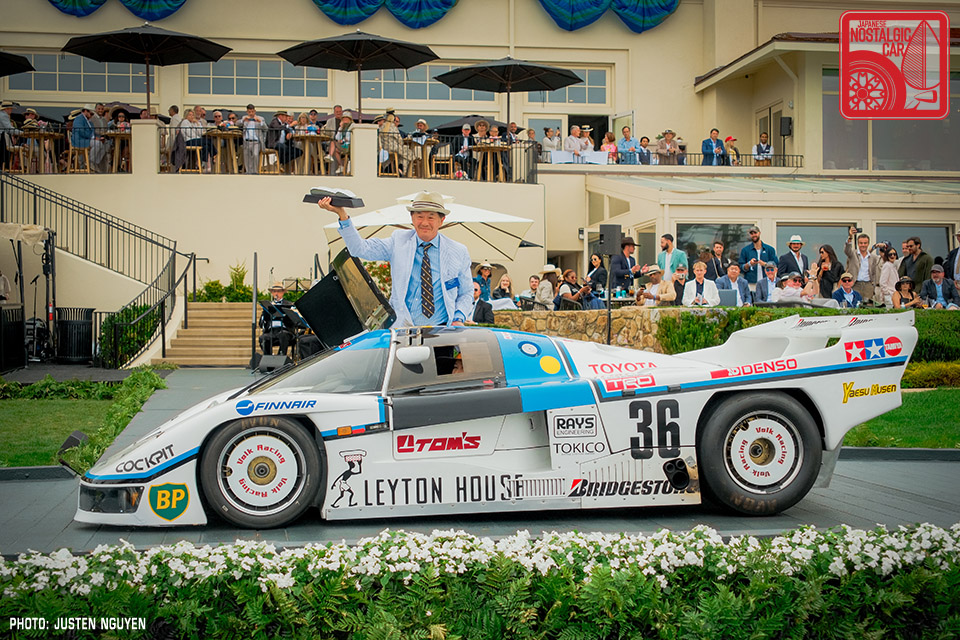
Taking first place was Hisashi Kunie’s Toyota 85C-L “Longtail”, which he had shipped from Japan. It was a historic moment: the first time a Japanese car has won Best in Class at this esteemed institution.
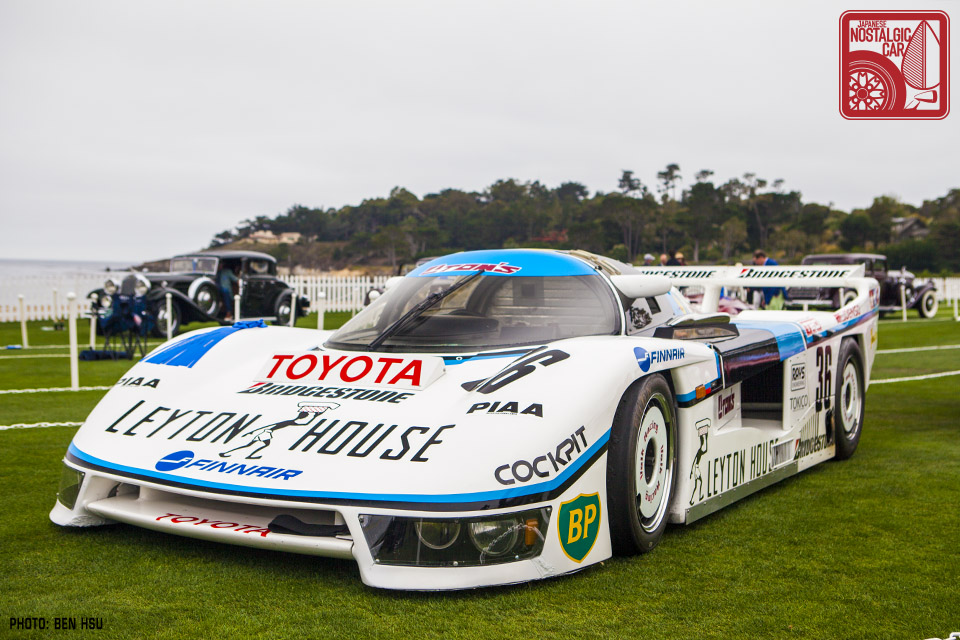
The Toyota 85C-L chassis No.001 represents a milestone in Japan’s Le Mans efforts as the first Toyota to compete in the 24-hour enduro. Though the official Pebble Beach Concours d’Elegance guide book states that this was the first Japanese car to finish Le Mans, that’s incorrect. That honor would go to a privateer Datsun 240Z that completed the 1975 running.
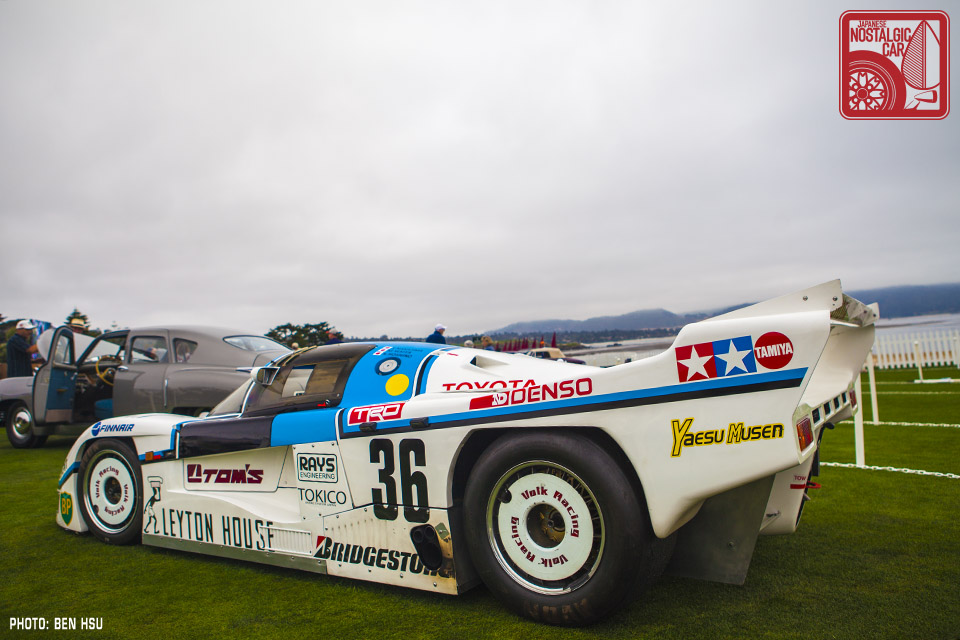
Constructed by Dome (of Zero fame) and TOM’s, it finished a respectable 12th in its inaugural Le Mans in 1985, kicking off a dynasty in Toyota endurance racing. Its three drivers were all Japanese legends: Masanori Sekiya, Kaoru Hoshino, and notably Satoru Nakajima, whose son Kazuki was born that same year and who would go on to pilot the Toyota TS050 when it won Le Mans in 2018.
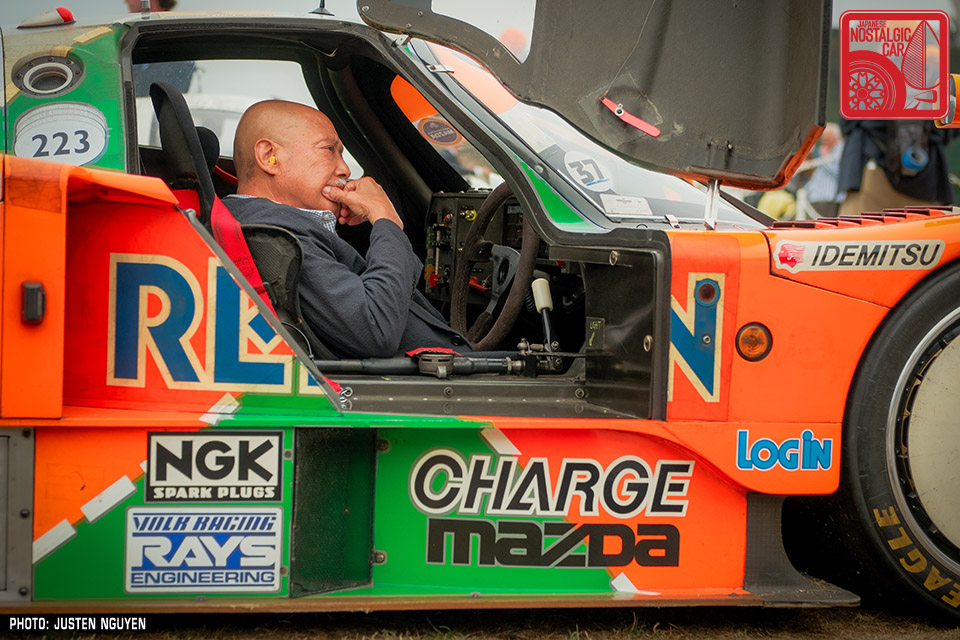
Though not technically eligible for an award, the event organizers allowed the Mazda 787B to drive onto the award stage. Behind the wheel was none other than Yojiro Terada, the legendary Mazda works driver who logged four class wins at Le Mans.
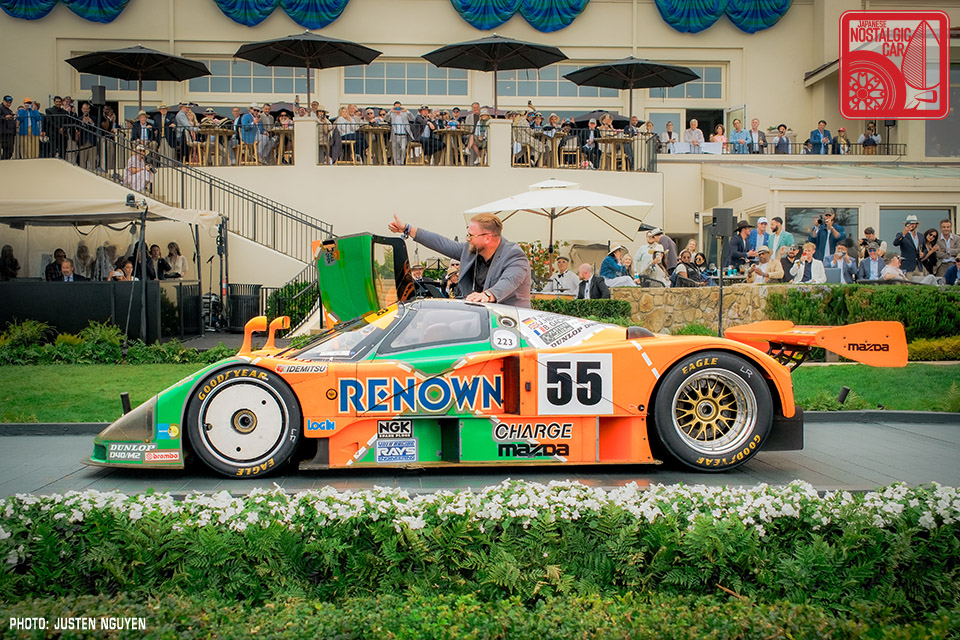
The celebration, however, was marred by the emcee, who made two glaring errors when announcing the car’s approach. He said it was the first (not true, see above regarding the 85C) and only (again, see the Toyota TS050) Japanese car to finish Le Mans.
The R26B four-rotor still emits one of the most otherworldly notes in motorsports, and Terada-san gave the 787B several good revs. It was a momentous occasion to have No.55 before the famed Lodge at Pebble Beach shaking the eardrums of the ascot- and sunhat-wearing attendees.
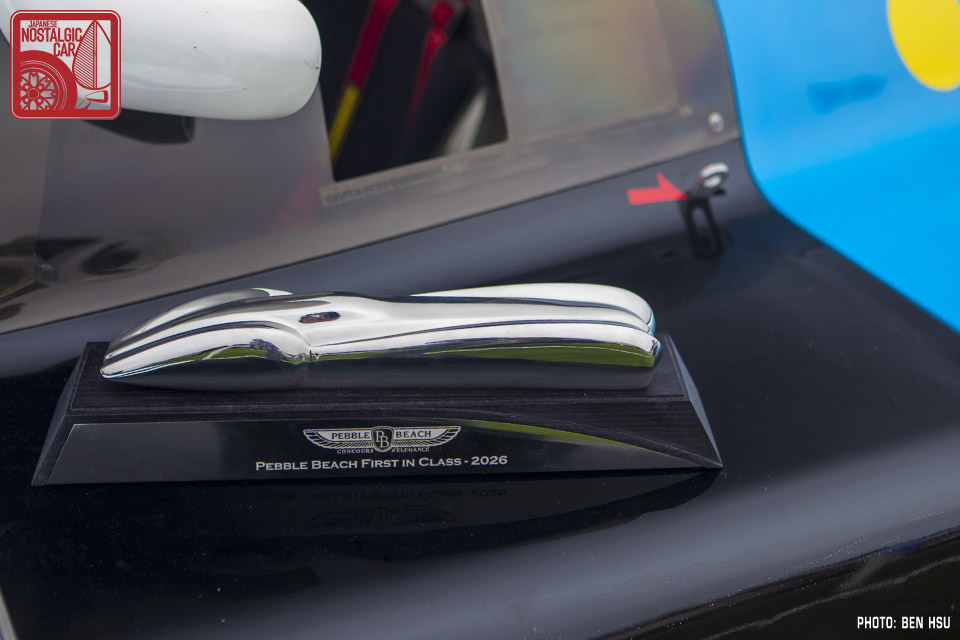
For observers who have long championed the merits of Japanese cars, it felt like a crowning moment. The recognition of these storied machines represent the shattering of boundaries. For decades, the Pebble Beach Concours d’Elegance has been a bastion of European royalty and American Gilded Age industrial wealth. The presence of these Japanese racing wedges on the 18th fairway felt like a seismic shift in the culture of the world’s most prestigious car show, now expanded to validate what enthusiasts have known for a generation. We simultaneously can’t believe how long it has taken, and how it also feels much sooner than expected.
That Lola based Nissan GTP is the most aesthetically pleasing and bad ass of any GTP car. So low wide and fast. My favorite, however with all of these cars at a golf course, there is just so much to choose. Each manufacturer had royalty on offer, and these 80’s-90’s classics put that nasty TS050 to shame.
I may also add, that that golf course is not worthy of these RACING cars on the putting greens.These cars were meant to compete in a binary manner, not in a color and trim contest held by crusty old farts.
I think they did race, or at least run the track, at Laguna Seca earlier in the week.
While I love that the Pebble Beach Concourse exists, I also hate it for being so elitist. Case in point is the description of the 787B. If it had been a prewar classic you would still be hearing the reverberating complaints.