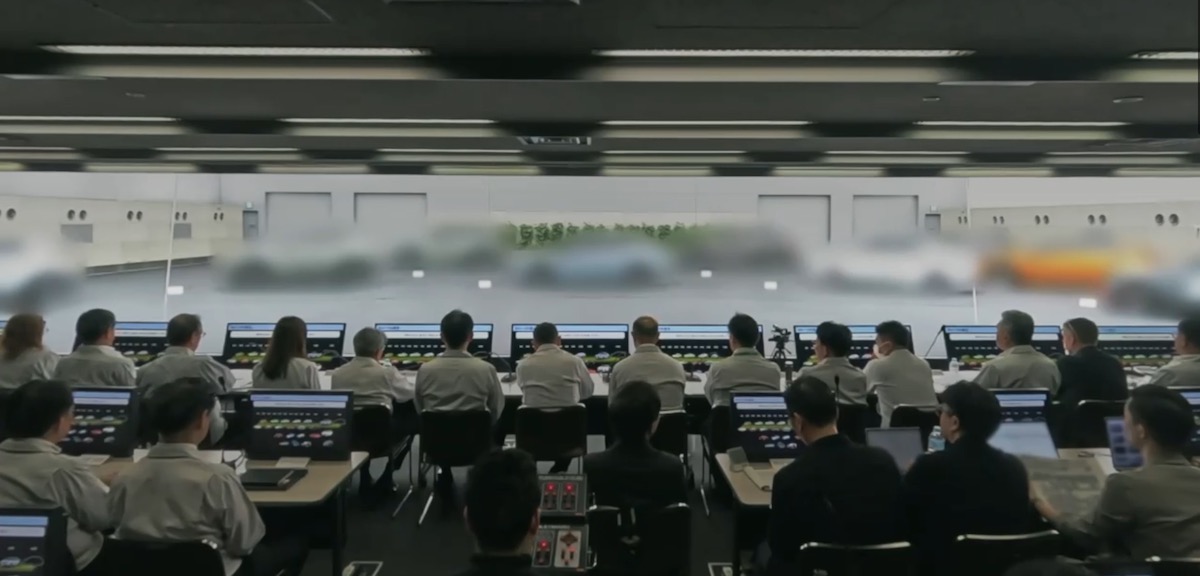
NHK has released a documentary that takes an unprecedented look inside the world’s top carmaker as it navigates an industry-wide existential crisis. Cameras go behind the scenes at the company’s technical center in Toyota City and the Design Dome (above), a highly secretive studio where the fate of future vehicles are greenlit for production or brutally rejected. It’s a behind-the-scenes peek into Toyota’s planning process rarely seen by anyone outside the company.
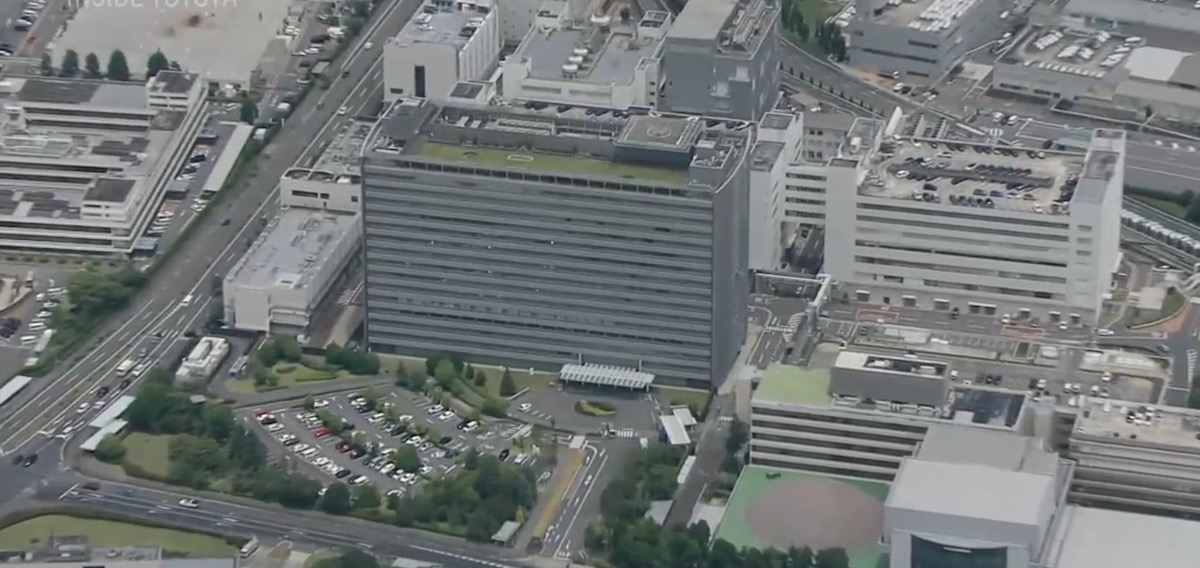
“Inside Toyota: Behind the Scenes of a Transformation” follows the engineers responsible for the development of the next Corolla sedan. With 2 million units sold each year and 60 years of heritage, it’s the backbone of Toyota’s lineup and a high-profile model that represents the Toyota brand. The stakes are high, and there are 400 people assigned to the project, named the “Z Team” internally.
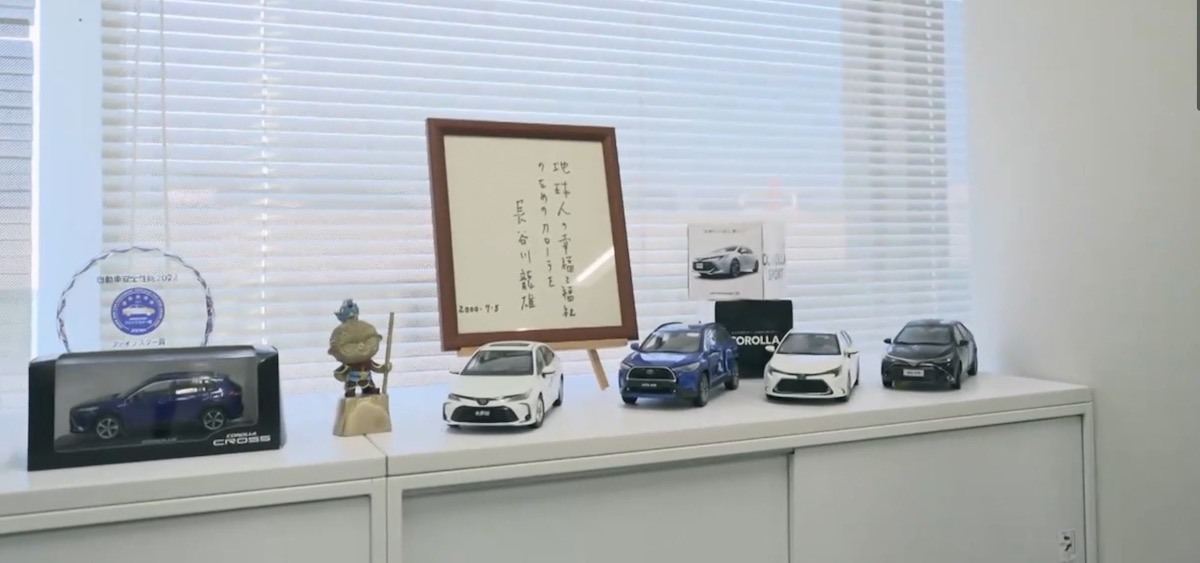
In their corner of the office, the Z Team works beneath a framed note written by Tatsuo Hasegawa, the chief engineer of not just the original 1966 Corolla, but the Sports 800, Publica, first-gen Celica and Carina, and more. It reads: “For the happiness and well-being of humanity: the Corolla.”
“If we just make an ordinary sedan, I don’t think the Corolla will survive,” says Takakazu Fukuoka, one of the Corolla’s engineers. Toyota is feeling the pressure from competitors. Chinese newcomers like BYD debut new generations every two years and never stop working. They operate three 8-hour shifts, not one, so that development can forge ahead 24 hours a day.
Additionally, the sedan market is shrinking, and surveys regarding industry trends towards electrification have proven unreliable. The Corolla must be a hit and there’s less time than ever to create its 30,000 parts, and each one has to be tweaked down to the proper tenth of a millimeter to work with the other 29,999.
As if that wasn’t challenging enough, the 13th-generation Corolla must ride on an all-new platform. The modular underpinnings are incredibly expensive to develop and have a lifespan of about 10 years, so decisions made today will affect models not yet created.
The call is made to develop the body and platform simultaneously, something Toyota has never done before. To temper the instability in the electric vehicle market, the Corolla will have four vastly different powertrains available, combustion-only, hybrid, PHEV, and full EV. The team is in uncharted territory, but survival is on the line.
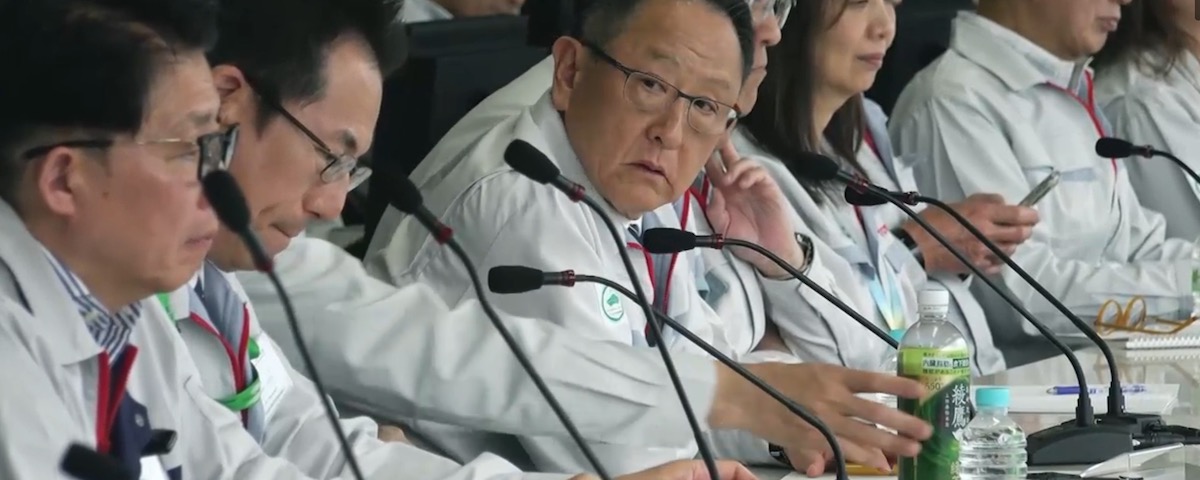
Finally, the moment of truth. The multiple Corolla variants are placed inside the Design Dome. Completed in 1966, almost every car from the Crown to the Celica was born at the facility. It replicates natural lighting from any angle while executives evaluate its production worthiness from stadium seating rows of desks that resemble a NASA control room. Despite some tough questions from Akio Toyoda, the Corolla passes.
The documentary also spotlights Akio Toyoda’s management style and his emphasis on driving feel. When he took the reins in 2009, he took the radical step of eradicating targets. Saddled with the pressure of living up to the founding family’s name, Toyoda barely survived the US unintended acceleration scandal that took place right after he took office. The conclusion was that his predecessor had let pursuit of market share take precedence over Toyota’s legendary quality.
So Akio Toyoda did away with targets, unsettling his troops. “If I give target numbers, people will do anything to hit them,” Toyoda explained. “Then things go completely off track.” Instead, Toyoda vowed to build ever better cars. To him, that meant making cars less boring.
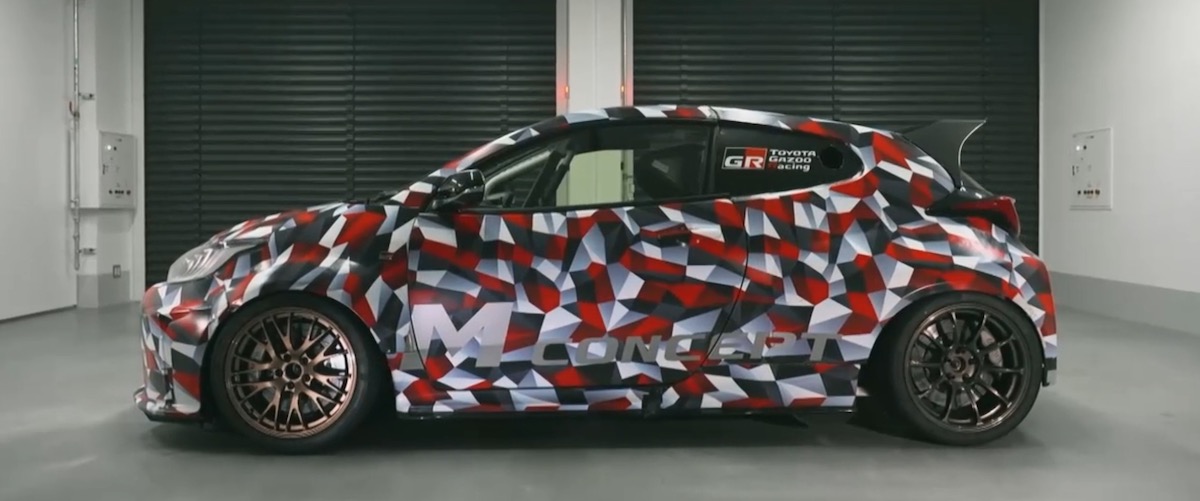
Fresh off of testing at Fuji Speedway, Toyoda responds with a fantastic answer when the interviewer asks him what it is and why it’s so important for him (timestamp 19:12). At Tsukuba Circuit, test drivers evaluate a mid-engined test mule. It resembles a GR Yaris but has a much longer wheelbase, likely the next Celica or MR2. They compare it with competitors cars, including an R35 Nissan GT-R, Porsche 911, Alpine A110, Honda Civic Type R,
It’s an elusive quality that can’t be described qualitatively. Akio Toyoda says it’s different for every car and is based on mostly intuition. One Corolla engineer admits there’s still a lot he doesn’t know about it. The interviewer seems surprised. But, his colleague explains, even a bolt flange’s thickness can affect it. The Corolla engineers conclude that driving feel is an edge that Toyota has over the EV newcomers. However one defines it, it’s a lead Toyota cannot concede.
From the outside, Toyota seems like an unbeatable juggernaut of the industry. The NHK documentary’s deep dive shows that’s not the case. Even a company whose success is as reliable as a Toyota isn’t resting on its laurels. “Inside Toyota” can be watched in its entirety on the NHK website.