

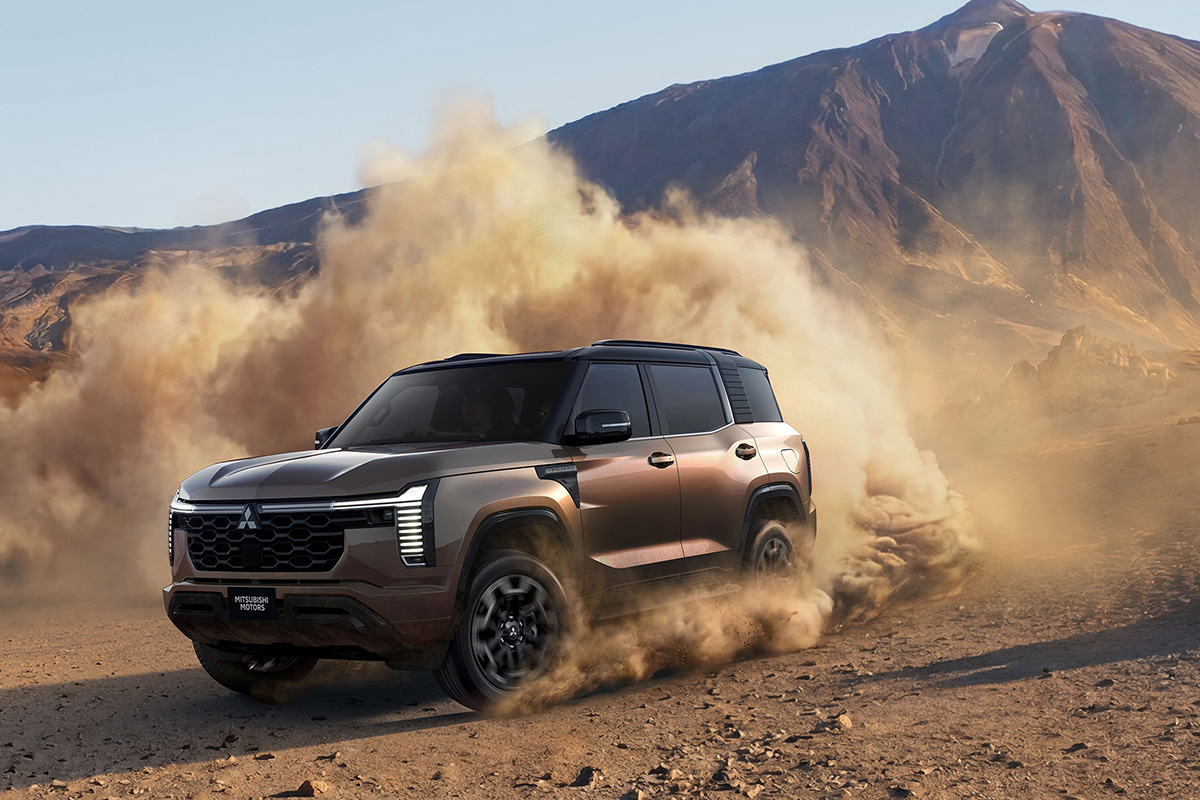
When Mitsubishi discontinued the Pajero in 2019 it was punch in the gut for enthusiasts. That was followed by a knockout uppercut when Mitsubishi shuttered Pajero Manufacturing Co., Ltd., its legendary plant dedicated to building the the famed SUV (as well as the Honda City Cabriolet). The future of Mitsubishi seemed bleak, but with the unveiling of an all-new Pajero today, the Triple Diamond Clan is showing new signs of life. However, the factory has already been sold to a toilet paper manufacturer, so where will the new Pajero be built?
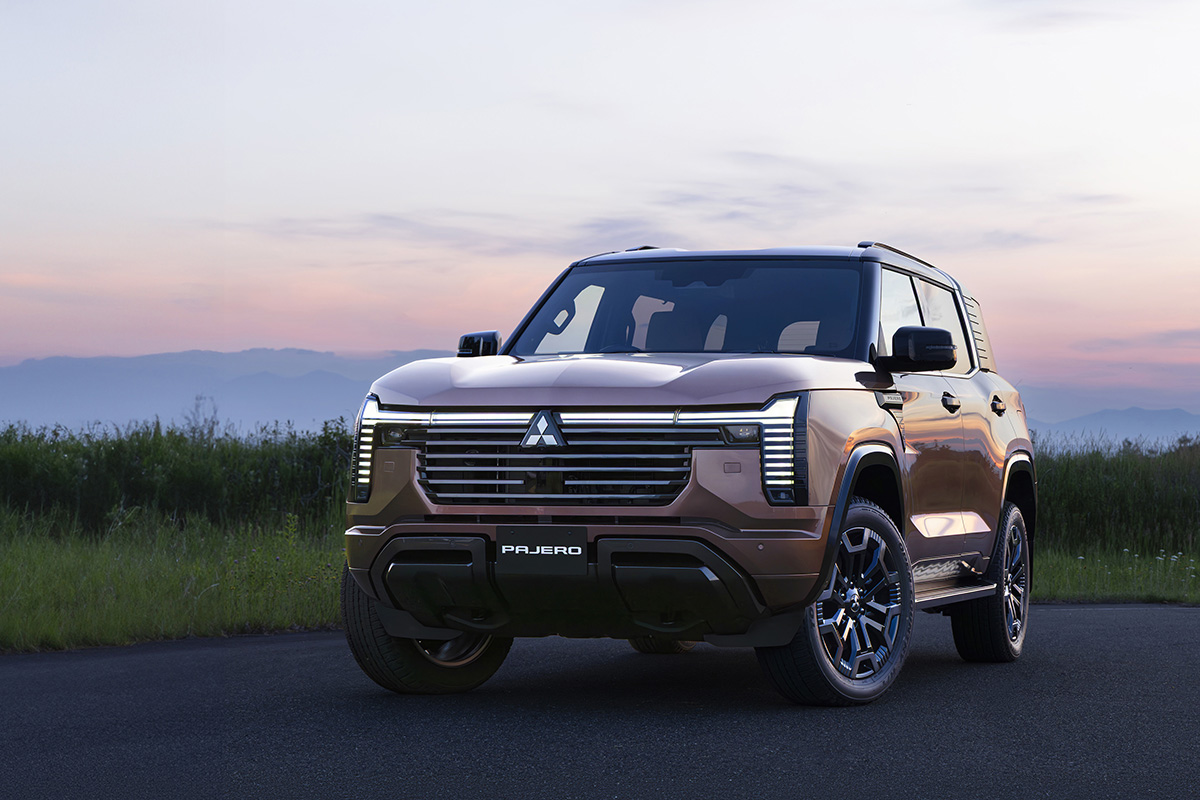
The answer is Thailand, a huge manufacturing base for Japanese automakers and one of the few markets where the brand is still highly regarded. That’s because the Triton is already built there, and the new Pajero is based on the pickup. In essence, it could be seen as a successor to the pickup-based Pajero Sport. This was sold in the US as the Montero Sport from 1997-2004), whose subsequent generations were sold elsewhere in the world but not in the US or Japan.
So even if it’s not a 100 percent true Pajero, this fortunately isn’t a case like the Eclipse Cross, where a revered nameplate is brought back on a tepid crossover, or even a case like the upcoming Eclipse Sportback, which is a rebadged Nissan Leaf.
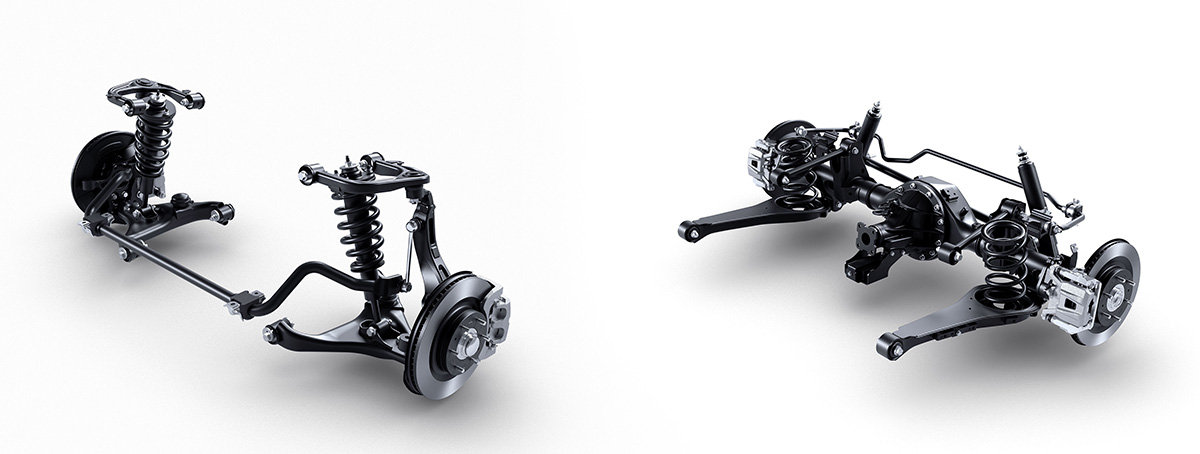
The new Pajero is a true ladder-frame SUV, something that the monococque third and fourth generation full-size Pajeros can’t claim. It also has a solid rear axle paired with a five-link rear suspension, better for off-roading than the independent suspension of the aforementioned third-gen and newer full-size Pajeros. With modes for full-time 4WD, low-range, and locking center diff, it’s shaping up to be a challenger to the Toyota Land Cruiser 250.

“When I discovered that domestic sales of the Pajero would cease in 2019, I experienced a deep sense of loss,” said lead designer Norihiko Yoshimine. “[It] was one of the vehicles that inspired me to pursue a career in car design. Therefore, being given the chance to work on the design of all-new Pajero was a true joy.”
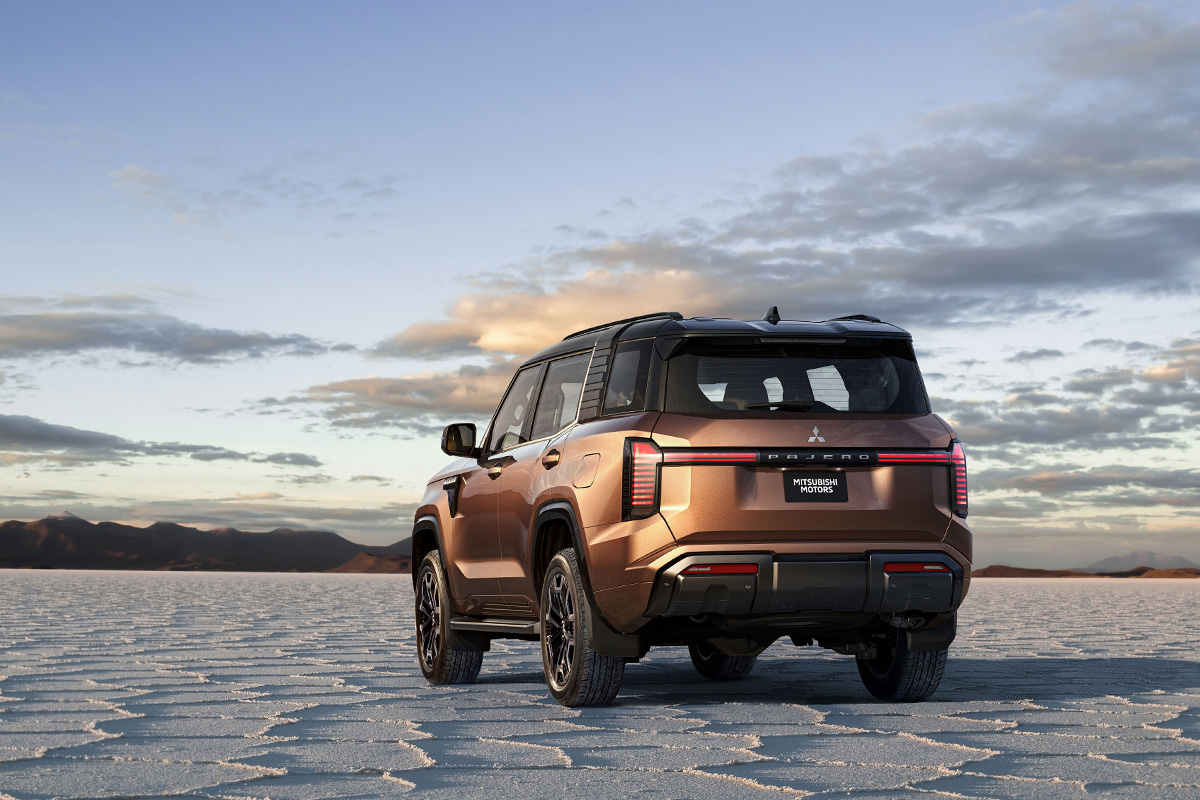
Outwardly there’s not a lot of cues linking it to the classic Pajeros. This was intentional, as Yoshimine didn’t want to create a retro design. However, there are a few small nods, like the C-pillar treatment, reminiscent of the first-gen’s roll bar. The front fender flare’s trailing edge treatment also reminds us of the facelifted second-gen’s. At the rear, a bulging hexagonal motif hints at the integrated spare tire housing of the fourth-gen’s tailgate.

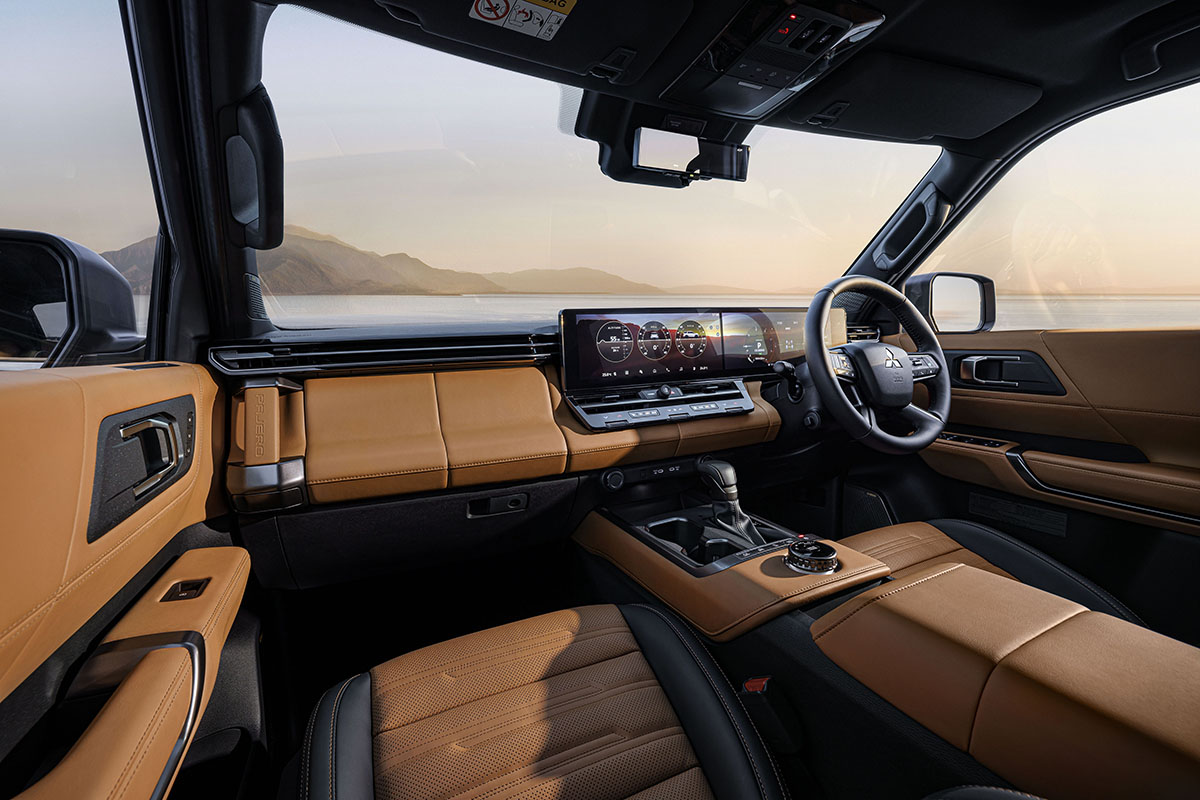
Inside, the new Pajero inherits the long horizontal planes of the first-generation’s dashboard. It’s interrupted by a large screen though, which comes in two sizes, 12.3 inches on lower grades and 14.3 on higher-end trims. The good news is that the screen can be used to display a virtual version of the Pajero’s famed Multi Meter, a three-gauge cluster that indicates altitude, compass heading, temperature, vehicle pitch and roll angles.
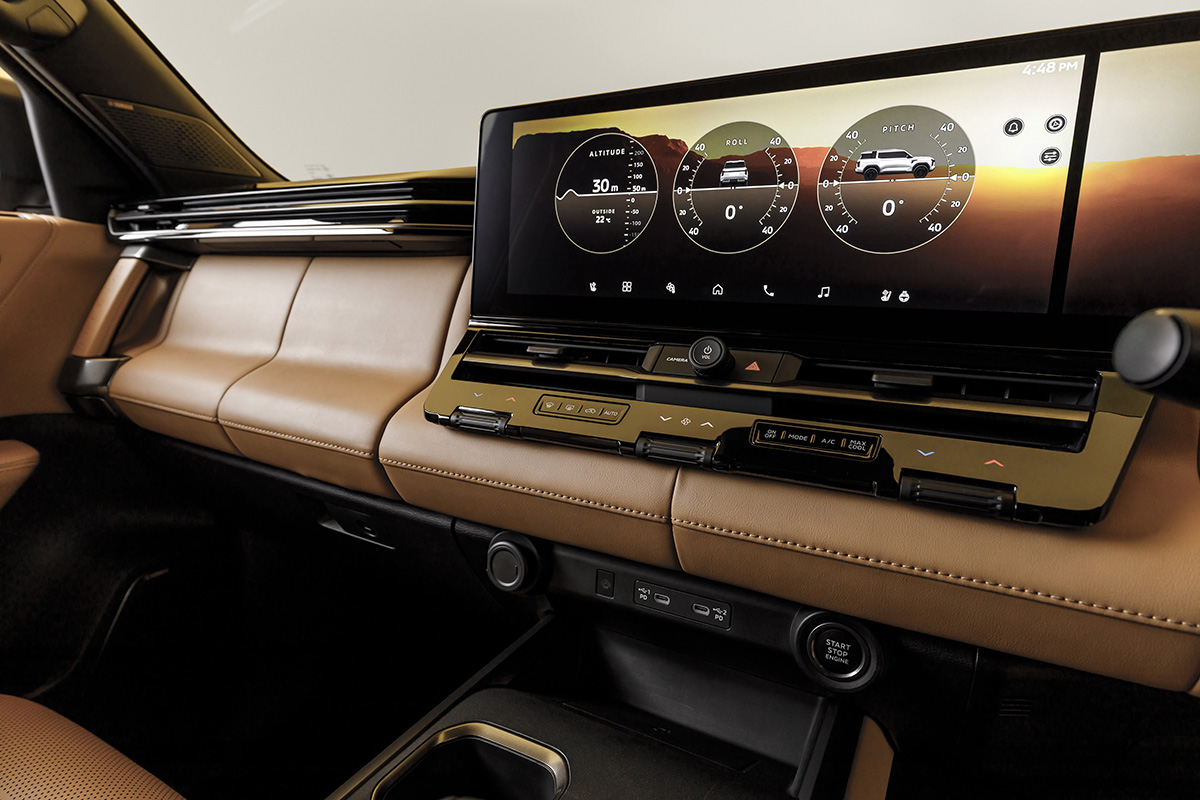
The system can also display a front under-floor view, allowing drivers to look “through” the vehicle at road surface conditions beneath and ahead, something that can come in quite handy while off-roading. There are seven drive modes: Normal, Eco, Gravel, Snow, Mud, Sand, and Rock.
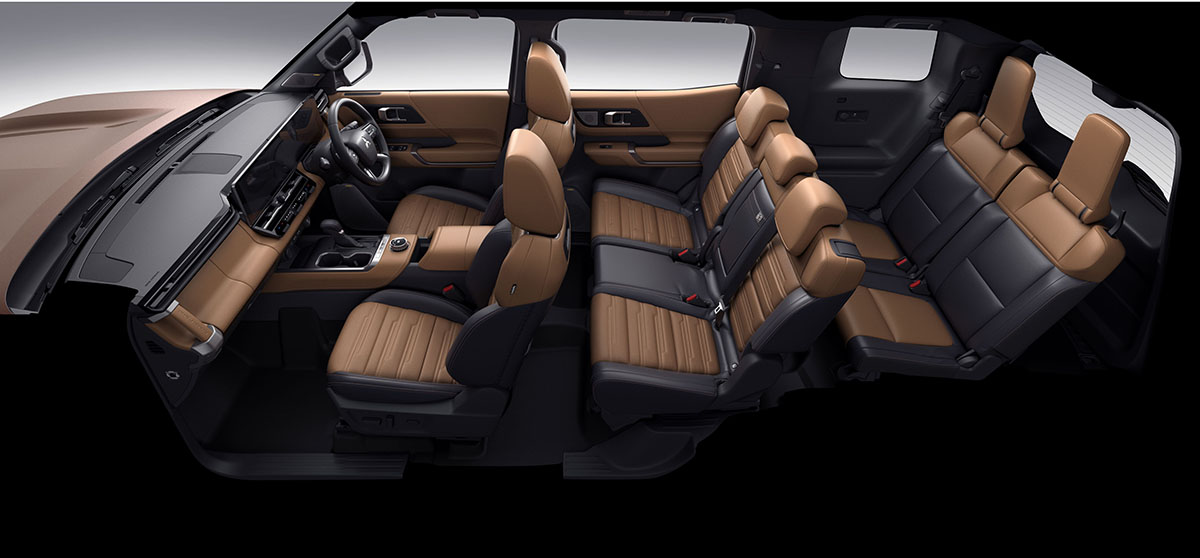
Physical buttons and dials remain for the climate control, volume, and hazard lights, but they do appear rather small. Traditionally, the Pajero’s controls have always been large, designed so that one can operate them even while wearing gloves.
The upholstery on the instrument and door panels use a stitching technique inspired by kimekomi, a traditional Japanese craft that tucks fabric into folds before sewing. The sound system was developed by Yamaha.
Power comes from a 2.4-liter diesel with a wide-range single variable geometry turbo. Horsepower numbers weren’t given but the same engine in the Triton it produces 201 horses. Mitsubishi did supply a torque figurer of 354 lb-ft, which is 7.4 lb-ft more than the Triton. The engine is paired with an 8-speed automatic transmission.
Interestingly, there are two types of gear selectors, a joystick type that springs back to center position after shifting (annoying) and a traditional gated shifter. Which one your Pajero will have is dependent on your market.


The dimensions of the Pajero (4920 mm long, 1925 mm wide, and 1910 mm high) put it at about the same length as the Land Cruiser 250, but 2.2 inches narrower, and two inches taller. The Pajero’s wheelbase (2870 mm) is 0.8 inches longer.
Ground clearance (9.1 inches) is the same as the Land Cruiser’s. The Pajero has a disadvantage in terms of approach angle (30.4 degrees vs 31.0) and breakover angle (22.6 degrees vs 25.0), but outdoes the J250 with a departure angle of 25.8 degrees (vs 22.0).
The Pajero will launch later this year in Thailand first, followed by a triumphant return to Japan before expanding to over 100 countries. Rumors say that a Pajero won’t arrive in the US until 2030. Unfortunately that’s because this version of the Pajero won’t make landfall on our shores at all. The diesel powertrain and the fact that Thailand’s tariff rate is higher than even Japan’s (between 40 to 60 percent) means that it has little chance of being sold here.
Instead, what the US will get is likely a rebadged version of a Nissan SUV, perhaps the new Pathfinder. Mitsubishi’s partnership with Nissan is said to also include a Mitsu pickup based on the Frontier. Whatever happens, we know one thing for sure. It’ll be called a Montero.
Images courtesy of Mitsubishi.




Mechanicals & interior aside, the design is stealthy in an airport rental lot. A missed opportunity.
I just don’t get another overy large and heavy UV on the market. I bet the fuel mileage is just awesome too. There is a lot of waste today, in a time when waste should be on the top of everyone’s mind. Sigh.
Maybe we can get a real Eclipse again. Mitsubishi from the 90s was amazing. I learned to drive a stick in my dad’s 92 Galant (non VR4). The Eclipse, 3000GT, Lancer EVO, Montero, Montero Sport were amazing cars