

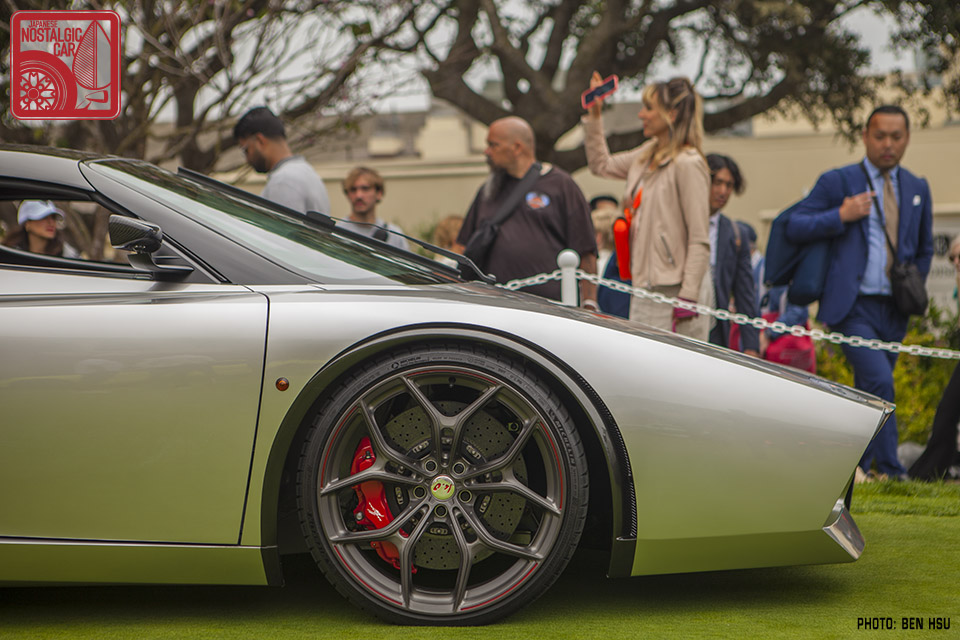
“1989 was a defining year. It gave us the GT-R, Lexus, and the RX-7. Japan’s automotive industry reached new heights,” says renowned automotive designer Ken Okuyama. His latest creation, the V12-powered Kode89, is a tribute to that seminal year. It was shown for the first time in the US at Monterey Car Week.
When he took the reins at the legendary coachbuilder Pininfarina in 2004, he became the first non-Italian to head the firm. When he left and moved back to his home country of Japan, the designer of the Ferrari Enzo, 612 Scaglietti, and Maserati Quattroporte, among others, brought with him the carrozzeria ways he had learned overseas. He dreamed of using Japan’s penchant for craftsmanship and apply it to coachbuilt cars.
“The car is fundamentally an homage in 1989 — the year when automotive design reached
its pinnacle,” Okuyama explained in a statement. “As you know, 1989 was an iconic year that saw the birth of numerous Japanese sports cars that are still talked about today and cherished as ‘neo-classics’. It was also a special year for Pininfarina, as it chose the Tokyo Motor Show as the venue for the world premiere of its new concept model, the Ferrari Mythos.”
It was the peak of the Bubble Economy. Harnessing the spirit of 1989, Okuyama wanted to create a supercar that hearkened back to the days of analog driving. The Kode89 employs a traditional manual-shift transmission, there are no screens, and it was developed for balanced driving rather than raw power.
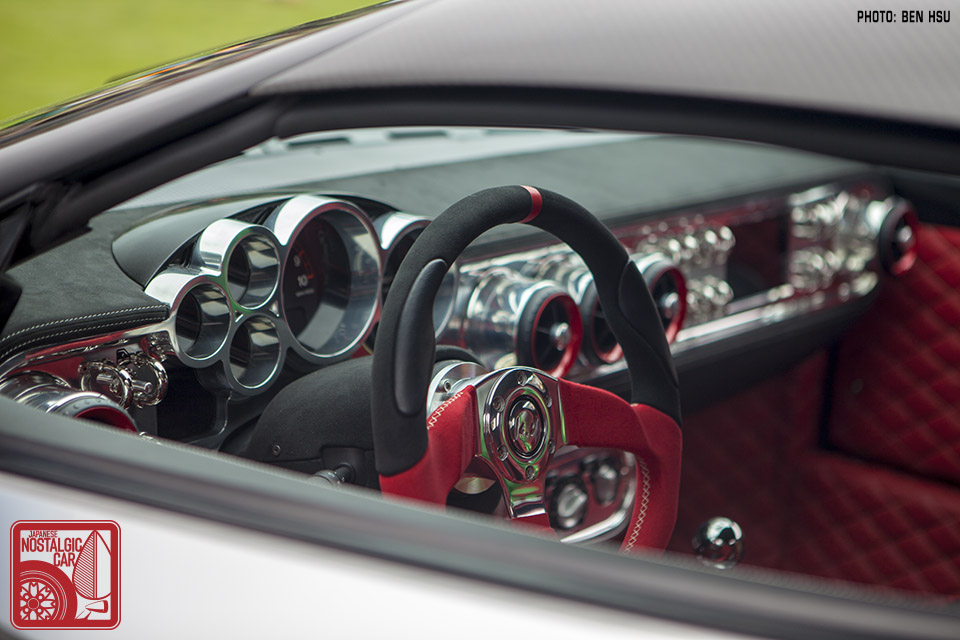
The chassis is all-aluminum space frame developed in-house at Okuyama’s Japanese carrozzeria. The customer can choose a V12 engine from any automaker and mount it in the Kode89’s mid-engine layout, but Okuyama recommends a tune of 600 to 650 horsepower, even if the technology is there to make 1000.
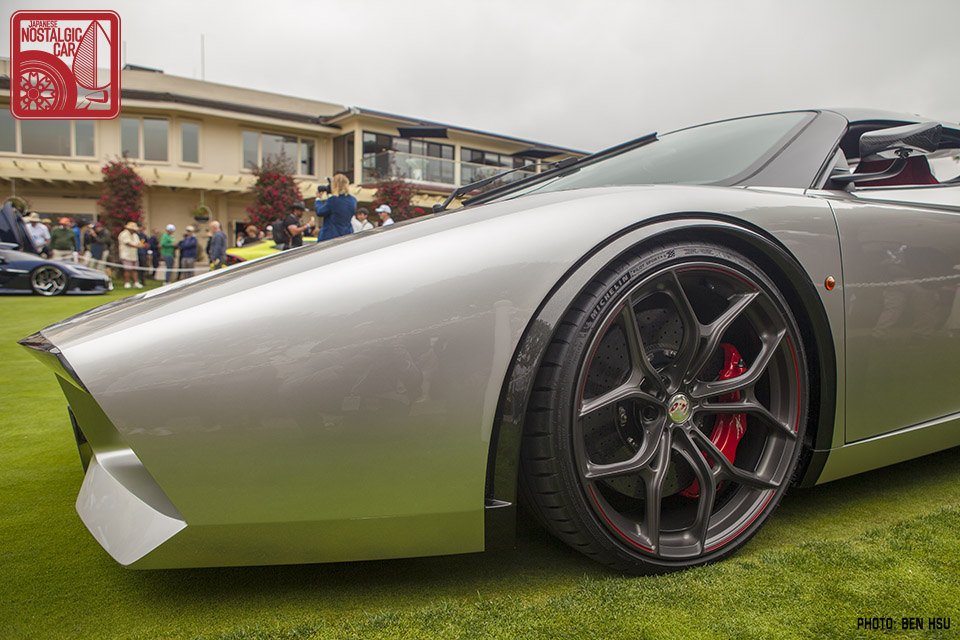
The car shown at Monterey is a prototype, but the actual production car will be bodied with dry carbon. The target curb weight is below 1300 kg (2866 lb), and Okuyama believes it will handle better than a modern Ferrari.
Okuyama dislikes how “dishonest” modern car design has become. He vows that his cars will not have fake grilles or materials that look like metal and wood but which are actually plastic. “Nowadays we are growing weary of excessive spectacle and digitalization,” he says.
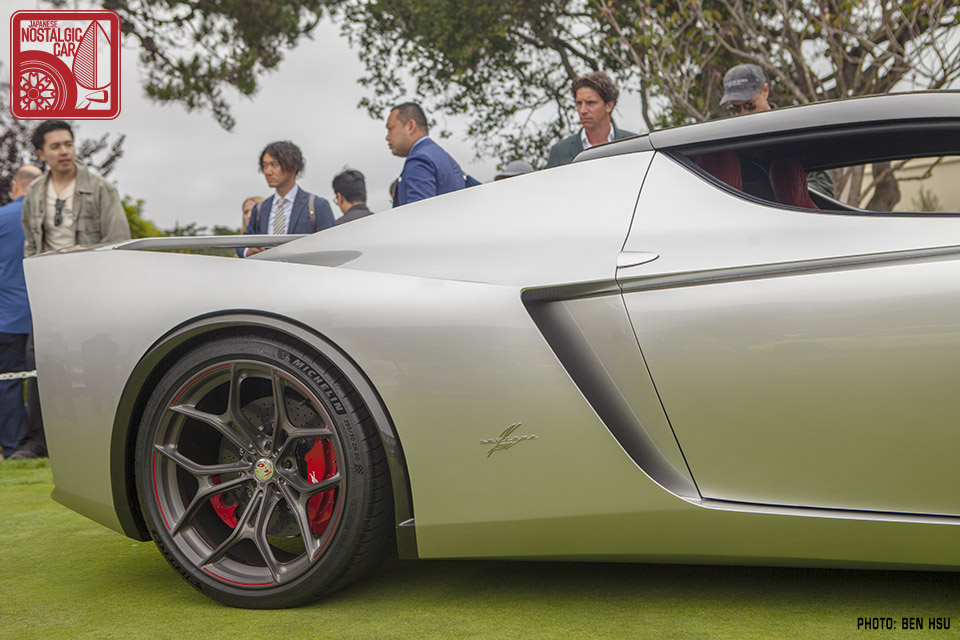
While the Kode89 may have spirit of 1989, it’s not a retro design. During his time at Pininfarina, Okuyama specifically did not want to look backwards when designing the Enzo. He took the successor to the F40 and F50 in a new, somewhat controversial direction that ushered in a new era of supercars.
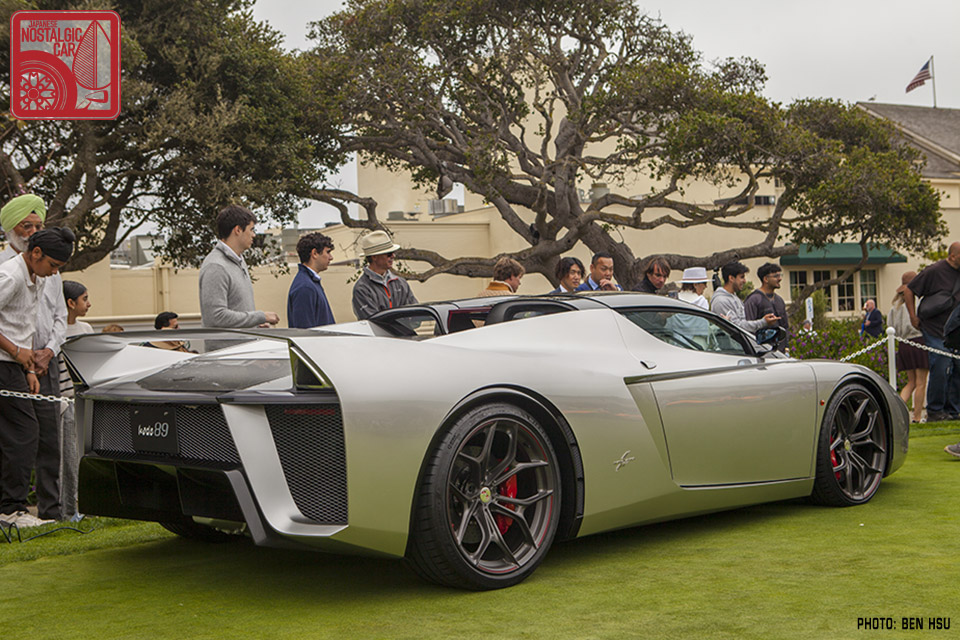
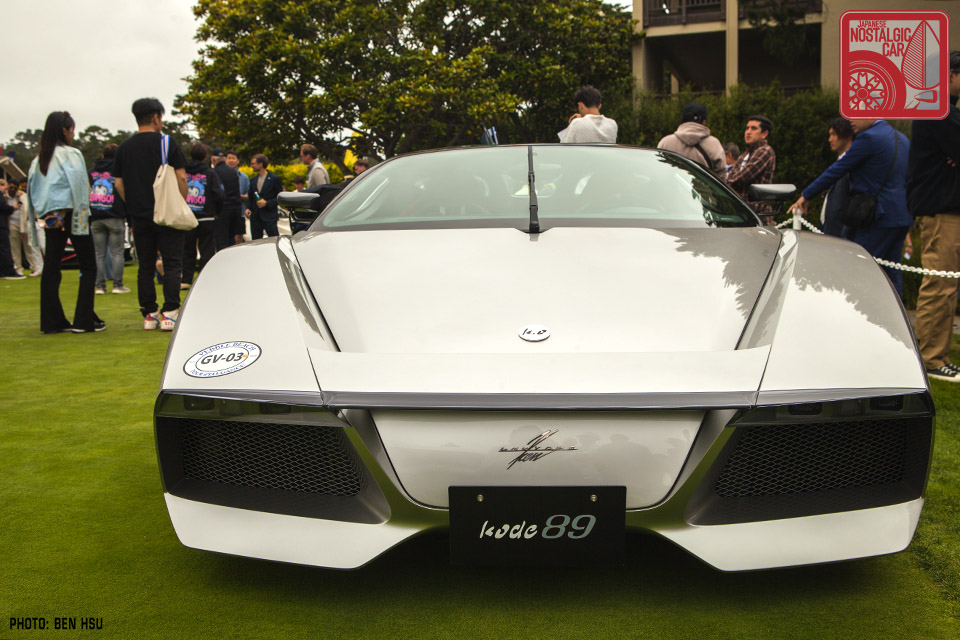
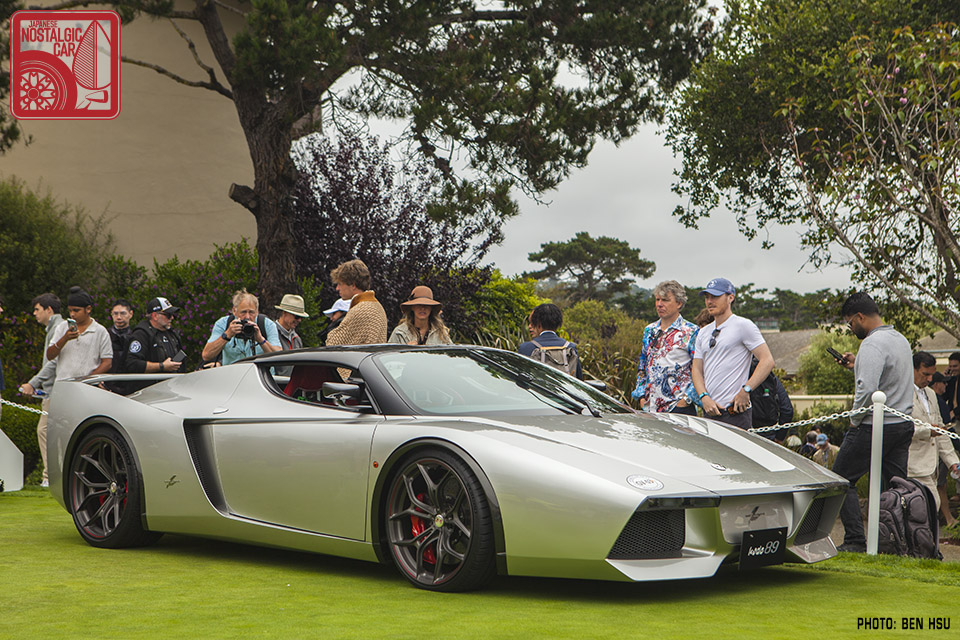
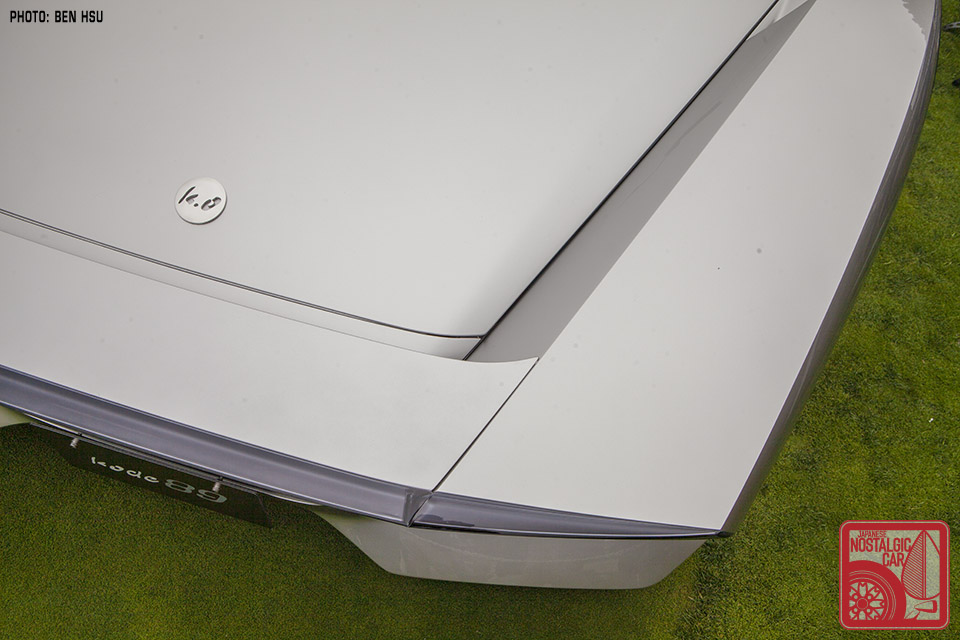
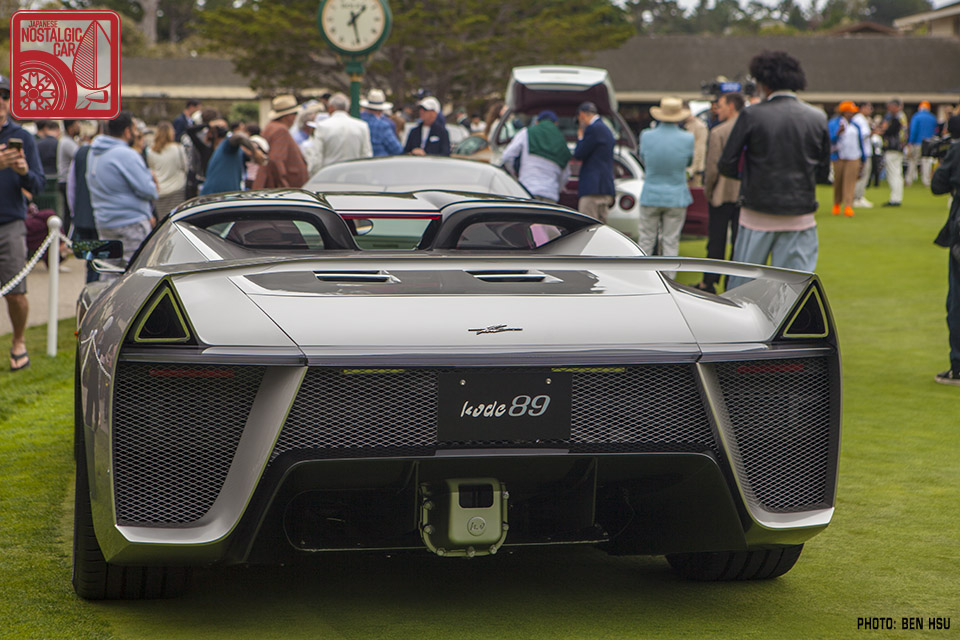
Elements of the Enzo can be seen in the Kode89’s greenhouse and nose. The rear, especially the bridge spoiler, will have any car enthusiast reminiscing about the Honda NSX, another watershed car introduced in 1989.
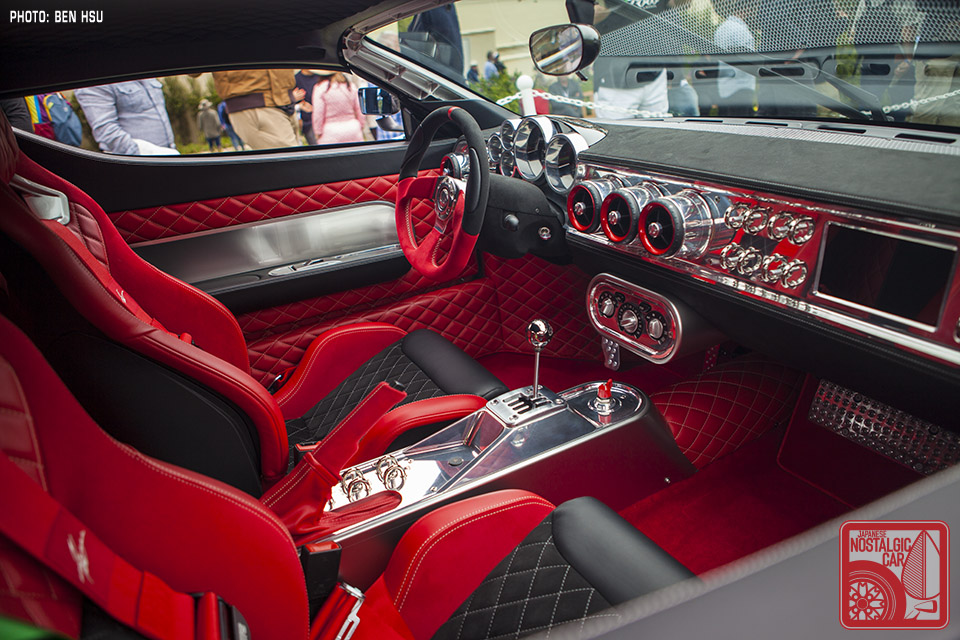
If one did not know what the Kode89 was, it would be difficult to place it in a specific era. It’s overall wedge shape is quite striking. It appears modern, yet also lithe and lightweight-looking, which are traits absent from modern supercars. The angular lines and sharp corners recall halo cars of the past, but it’s not a throwback. Whatever you call it, the Kode89 is a far better design than some of the cars from traditional luxury brands that shared the lawn.
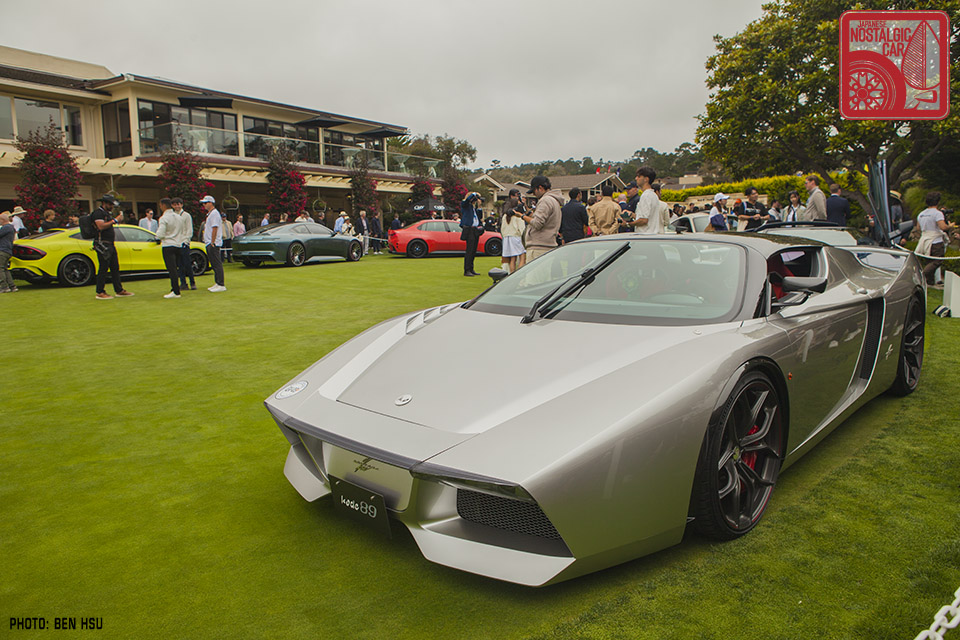
Okuyama plans to build only eight examples of the Kode89. Their handmade nature will allow many points of personalization, so no two will be alike. It’s a true low-volume car in the tradition of the great coachbuilders, which is what events like the Pebble Beach Concours d’Elegance celebrate. Okuyama wants to continue the art of coachbuilding into the future. It’s a dying tradition, especially with the rush to digitalization and electrification in the auto industry. And if there’s one place that can carry the torch for time-honorerd craftsmanship, it’s Japan.



LOVE THE TAIL FINS. SURE HE WASN’T CHANNELING 1959?
I love the analog features and missing screens. Had Ken for a semester in design school, good to see he is still getting at it!
Aside from the nose, which doesn’t sit well with me, the rest of the car is very clean and uncluttered, and very smooth. I like that. The interior is a bit flashy for my taste, and all that chrome is going to cause problems with sun reflection. Still I like overall. It’s a breath of fresh air compared to the overly busy, and too aggressive cars coming from Italy these days, especially Lamborghini.
Beautiful. It’s been a long time since I’ve seen a newly designed supercar that possesses a classic elegance.
I see some Fukuoka style in the nose. Nice.
1989 gave us the RX7? What the updated FC/series 5? there was plenty of other new stuff like the landcruiser 80, z32 300zx, T180 Celica, Subaru legacy, Mazda mx5, w20 mr2…
I dont think he needed to have such low profile tyres, Just go two inches smaller on the wheels and keep tyre diameter the same, it would look spot on.
That nose reminds me if the Honda 0 EV that was cancelled. Derisive to some, I actually liked it. Honda will not be forgiven.