

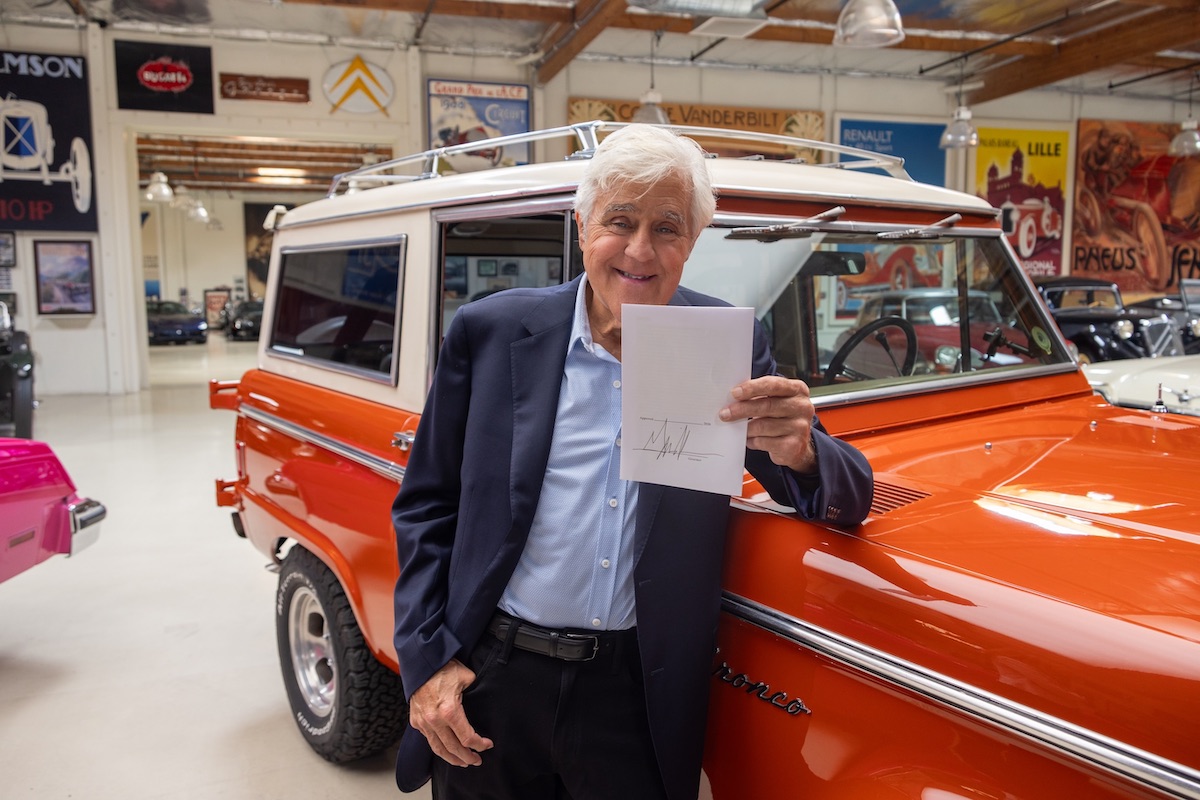
On Wednesday morning California Senate Bill 1392 was signed into law. Also known as Leno’s Law, it’s a reprieve for classic car enthusiasts across the state, as it pushes back the state’s notoriously strict smog tests to cars built through 1985. Though Governor Gavin Newsom signed the bill this morning, it doesn’t take effect immediately. Here’s now the rollout will take place in the coming years.
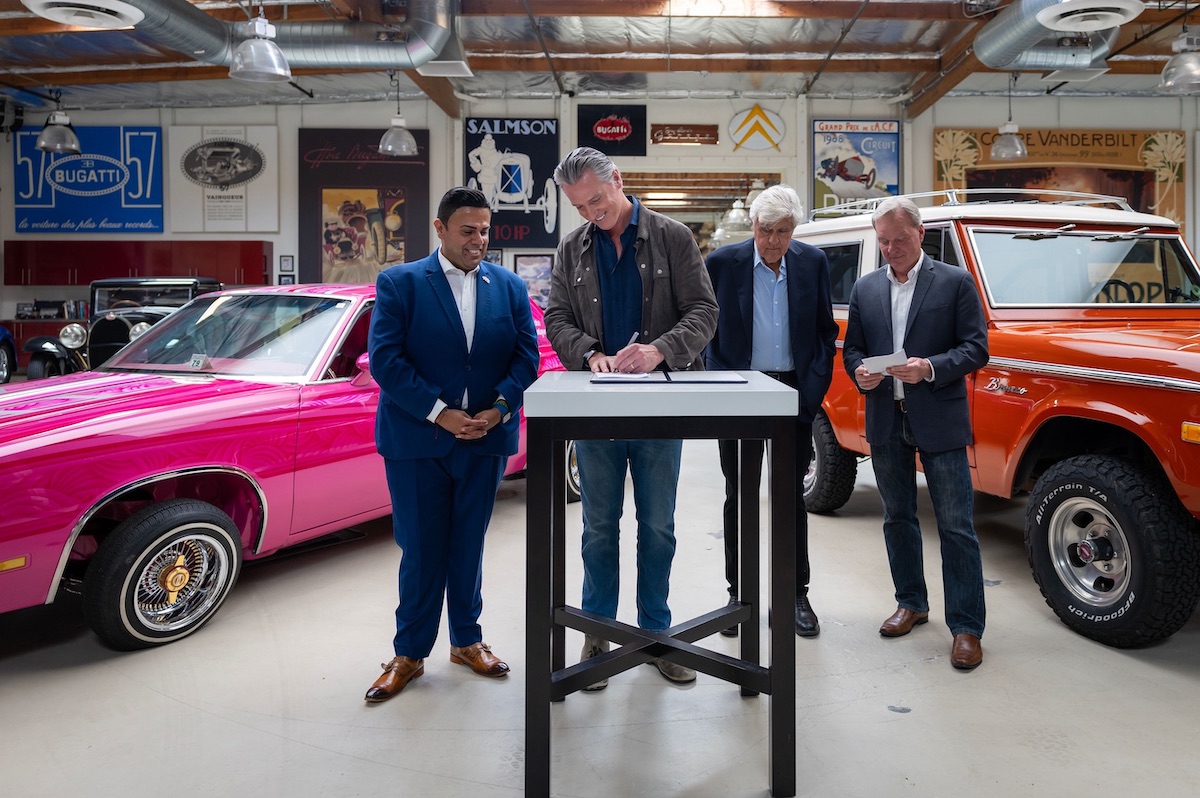
Newsom signed the bill with renowned car collector and talk show host Jay Leno at his garage. They were joined by Democratic State Senator Dave Cortese (right), who co-authored the bill with Republican State Senator Shannon Grove, and Assemblyman Mark Gonzalez (left). It was a true bipartisan effort. While Leno was the most well-known advocate for the bill, representatives from SEMA were also involved in pushing the bill through.
Though California is the epicenter of car culture (especially Japanese car culture) in America, smog rules have required all vehicles built 1976 or later to pass a strict biannual emissions test. Prior to that, smog tests operated on a rolling 30-year rule. Cars older than 30 years, or once they became 30 years old, were exempt from the tests. In 2005, Governor Arnold Schwarzenegger signed Assembly Bill 2683, freezing the smog cutoff at 1976.
Here’s the timeline for the new law:
- January 1, 2028. New rules take effect. Cars built before the 1981 model year are exempt from smog testing.
- From then on, the exemption adds one model year every year until 2033 (a rolling 48-year rule).
- By 2033, everything built before the 1986 model year will be exempt from smog tests.
- Cars built before 1976 are unaffected and remain smog test-exempt.
Daily driven cars do not qualify for exemptions. The car must be insured with collector car insurance or prove that it is driven fewer than 1000 miles per year.
Unfortunately there are no provisions after 2033, but Leno and groups like SEMA are hopeful that the law, if successful, will serve as a proof of concept that can be applied to cars newer than 1985 in the future. Many of the cars we love from the late 80s and 90s are still stuck in emissions test purgatory, but this is a huge step in the right direction.


How does this effect car models that were never originally sold in the US? For those cars, you had to be 1967 or earlier to bypass the EPA requirements. Can they now legally be registered in California?
So, essentially, your classic car will only be smog exempt if you don’t drive it (driven fewer than 1,000 miles per year). What’s the point of this bill? If I’m required to insure it too, I want to drive it.