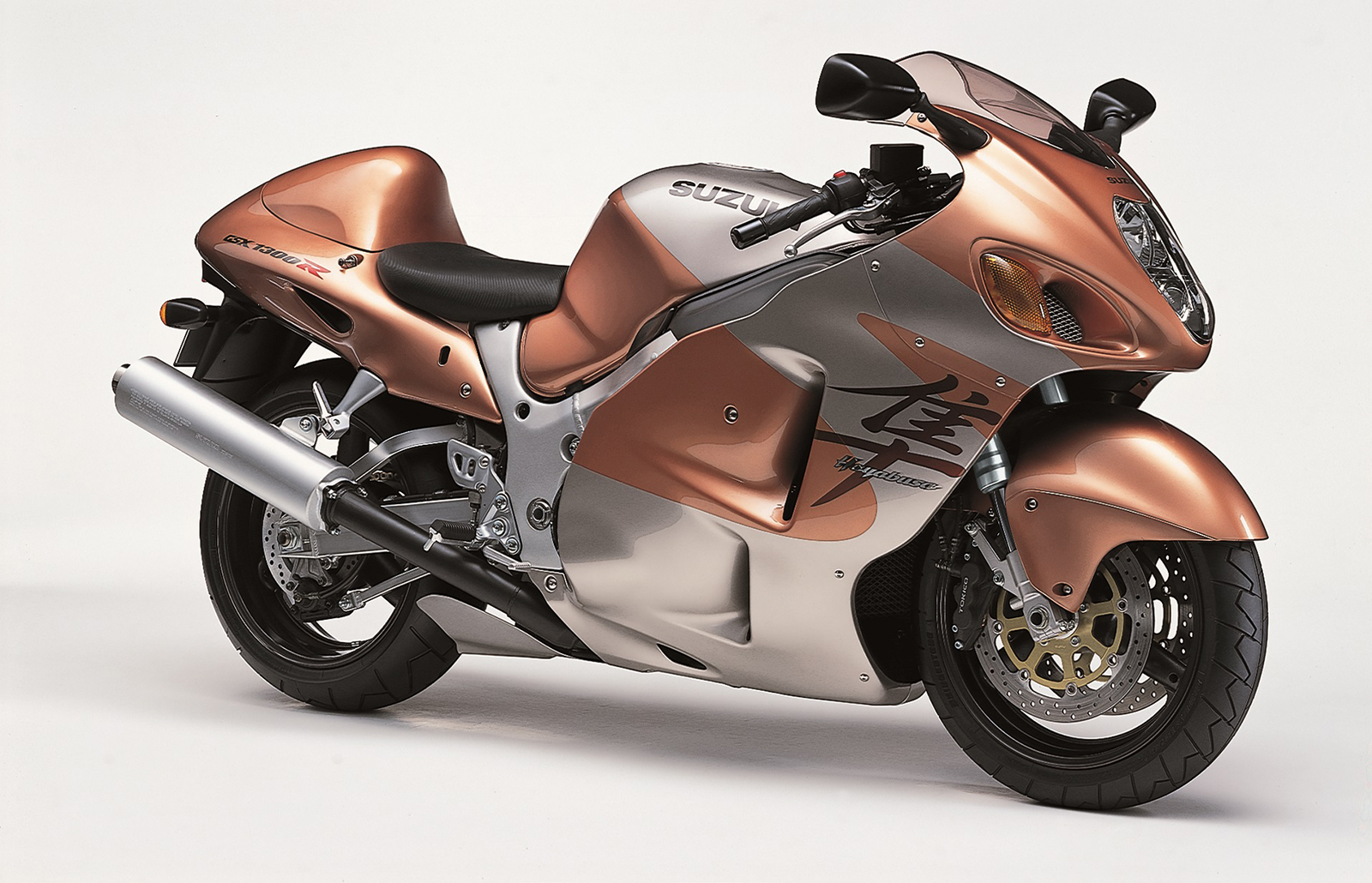
The Suzuki GSX1300R Hayabusa became an instant legend when it was introduced in 1999. Not only did it instantly claim the title of world’s fastest street-legal motorcycle, at a time when manufacturers one-upped each other incrementally, it blew the previous record holder, the Honda CBR1100XX Super Blackbird, out of the water with a top speed of 312 kph (194 mph) — a 23 kph (14 mph) jump, still the largest top speed leap in production motorcycle history.
The Hayabusa was also famously overbuilt, laying the groundwork for tuners and turbochargers that could bump street builds from its factory 175 horses to 300 without modifying internals. To get there, the fastest bike has an intentionally slow manufacturing process.
As this video of Suzuki’s Hamamatsu factory shows, creating a Hayabusa is quite a different procedure than more commonplace bikes. Like the Toyota Century or Nissan GT-R, the Hayabusa is put together by takumi, or craftsmen, who handle elaborate multi-stage assemblies at build stations. By contrast, this work would be done by robots as the bike rolled down an assembly line on a mass-market model.
This allows the takumi to manually ensure that each cylinder’s port and valve seat has perfect air flow, or to precisely shim the solid-mounted engine to the frame so that there’s no flex. Whereas a robot would simply stop turning a bolt when it reached a certain torque setting, the takumi hand-tighten the bolts using special torque and angle sensing wrenches that allow them to feel if the metal is yielding properly. This guarantees consistent tension throughout important components like the crankcase.
Some of the shots in the video, like the casting of the engine parts or the pressing of the fairings, are not of specific Hayabusa parts, but the automated processes are similar. It’s the human component that makes the assembly of the Hayabusa special, and why building the bike is reserved for only the top takumi, like Toyota and Honda did with the Lexus LFA and NSX.