

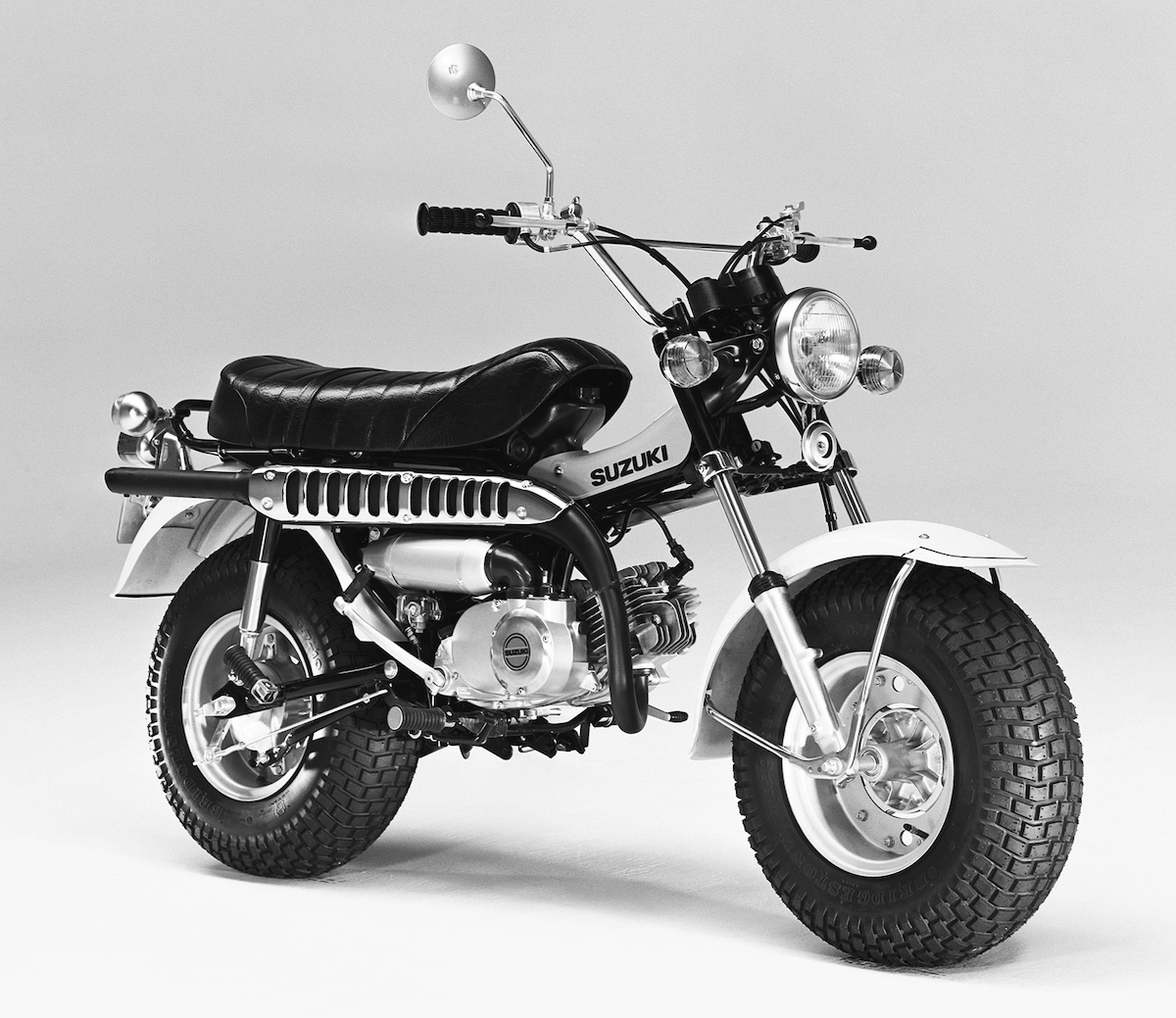
Suzuki has filed for a trademark application for the e-VanVan, an electric mini-bik inspired by the 1971 VanVan 90. Whimsically named for the sound of a revving two-stroke, the original was one of the motorcycles that defined Japan’s leisure bike boom of the late 60s and early 70s. Now there’s something of a retro bike renaissance in Japan, so it only makes sense that the VanVan is revived for the modern age.
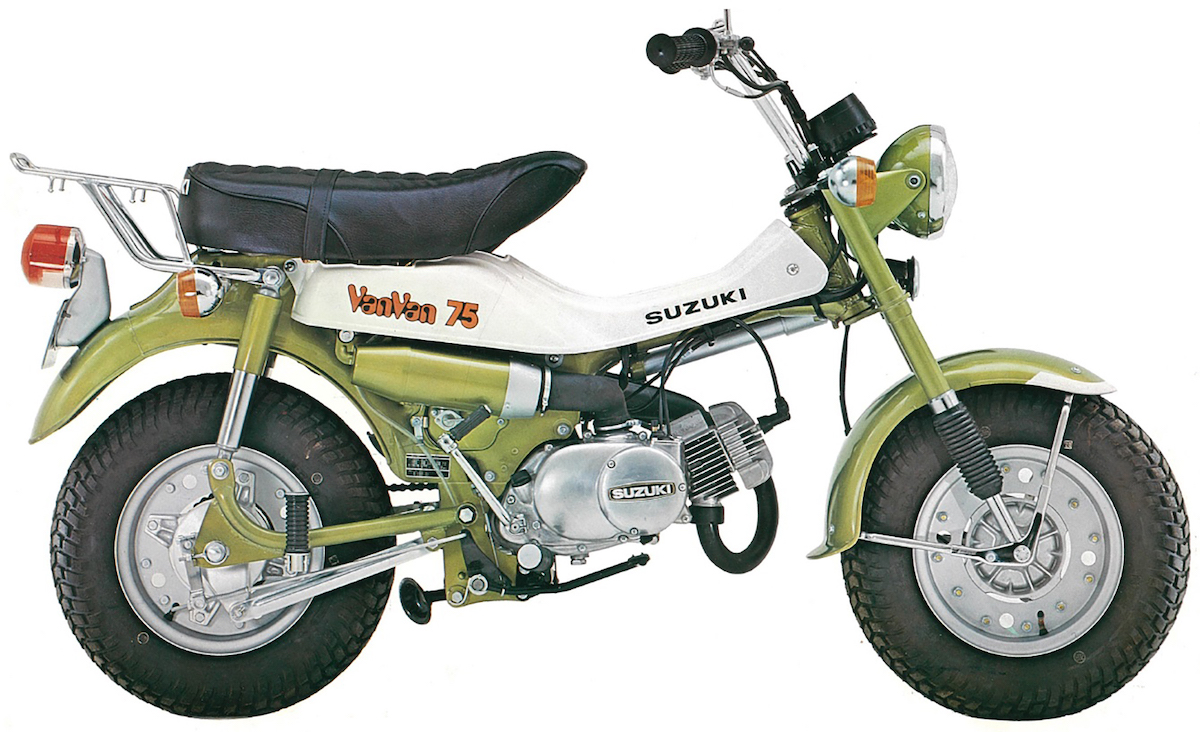
The leisure bike segment was born in 1967 when Honda launched the Monkey. It was quickly followed by the Honda Dax in 1969 (which is, incidentally, having its own revival). These leisure bikes were intended to be compact enough to be hauled in a car and brought along to recreational activities. Turns out, they were as good crowded cities as they were on campsites.


In 1971 Suzuki debuted the 8-horsepower VanVan 90, designed in the same vein as the Hondas but with off-road riding top of mind. It was marketed as a bike that could tackle all sorts of terrain from sand to snow, mud to mountains. It came with blocky 6.7-10-4PR tires and had an air pump in the frame so that tires could be deflated and re-inflated on the go to suit any kind of surface.
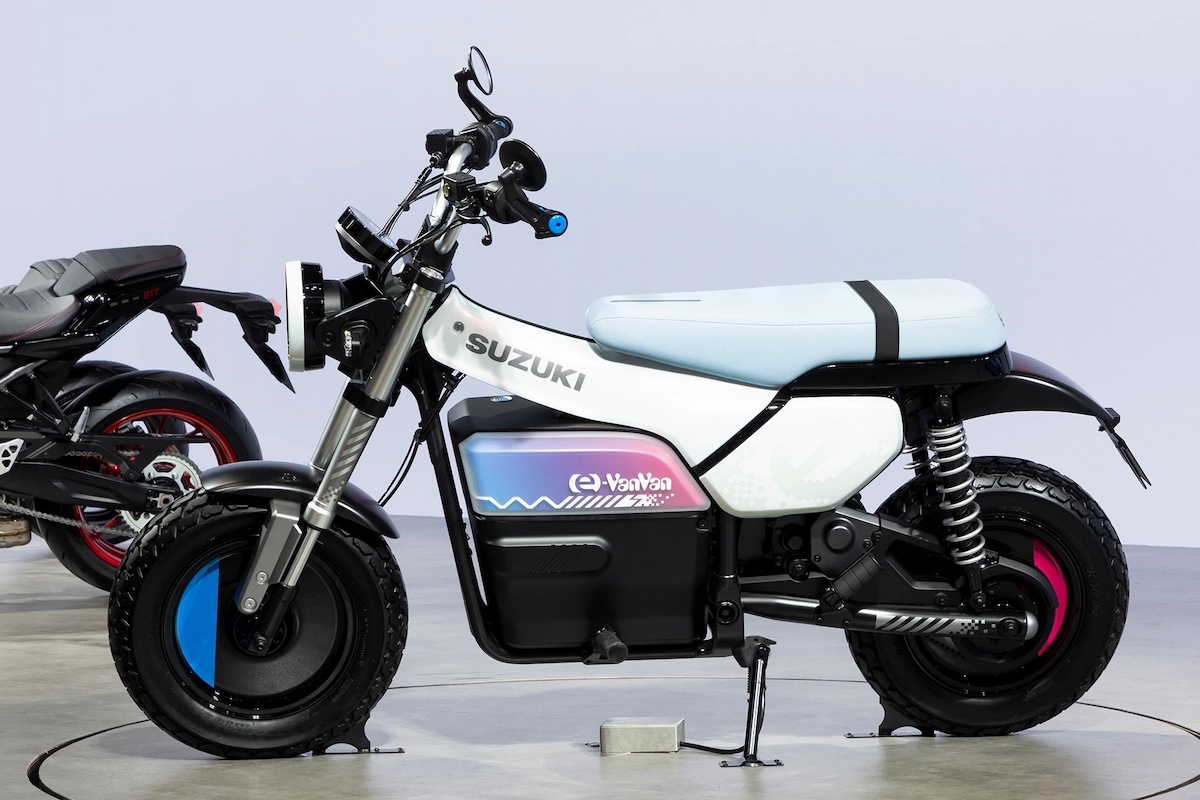
It soon caught on not only in the great outdoors, but on farms, construction sites, and golf courses. Suzuki quickly followed up with variations with different engine sizes, launching the VanVan 50 and 125 in 1972, and the VanVan 75 in 1973. The original series was built until 1983, but Suzuki revived it in 2002 with an all-new four-stroke Suzuki VanVan 200. That model was discontinued in 2017 in Japan and actually sold in the US until 2019, but wasn’t a big seller in the American market.


At the Japan Mobility Show in October Suzuki showed the e-VanVan, at the time claiming it was just a concept used to gauge public reaction. Apparently the reaction was pretty favorable, because now it Suzuki seems to be taking steps to put it into production. It’s starting with trademarking the name, as reported by Best Car.
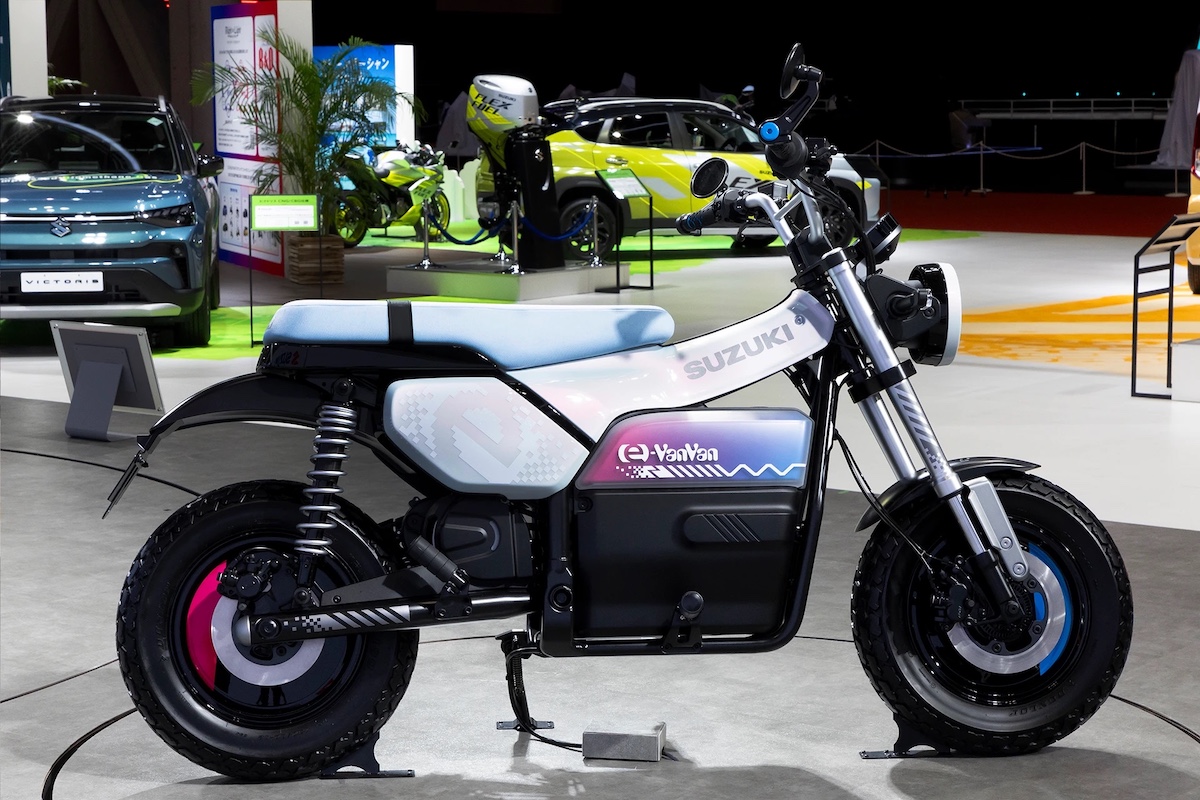
The e-VanVan retains the unmistakable snail-like frame profile of the original. The engine is replaced with an electric motor and a battery good for around 83 km (52 miles) of travel. It comes with 12-inch tires that are 5.1 inches wide, but there’s no word on whether an on-board pump exists. It looks like a fun little e-bike and the styling certainly hits the nostalgia receptors in the brains of people who remember the original. However, with a presumably quiet electric motor, does the name VanVan still make sense?
Images courtesy of Suzuki.



Dang it, stop it with the elec bikes! It does not work for most people as a motorbike, and over here you need to a motorcycle licence to ride one on the street, so obviously everyone pick a gas bike!
But this one? Heck, being elec, I could take it over the foresty mountain at the end of my street and ride all the trails, even those that come somewhat close to the houses, without any exhaust sound, just like a push-bike, and smaller than a goblin’s fart and probably not much faster, one could be ridden on these (not-bike-only do not worry) trails. Or straight in the woods. This one could work. And it is cute as frig.