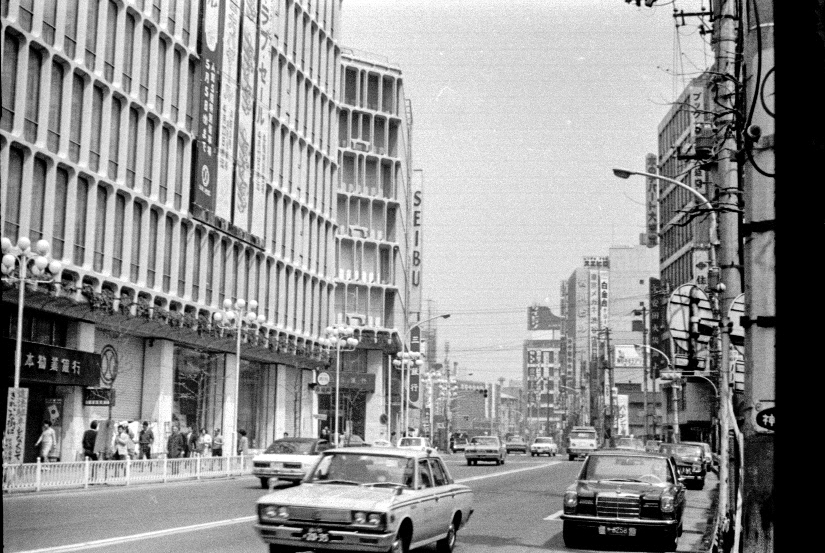
It was announced yesterday that the Seibu Shibuya department store will be closing after 58 years in operation. Even in Shibuya, the epicenter of youth culture in Tokyo, the Seibu store was once considered the trendsetter. For years Seibu was locked in what the media called a “ruthless battle” with rival department store Tokyu, with each emporium’s moves closely reported in the press.
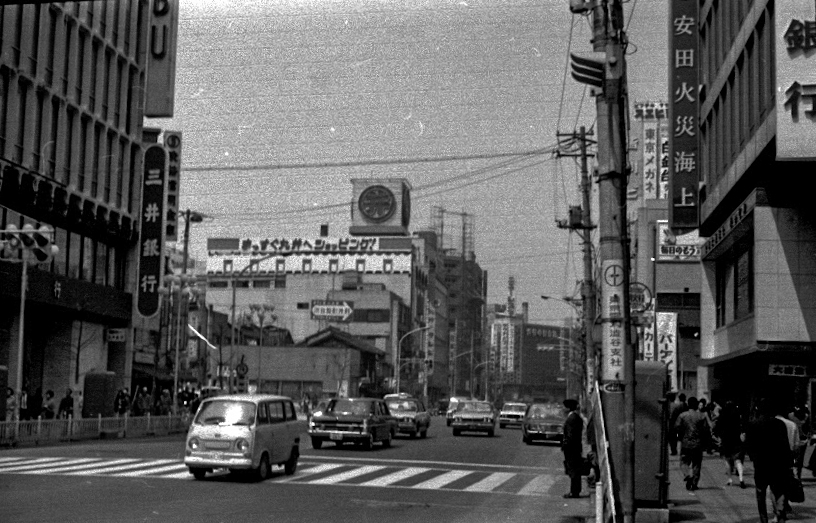
As with many department store chains in Japan, Seibu and Tokyu are both extensions of railway companies. Seibu (a combination of sei, or “west”, and bu referring to a 7th century region where Tokyo is located today) and operates train lines going from Tokyo to areas in the west, while Tokyu (a combination of to, or “east”, and kyu meaning “express”) operates lines heading east.
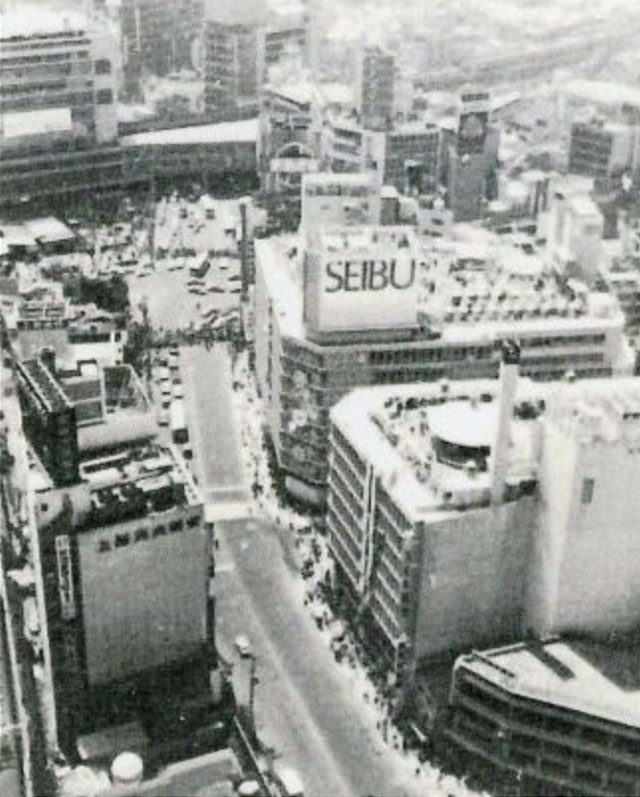 The stores were developed as extensions of the train lines, typically at major hub stations. Sometimes they ended up overshadowing the railways themselves. In 1968 Seibu, with its flagship store in Ikebukuro, opened its Shibuya location, striking right at the heart of Tokyu territory.
Its two buildings were connected by a skyway, both with massive walls of rounded rectangle windows framed by a geometric concrete pattern considered architecturally modern at the time, but charmingly retro today. Of course, true to Japanese form, the president of Tokyu respectfully attended Seibu Shibuya’s opening ceremony.
Rather than established brands, “SeiShi” gave floor space to more avant-garde designers like Issey Miyake, Yohji Yamamoto, and Takeo Kikuchi — names that would become global powerhouses in the fashion world. In the 70s and 80s, it was ground zero for the latest trends, while the more traditional Tokyu was saddled with the image of catering to middle-aged clientele.
In retaliation, Tokyu began a decades-long spree of buying up all the surrounding land, sandwiching Seibu between its buildings. In 1979 it opened the famous Shibuya 109 (a pun because 10 can be read as “to” and nine as “kyu”), which has since overtaken Seibu Shibuya as the nexus of fashion trends. Today, it owns even more destinations that tourists have likely visited, such as Tokyu Hikarie, Shibuya Sakura Stage, and Shibuya Scramble Square.
Meanwhile, Seibu branched out into other businesses, like FamilyMart convenience stores, the Muji non-brand brand, and even a car-related business (sorry for the long walk) called Seibu Motor Sales. The subsidiary specialized in Citroen and Saab, but also dabbled in Peugeot, Chevy, Fiat, and Ferrari.


In its heyday new model launches would take center stage at Seibu Shibuya, with cars displayed alongside mannequins in trendy outfits in shop windows visible from the famous Shibuya Scramble crossing, or with advertising plastered on the skyway between the two buildings. Sometimes models like the 2CV or original Fiat 500, considered cute and exotic, would be displayed as art pieces to attract hip young customers.
Seibu even created its own modified Citroens catering to the Japanese affinity for both wagons and eclectic design. It launched its own version of the BX, finished in white with body-colored bumpers and high-grade French velour seats. Imported BX wagons arrived with black plastic bumpers and Seibu would prep and paint them to match the bodies.
Due to the French penchant for glitches, Seibu also made considerable enhancements to the cars’ mechanical aspects. Thicker-core radiators, revised coolant temp switches, and reinforced hoses improved cooling, higher-output alternators Yuasa batteries, and dielectric grease beefed up the electrical system. Seibu replaced the complex return lines of the hydropneumatic suspension with more durable materials, and diligently re-gassed its chambers to ensure the ride would be acceptable to discerning luxury buyers.
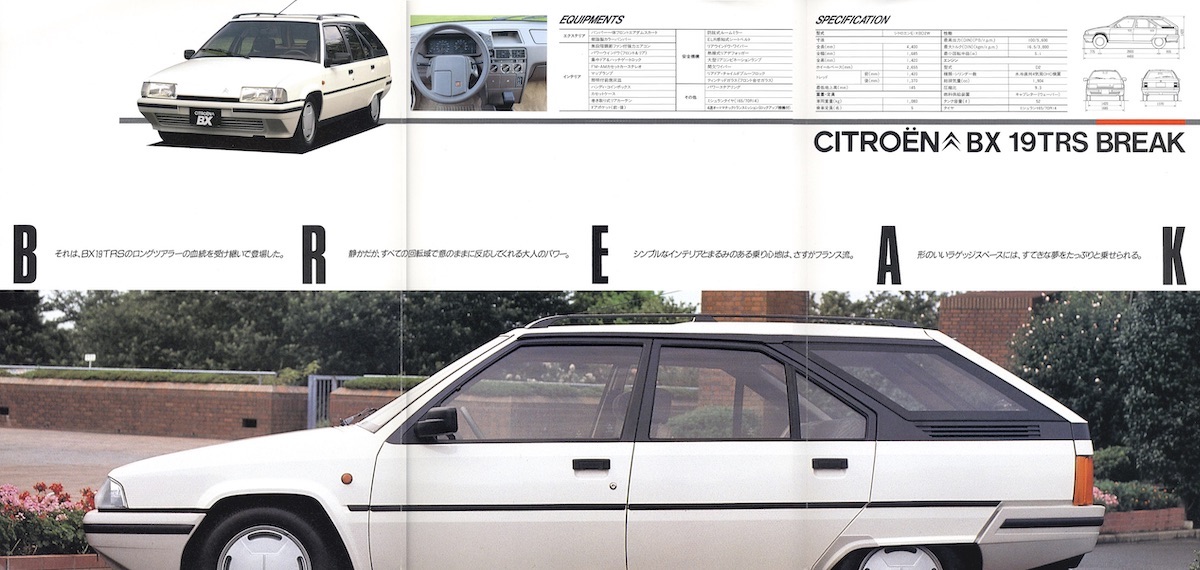
Also required were the features expected of any Japan-market car, like power folding mirrors, Japanese-compliant lighting, and Japanese-frequency stereos, which Seibu often upgraded to Alpine or Pioneer units. All this came at a cost, and the so-called Seibu-spec Citroens retailed between ¥3 million to 4 million. By contrast, a Toyota Corolla could be had for about ¥1 million at the time.
Among Citroen collectors, these Seibu-spec cars are quite sought after, worth double a regular one in the collector’s market. They can be identified by a Seibu Motor Sales (or Shin Seibu Motor Sales for later models) identification plate, a Japanese language owner’s manual with Seibu logo, and a Seibu sticker on the back, a high-status marker from the mecca of hipness. Mazda’s Eunos division also imported Citroens from 1990-96, but without the Seibu decal they simply weren’t as prestigious.
Seibu says it’s closing its Shibuya location because it couldn’t come to a deal after a 20-year negotiation with the landowners. Once it’s gone, these cars may be the only artifacts of the SeiShi era one comes across in the wild. Seibu Shibuya will close its doors in September 2026.
Images: Szilas in Tokyo, Citroen Japan